
Susquehanna County, Pennsylvania: overview, history, and characteristics
Susquehanna County is a largely rural county in northeastern Pennsylvania, created in 1810; its seat is Montrose. The county is known for rolling farmland, small towns, and recent natural gas development.
Overview
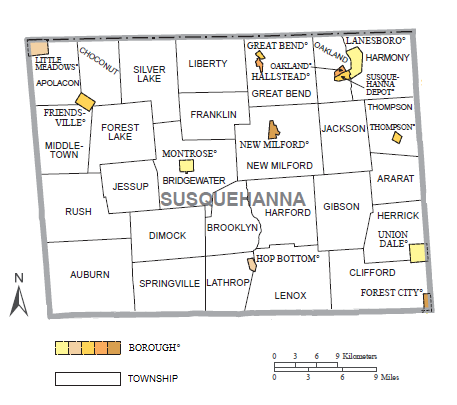
Susquehanna County lies in the northern tier of Pennsylvania, near the border with New York in the United States. The county is characterized by a mix of small boroughs, townships and agricultural land. It has long been recognized for its rural landscapes, wooded hills and local communities that developed during the 19th and early 20th centuries.
Image gallery
5 Images



History and formation
The county was created on February 21, 1810, when it was separated from Luzerne County. Settlement in the area followed patterns common to northeastern Pennsylvania: early farms, timbering and later small industrial and railroad activity. The county takes its name from the Susquehanna River, which has long been an important geographic reference for the region.
Population and communities
According to the 2010 census, the population was 43,356. Communities range from the county seat and administrative center to numerous boroughs and townships; local government is organized under Pennsylvania's system of county, borough and township authorities. The county seat and its institutions are focal points for services, while Montrose serves as a cultural and commercial hub for residents and nearby rural neighborhoods.
Geography and environment
The county's terrain includes rolling hills, mixed forests and agricultural valleys. Its climate is typical of northern Pennsylvania, with cold winters and warm summers. Land use is heavily oriented toward farming and forest management, and many streams and small watersheds feed larger rivers in the region.
Economy and land use
Economic activity historically centered on agriculture, timber and small-scale manufacturing. In the early 21st century the area experienced interest from energy developers because of shale formations beneath parts of northeastern Pennsylvania, while tourism and outdoor recreation contribute through hunting, fishing and scenic drives. Local businesses remain important to the county's economic fabric.
Government, services and notable facts
- County government provides courts, public records and social services typical of Pennsylvania counties.
- Transportation consists mainly of state and local roads; historic rail lines once played a larger role in moving goods.
- The county contains a mix of historic buildings, community institutions and natural areas that attract residents and visitors seeking a rural experience.
For further information about administrative details, demographics and local resources, consult county publications and regional planning materials or follow official links provided by municipal offices and state agencies.
Author
AlegsaOnline.com Susquehanna County, Pennsylvania: overview, history, and characteristics Leandro Alegsa
URL: https://en.alegsaonline.com/art/146334