
Sliedrecht — town and municipality in South Holland, Netherlands
Sliedrecht is a municipality in South Holland, Netherlands, long associated with dredging and maritime engineering. Population about 25,000 (2019). Noted for its dredging museum, riverfront industry and local services.
Overview
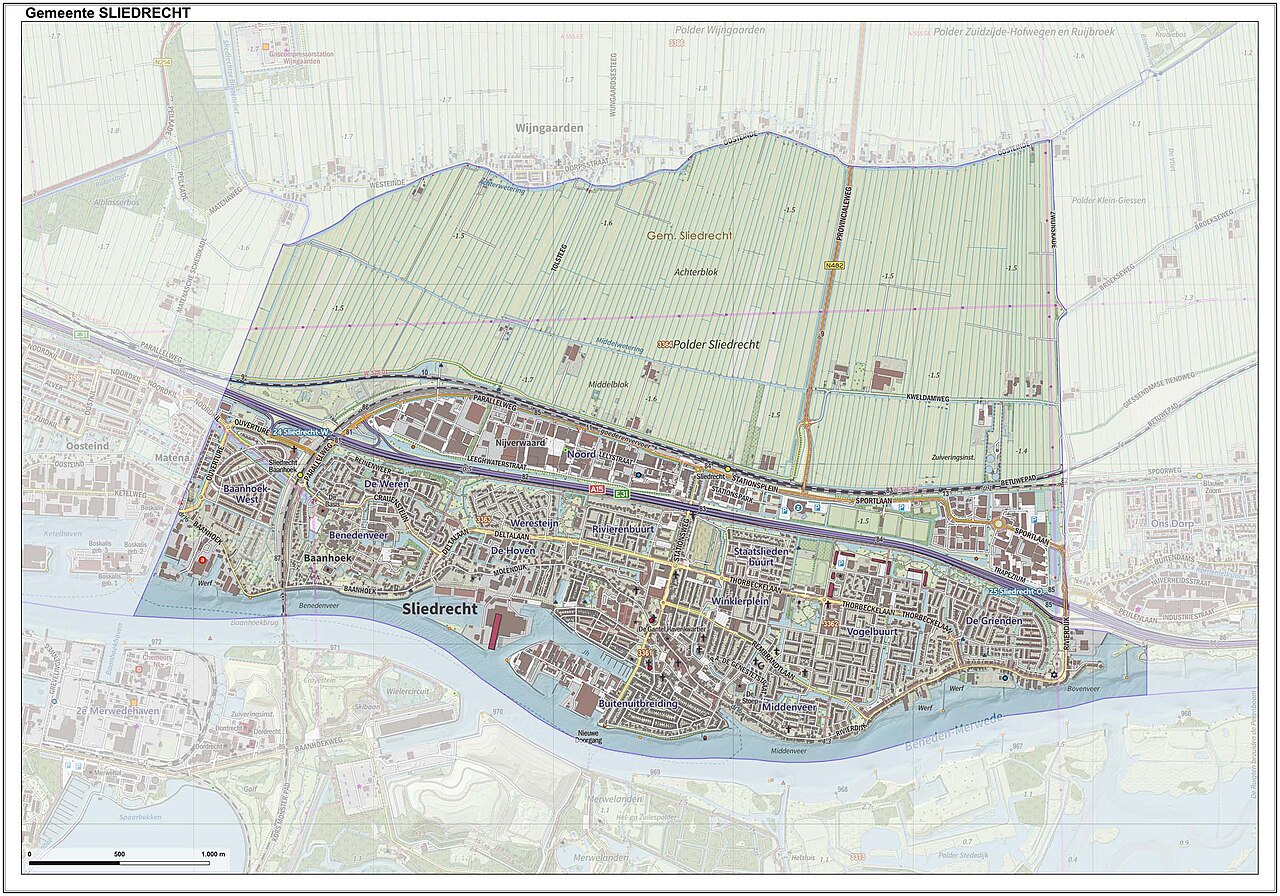
Sliedrecht is a Dutch municipality and town in the western Netherlands, located in the province of South Holland. It lies in a low-lying, water-rich landscape and had a population of roughly 25,000 people in 2019. The town combines residential neighbourhoods with industrial areas and port-related facilities along local waterways. Its identity and daily life are strongly shaped by the presence of water and by a history of managing rivers, canals and flood defences.
Image gallery
8 Images




Geography and administration
Administratively Sliedrecht functions on its own municipal council and forms part of the regional planning area for riverine settlements. Local planning and infrastructure are oriented toward dike maintenance, water management and navigation. Sliedrecht sits among a network of towns that grew up along rivers; nearby urban centres provide broader services while the town retains a compact built environment with community facilities concentrated near main streets and the waterfront.
History
The town developed where land and water meet, shaped by reclamation, peat extraction in earlier centuries and, from the 19th century onward, by advances in dredging and civil engineering. Growth in the dredging trade and related workshops during the 19th and 20th centuries gave Sliedrecht a specialised industrial profile and vocational traditions in maritime technology.
Economy and culture
Sliedrecht's economy has long been linked to maritime technology, dredging, ship maintenance and port services. This industrial base influenced local employment, technical education and community life. Cultural activities include local festivals, sports clubs, historical societies and a strong tradition of practical craftsmanship. The town is often cited as an example of how Dutch water management shaped local economies.
Landmarks and attractions
A prominent local attraction is the dredging museum, which documents vessels, machinery and the technology used to shape waterways. Visitors can also find riverside promenades, viewpoints for river traffic and several churches and community centres that reflect the town's development. For provincial background see provincial context and for the wider regional connections consult the regional network.
Author
AlegsaOnline.com Sliedrecht — town and municipality in South Holland, Netherlands Leandro Alegsa
URL: https://en.alegsaonline.com/art/145837