
Silva Batuta (Wálter Machado da Silva) — Brazilian footballer
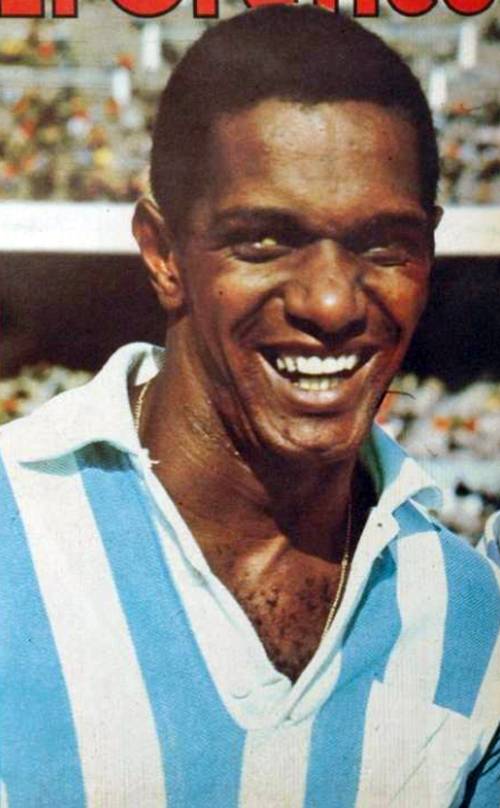
Wálter Machado da Silva, known as Silva Batuta, was a Brazilian footballer active mid-20th century. He played for club teams in Brazil and represented the Brazil national team. He died in Rio de Janeiro in 2020.
Overview
Wálter Machado da Silva (2 January 1940 – 29 September 2020), commonly known as Silva Batuta or simply Batuta, was a Brazilian football player whose career spanned the 1950s through the 1970s. He is remembered as part of Brazil's rich footballing era and for contributions at club level and for the Brazil national team. For a concise record of his career, see a summary entry here.
Image gallery
2 Images
Playing style and position
Batuta was primarily known as an attacking player. Contemporary descriptions emphasize his technical ability, movement off the ball and eye for goal, qualities that made him effective in forward roles. He combined individual dribbling skills with quick combinations in the final third, attributes that allowed him to adapt to different tactical systems used by clubs and the national side.
During his active years he competed in domestic competitions in Brazil and also had spells abroad, a pattern common for notable South American players of his generation. His performances at club level led to selection for the national team; details of his international appearances and contributions are available from several records here.
Outside match play, Batuta's era was one of tactical evolution in Brazilian football, moving between more classical attacking formations and the increasingly sophisticated team systems that emerged in the 1960s. Players of his profile were valued both for finishing and for creating space for team-mates.
Batuta died on 29 September 2020 in Rio de Janeiro at the age of 80. Contemporary notices and obituaries reported his passing and recalled his place in mid-century Brazilian football; a report of his death can be found here.
Legacy and notable facts
- Often referenced by his nickname, a common practice in Brazilian football culture that highlights personality as well as skill.
- Remembered as part of the generation that followed Brazil's first World Cup triumph, contributing to the depth of attacking talent in the country.
- Serves as an example of players whose careers bridged domestic and international club football during the mid-20th century.
Batuta's career is documented in football records and collective memory of the sport in Brazil. For researchers and fans, he represents a link between the golden age of Brazilian football and subsequent developments in tactics and international club movement.
Author
AlegsaOnline.com Silva Batuta (Wálter Machado da Silva) — Brazilian footballer Leandro Alegsa
URL: https://en.alegsaonline.com/art/145788