
Scotland County, North Carolina
Scotland County is a rural county in southern North Carolina. Its county seat is Laurinburg. Established in 1899, the county has agricultural roots, small towns, and local institutions including a private college.
Overview
Scotland County is located in the southern part of the U.S. state North Carolina, near the border with South Carolina. The county seat and largest town is Laurinburg, which serves as the center for local government, commerce and cultural life. According to the 2010 census the county had 36,157 residents, distributed across small towns, rural neighborhoods and working farms.
Image gallery
10 Images


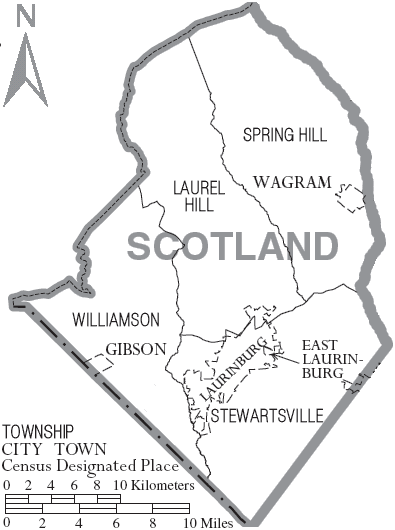
Geography and communities
The county lies within the coastal plain region, with generally level to gently rolling terrain, mixed farmland, forested tracts and small streams. In addition to Laurinburg the county contains several small towns and unincorporated communities that provide local services, schools and places of worship. For official maps and municipal information consult state or county pages such as the county homepage: state overview and local listings like Laurinburg information.
History
Established in 1899, Scotland County was formed from adjoining counties. Its name reflects the strong Scottish and Scots-Irish heritage of many early settlers, a legacy visible in place names and community traditions. Over the twentieth century the area developed through agriculture, small manufacturing and transportation links to regional markets.
Economy, institutions and services
The county economy has historically depended on agriculture and related industries; in recent decades employment patterns have diversified to include manufacturing, retail and public services. Laurinburg hosts a private college that has been an important local employer and cultural resource. County government provides education, health, public safety and planning services for residents.
Demographics and culture
Scotland County has a mix of rural and small-town populations, with community life shaped by churches, schools, civic groups and local events. Cultural influences from early Scottish settlers remain part of local identity, while contemporary community activities reflect the county's diverse residents and institutions.
Quick facts
- County seat: Laurinburg.
- State: North Carolina (state resources).
- Established: 1899.
- Population (2010 census): 36,157.
- Official county site: county; local town site: town.
Author
AlegsaOnline.com Scotland County, North Carolina Leandro Alegsa
URL: https://en.alegsaonline.com/art/145527