
Rudolph A. Marcus — chemist and developer of electron transfer theory
Rudolph A. Marcus, Canadian–American chemist and 1992 Nobel laureate, developed Marcus theory explaining rates of electron transfer reactions and their importance across chemistry and biology.
Overview
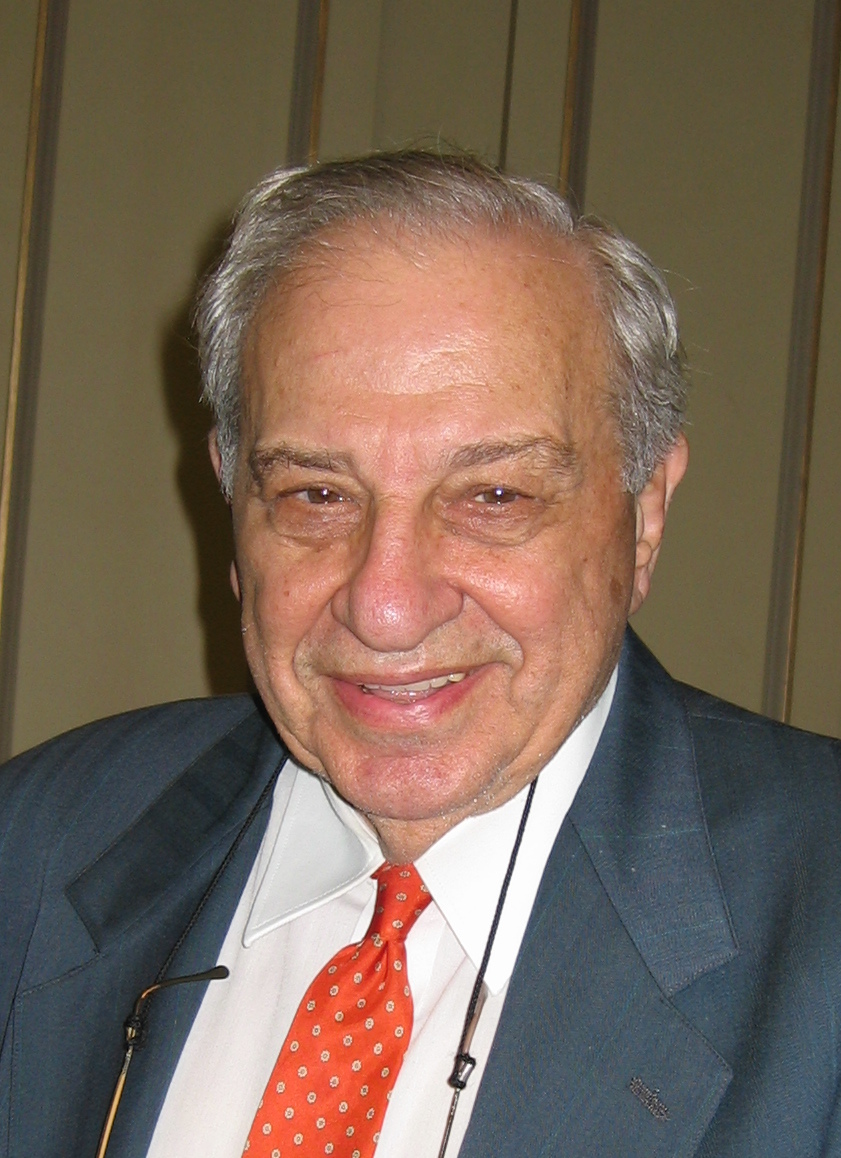
Rudolph Arthur Marcus (born July 21, 1923) is a Canadian–American physical chemist best known for formulating the theoretical framework that describes electron transfer reactions in chemical and biological systems. His work placed the dynamics of charge transfer on a thermodynamic and kinetic footing, leading to predictions that altered how chemists think about reaction rates and mechanisms. Marcus received the Nobel Prize in Chemistry in 1992 for this contribution.
Image gallery
3 Images

Early life and career
Marcus was born in Montreal, Quebec, and later built a career that crossed national borders and academic disciplines. He became known both as a Canadian scientist and, through his long association with institutions in the United States, as an American researcher. Over decades he published theoretical papers and reviews that synthesized quantum mechanics, statistical mechanics, and chemical thermodynamics to explain electron transfer phenomena.
Marcus theory and key concepts
Marcus theory relates the rate of electron transfer between donor and acceptor species to two central ideas: the reorganization energy (the energy required to reorganize the positions of nuclei and the solvent) and the free-energy change driving the reaction. The theory models potential energy surfaces as parabolas and shows that reaction rates depend on the overlap of these surfaces and on electronic coupling between reactants. A striking prediction was the so-called "inverted region," where making a reaction more thermodynamically favorable can decrease its rate—an effect later confirmed by experiment.
Applications and importance
Marcus's framework has broad application across chemistry and biology. It informs understanding of redox processes, photosynthesis, electrochemistry, charge transport in materials, and components of molecular electronics. Experimentalists frequently use Marcus concepts to interpret kinetic data and to design systems with tailored electron-transfer properties.
Distinctions and legacy
In addition to the Nobel Prize, Marcus's ideas have been recognized through numerous honors and by their persistent influence on research directions in physical chemistry and chemical physics. His name is attached to the theory that remains a standard topic in graduate-level discussions of reaction dynamics.
Notable facts
- Marcus theory introduced the central role of reorganization energy in reaction rates.
- The prediction of the inverted region stimulated experimental tests that validated the theoretical picture.
- Further developments have integrated Marcus concepts with quantum tunneling, solvent dynamics, and condensed-phase effects.
For additional biographical details and technical exposition, see specialized biographies and reviews that examine Marcus's papers, the evolution of electron-transfer theory, and subsequent extensions that connect his ideas with modern studies in energy conversion and molecular electronics. Relevant resources may be found via academic databases and institutional histories.
Further reading and resources: electron transfer, historical profiles at institutional archives, and summaries in textbooks of physical chemistry and chemical kinetics.
Author
AlegsaOnline.com Rudolph A. Marcus — chemist and developer of electron transfer theory Leandro Alegsa
URL: https://en.alegsaonline.com/art/145134