
Rockingham County, North Carolina
County in north-central North Carolina. Founded in the 18th century with county seat Wentworth; 2010 population 93,643. Piedmont landscape, small cities and towns, manufacturing and agricultural history.
Overview
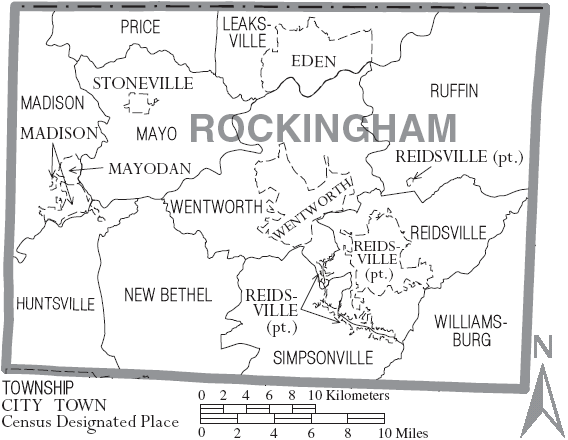
Rockingham County is located in the north-central part of the U.S. state North Carolina. As recorded at the 2010 census the county had a population of 93,643. The county seat is Wentworth, a small town that houses county government and local services. The county contains a mix of small cities, towns and rural areas.
Image gallery
9 Images




Geography and environment
The county lies within the North Carolina Piedmont, a region of rolling hills, woodlands and farmland. Several streams and rivers cross the county and contribute to local watersheds; among the notable waterways is the Dan River, which has influenced settlement patterns and industry. The landscape supports a mix of agricultural fields, forest tracts and suburban residential areas near larger towns.
History and name
Rockingham County was created in the late 18th century from portions of older counties during the period of state formation. Its name honors a British statesman, the Marquess of Rockingham, a common practice for counties established at that time. Over the centuries the county grew around small manufacturing centers, farms and transportation routes.
Economy and communities
The local economy has long combined agriculture with manufacturing and services. Historically crops such as tobacco and mixed row crops and industries including textiles and furniture were important; in recent decades economic activity has diversified to include light manufacturing, distribution and small businesses. Principal communities within the county include several towns and small cities that serve as commercial and service centers for surrounding rural areas.
Government, education and services
The county operates under a commission or board structure common to North Carolina counties and provides services such as law enforcement, public health and planning from the county seat. Institutions of higher education and vocational training, including a community college campus, serve local students and workforce needs.
Culture, recreation and notable facts
Residents and visitors find recreational opportunities in county parks, riverside areas and community festivals. Historic sites, local museums and preserved downtowns reflect the county's development over two centuries. While the county remains largely rural, its proximity to larger regional centers means many residents commute for employment and cultural amenities.
Author
AlegsaOnline.com Rockingham County, North Carolina Leandro Alegsa
URL: https://en.alegsaonline.com/art/144996