
R. B. Bennett — Canadian prime minister and businessman (1870–1947)
Richard Bedford Bennett, 11th prime minister of Canada (1930–35), Conservative leader who governed during the Great Depression and later became Viscount Bennett.
Overview
Richard Bedford Bennett (3 July 1870 – 26 June 1947) was a Canadian lawyer, businessman and politician who served as the 11th prime minister of Canada from 1930 to 1935. A leader of the Conservative Party, Bennett guided the federal government through the worst years of the Great Depression. His tenure combined protective economic measures, relief efforts and later proposals for broader reforms.
Image gallery
10 Images




Early career and business activities
Bennett first made his mark as a lawyer and entrepreneur in western Canada. He amassed considerable personal wealth through legal practice and investment in mining and resource ventures, which shaped his pragmatic, businesslike approach to public policy. His legal background and private-sector experience influenced his preference for tariffs and policies intended to protect Canadian industry.
Prime ministership and policies
Taking office in 1930, Bennett faced rapidly rising unemployment and collapsing markets. His government raised tariffs and promoted trade protection, launched relief and public works programs, and sought to stabilize banking and credit. In 1935 he proposed a program of more ambitious social and economic reforms—sometimes compared to contemporary New Deal ideas—which met both support and sharp criticism. Historians debate how effective his measures were in easing widespread hardship.
Later life and legacy
Bennett was defeated in the 1935 federal election and returned to private life. He later moved to England and accepted a peerage as Viscount Bennett. Public assessments of his premiership are mixed: some praise his attempt to respond to unprecedented economic crisis, while others argue his measures were too late or inconsistent. His government is remembered for its prominence during a formative era in Canada’s social and financial policy.
Notable facts
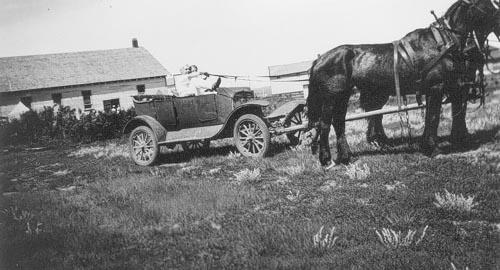
- Often associated in popular memory with the hardships of the Depression and the symbolic "Bennett buggies"—cars stripped of engines and pulled by horses.
- His government took steps to shore up Canada’s financial institutions and is linked with the creation of national financial frameworks such as the Bank of Canada.
- Bennett’s later proposals for social and economic reform remain a subject of study in discussions of Canadian welfare and economic policy.
- For further reading, see official biographies and archival material: biography and papers and parliamentary records at government reference.
Author
AlegsaOnline.com R. B. Bennett — Canadian prime minister and businessman (1870–1947) Leandro Alegsa
URL: https://en.alegsaonline.com/art/144592