
British Rail Class 395 (Javelin) — High-speed EMU
Dual-voltage high-speed electric multiple unit introduced in 2009 for domestic services on High Speed 1. Built by Hitachi, operated by Southeastern and commonly known as the 'Javelin'.
Overview
The British Rail Class 395 is a fleet of high-speed electric multiple units introduced for domestic passenger services on the High Speed 1 corridor linking London with parts of Kent. Built by Hitachi as part of its A-train family and marketed under the name "Javelin", these trains provide faster intercity-style connections on routes that previously relied on conventional lines. They entered revenue service in 2009 and are operated by Southeastern.
Image gallery
9 Images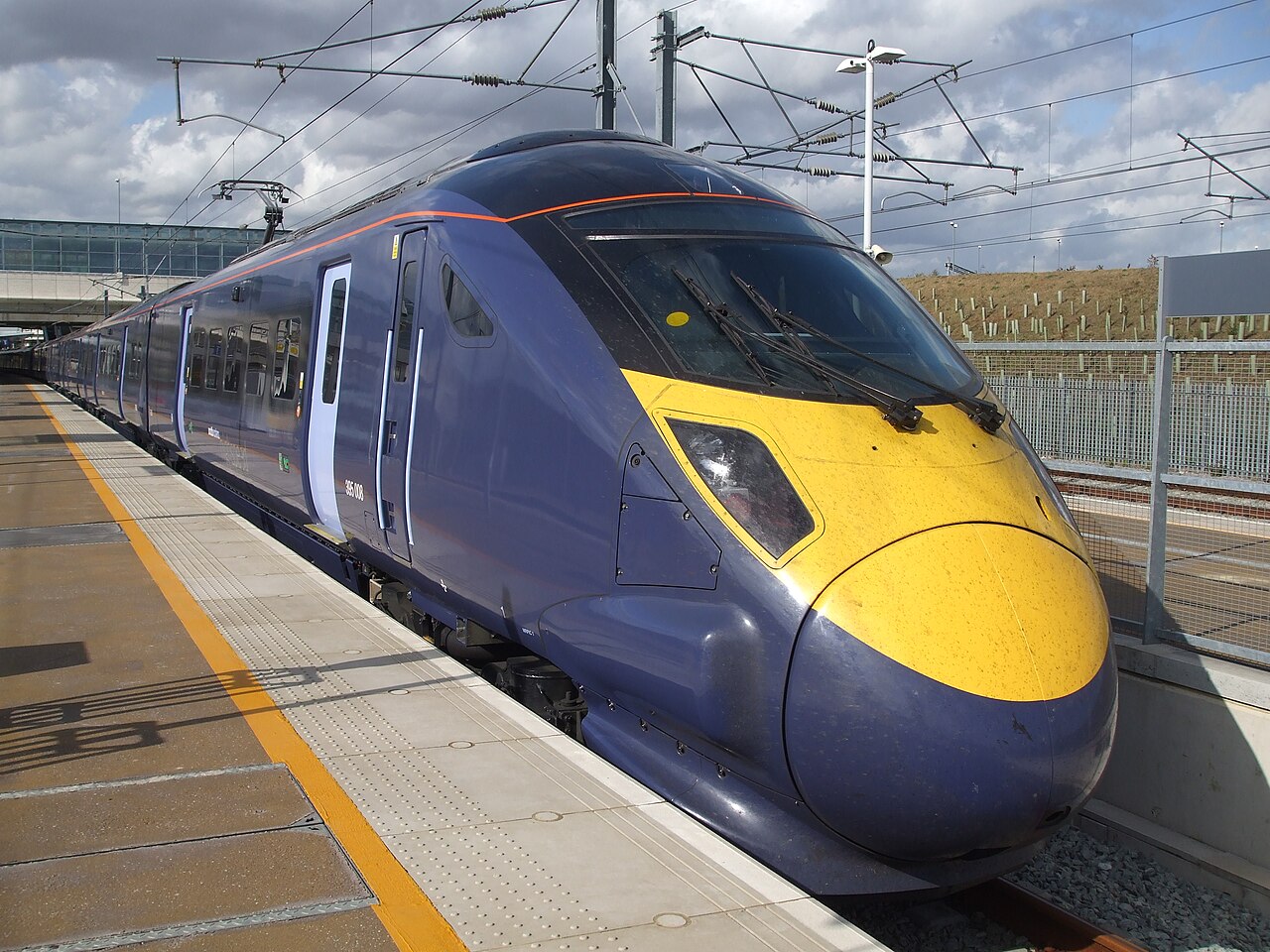


Design and technical characteristics
Class 395 units are dual-voltage trains capable of drawing power from 25 kV AC overhead lines and 750 V DC third-rail supplies. This flexibility lets them run on the dedicated high-speed line and continue onto conventional electrified routes without changing traction. Typical features include modern passenger accommodations, luggage areas, accessible facilities and real-time passenger information systems.
- Manufacturer: Hitachi (A-train family)
- Power systems: dual-voltage (overhead and third rail) — see electrical systems
- Formation: fixed-length multiple-unit sets designed for high-speed running
History and development
The Class 395 project grew from the need to exploit the newly built High Speed 1 infrastructure for domestic services. Rather than modifying existing stock, a new fleet was commissioned to meet higher speed requirements, improved acceleration and passenger expectations. After construction and testing, units began regular operations in 2009 and later played a prominent role during large events such as the 2012 Olympic Games where faster cross-London connections were in demand.
Operation, uses and significance
Deployed primarily on services between London and towns in Kent, the trains reduced journey times compared with conventional services and increased capacity on key commuter and regional corridors. Their ability to operate seamlessly between dedicated high-speed track and legacy electrified routes makes them important for integrating new infrastructure with existing networks. For information on the route infrastructure they use, see High Speed 1.
Notable distinctions
Class 395 units are among the fastest regular domestic trains in Britain and marked a shift toward modern, high-speed domestic services. They illustrate a practical approach to running high-performance trains on mixed networks by combining dual-voltage capability with proven multiple-unit design principles.
Related articles
Author
AlegsaOnline.com British Rail Class 395 (Javelin) — High-speed EMU Leandro Alegsa
URL: https://en.alegsaonline.com/art/14431
Sources
- southeasternrailway.co.uk : "Southeastern completes its executive team and welcomes high-speed train experts"