
New Super Mario Bros. (2006 video game)
2006 side‑scrolling Mario platformer for Nintendo DS that revived classic 2D gameplay, introduced new collectibles and power-ups, and launched the New Super Mario Bros. series.
Overview
New Super Mario Bros. is a side‑scrolling platform game developed and published by Nintendo for the Nintendo DS. Released in 2006, it marked the return of traditional two‑dimensional Mario platforming to a handheld console and began the New Super Mario Bros. series. The game blends familiar mechanics from classic Mario titles with updated presentation, a contemporary level structure, and a few new ideas intended to modernize the formula without abandoning its arcade roots.
Image gallery
3 Images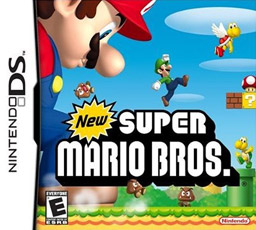


Gameplay
Play follows Mario as he moves through a sequence of themed worlds, each composed of multiple stages that may include standard land levels, underwater sections, auto‑scrolling segments, and boss battles. Core actions are running, jumping and stomping on enemies; the game emphasizes precise timing and exploration. Players encounter secrets, alternate exits and short challenge stages. Difficulty is tuned to be approachable for newcomers while offering optional challenges for experienced players.
Levels and collectibles
Levels are grouped into distinct worlds with visual themes such as grasslands, deserts, caves and fortresses. A notable addition is the inclusion of collectible coins and larger hidden tokens that encourage replay: collecting special coins can open secret routes or optional stages. The level design mixes short, fast stages with longer exploration levels that hide secrets and bonus areas for completionists.
Power-ups and characters
- Classic items: Familiar power‑ups such as the Super Mushroom and Fire Flower return to change Mario's abilities and resilience.
- New or reimagined items: The game introduced new effects that alter movement or give temporary advantages, while keeping the core identity of Mario gameplay intact.
- Antagonists: Bowser appears as the primary antagonist and players face bosses and guardian characters across the worlds.
Controls and Nintendo DS features
The game uses the DS's button controls for movement and actions and makes limited use of the system's additional features. Touch‑screen functions are not central to the main platforming, preserving a traditional control feel. Local wireless capabilities were used for ancillary modes that extended play beyond the single‑player campaign.
Multiplayer and extra modes
While primarily a single‑player experience, New Super Mario Bros. includes small competitive or challenge modes that take advantage of the handheld's wireless communication. These modes offered brief multiplayer diversion but the single‑player campaign remained the focus for most players.
Development and release
Nintendo developed the title to bring classic 2D Mario gameplay to a modern handheld audience, combining retro mechanics with contemporary production values. It first reached stores in North America on May 15, 2006 and followed with a Japanese release on May 25, 2006. Regional launches continued in Australia and Europe in June 2006. For official information, Nintendo provided materials and pages at launch (official page, Nintendo, Nintendo DS), and regional announcements listed specific release timing and retail details (North America, Japan, Australia, Europe, with some notices referencing the Australian date around June 8).
Reception and legacy
Critics and players generally praised New Super Mario Bros. for recapturing the spirit of classic Mario side‑scrollers while adding modern polish and accessibility. Its blend of familiar mechanics, collectible‑based exploration and approachable difficulty helped it reach a broad audience. The title's success led Nintendo to expand on the concept with later entries and spin‑offs; an indirect successor for home consoles, New Super Mario Bros. Wii, continued the approach with cooperative play and larger‑scale levels.
Notable distinctions
New Super Mario Bros. is often credited with revitalizing two‑dimensional platforming within Nintendo's lineup and establishing a template that balanced retro design with modern conveniences. The game demonstrated that classic side‑scroll mechanics could be refreshed for contemporary hardware, influencing subsequent Mario titles and platformers that sought to combine nostalgia with updated design.
Cover and promotional artwork and further launch details were included in Nintendo's marketing materials and regional press notices; archival and official references remain useful for historical release information (publisher page, corporate site).
Author
AlegsaOnline.com New Super Mario Bros. (2006 video game) Leandro Alegsa
URL: https://en.alegsaonline.com/art/143340