
Moskva River
The Moskva River runs about 473 km through western Russia, giving its name to Moscow. A tributary of the Oka and part of the Volga basin, it shapes the capital's layout, history, navigation and recreation.
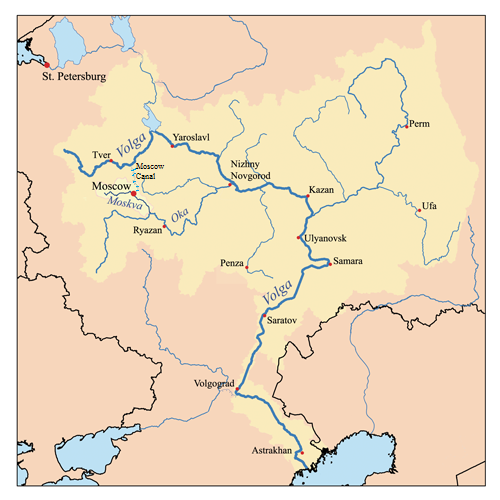
The Moskva River (река Москва) is a prominent watercourse in western Russia, best known for flowing through the city of Moscow and lending the city its name. About 473 km long, the Moskva is a tributary of the Oka River, which in turn joins the Volga and ultimately drains into the Caspian Sea. The river is frequently shown on regional maps and reference works (map entry), and it remains central to Moscow's geography and urban identity.
Image gallery
7 Images


Course and physical characteristics
The Moskva rises on the Smolensk–Moscow Upland in Moscow Oblast and follows a generally eastward and southeastward course through the oblast and the city of Moscow before meeting the Oka near the historic town of Kolomna. In the Moscow section the river is confined by stone embankments and crossed by many bridges. Seasonal variation is strong: the river is typically frozen in winter months and experiences higher flows during spring thaw.
Tributaries and hydrology
Its watershed includes a number of smaller tributaries, several of which run through Moscow or its suburbs. Notable tributaries include:
- Yauza — a significant urban tributary that meets the Moskva within Moscow.
- Neglinnaya — historically above ground, now largely routed through tunnels beneath the city centre.
- Setun — a smaller western tributary that flows into the Moskva within the metropolitan area.
History and name
The river has been important since medieval times as the setting for settlements that later coalesced into Moscow. The city's name is derived from the river's name. Linguists typically regard the hydronym Moskva as pre-Slavic in origin, with likely Finno‑Ugric roots linked to local marshy or riverine terms. Over centuries the riverbanks have been fortified, embanked and integrated into the city's expansion.
Uses, navigation and urban role
The Moskva has served multiple roles: a local transport route, a source of water, and a recreational corridor. During the 20th century the construction of the Moscow Canal (connecting the Moskva and Volga basins) improved navigation and helped secure water supplies for the capital. Today passenger riverboats operate in warmer months, embankments provide promenades and roads, and the river remains a popular scenic element in the city's tourism and public life.
Environment and notable facts
Urbanization created pollution challenges in the 20th century; more recent efforts have focused on water quality, flood control and ecological restoration. Architecturally and culturally, the Moskva River frames many of Moscow's landmarks and has inspired art and literature. For further general information and maps consult regional references and official city guides (see map, Russia overview). The river's role as a tributary of the Oka links it into the larger Volga basin and ultimately to the Caspian Sea, underscoring its place in the broader hydrology of European Russia.
Author
AlegsaOnline.com Moskva River Leandro Alegsa
URL: https://en.alegsaonline.com/art/142981