
Mario Bros. (1983 arcade game)
Mario Bros. is a 1983 arcade game by Nintendo introducing Mario’s name and Luigi as a playable character; it popularized two-player cooperative platforming and a distinctive flip-and-kick enemy mechanic.
Mario Bros. is an arcade platform game released by Nintendo in 1983. Designed as a short, action-focused title, it established several features that would influence later entries in the Mario franchise. The game is notable for being the first to give the protagonist the name Mario in the game itself and for making his brother Luigi a playable character. It shipped in arcades and was subsequently adapted to multiple home systems and later included in compilation releases.
Image gallery
6 Images



Gameplay and mechanics
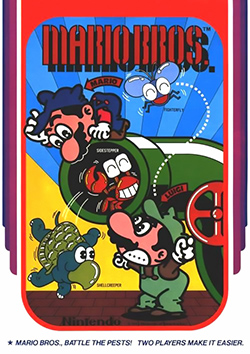
The core gameplay takes place on a single-screen playfield made of platforms and pipes. Players control Mario, Luigi, or both simultaneously in competitive or cooperative play. Enemies appear from pipes and move across platforms. Rather than stomping directly from above, players must hit the platform from beneath to flip many enemies onto their backs, then run over and kick them to remove them from the stage. This two-step defeat method gives Mario Bros. a distinct rhythm and tactical feel compared with later platformers.
Characters and enemies
The protagonists are two Italian-American plumbers who work in the sewers beneath a city. The roster of opponents includes turtle-like shell creatures, crab-like fighters, and flying creatures that change behavior as levels progress. Many of these enemy archetypes evolved into the Koopa Troopas and other recognizably recurring foes in later Mario titles. The game also features bonus items, a POW-style hazard used to flip multiple enemies at once, and increasing speed and variety across levels.
History and releases
Created by Nintendo as a follow-up to earlier successes, the title was developed to be accessible in arcades while offering room for competitive high-score play. Following its arcade life, ports and licensed versions appeared on contemporary home consoles and computers so players could enjoy the multiplayer action at home. Elements of the game were later bundled in various Nintendo compilations and handheld releases; for example, versions of the arcade game were distributed alongside collections on later consoles and handhelds in subsequent decades. For more detailed release information see release notes and archival entries at dedicated databases (platform listings).
Legacy and significance
Mario Bros. is often remembered for introducing Luigi as a distinct playable character and for formally naming the lead character Mario, who had been called "Jumpman" in earlier arcade titles. The cooperative yet competitive two-player mode influenced many later arcade and console multiplayer designs. Its simple rules, tight level design, and emphasis on timing and coordination helped establish recurring series conventions and made the game a common subject of ports, remakes, and homages.
Ports, variants and modern access
- Arcade original (1983) with upright cabinets and cocktail versions.
- Home and console ports during the 1980s and later compilation releases bringing the arcade experience to new audiences.
- Special editions and emulated versions included in handheld and compilation releases — see companion collections for specifics (compilation index, modern re-releases).
Today, Mario Bros. is studied as an early and influential chapter in Nintendo's history and in the evolution of platform games. Its mechanics are simple to learn yet allow for skilled play, and the title remains a useful example of how a compact design can create lasting appeal.
Author
AlegsaOnline.com Mario Bros. (1983 arcade game) Leandro Alegsa
URL: https://en.alegsaonline.com/art/142242