
Donkey Kong (1981 video game)
Donkey Kong is a 1981 arcade platform game by Nintendo that introduced Mario and established early platforming conventions. It features climbing-based stages, hazardous obstacles, and a rescue storyline.
Overview
Donkey Kong is an early platform game released by Nintendo in 1981. Presented as an arcade experience, it challenged players to move a character upward through a series of elevated stages while avoiding hazards. The game is notable for introducing a heroic protagonist who would later be named Mario and for popularizing the single-screen platform format that informed many later titles.
Image gallery
5 Images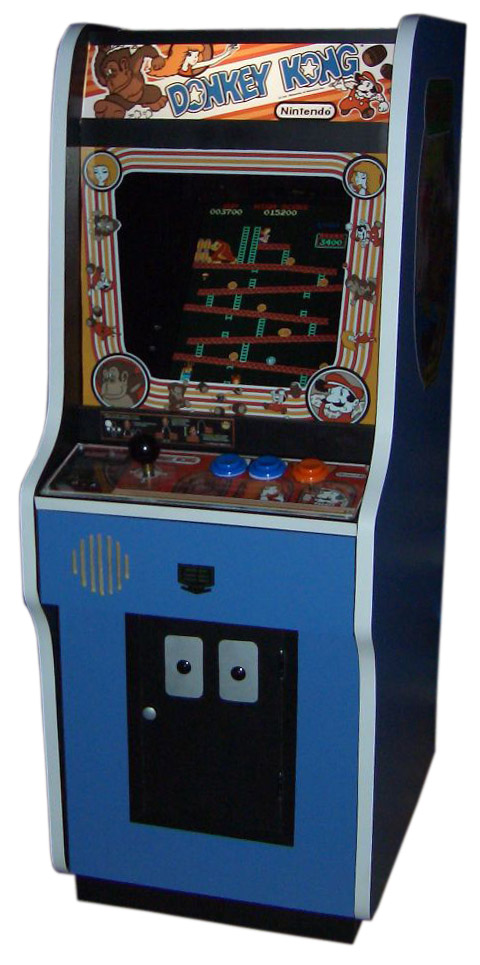



Gameplay and structure
Gameplay centers on navigating platforms, ladders, and elevators while dodging or jumping over projectiles and obstacles. Each level is a single, self-contained screen with a clear start and goal: reach the top to confront the antagonist and rescue a captive character. The design rewards timing, pattern recognition and quick reflexes rather than exploration or complex input, making the core loop immediate and easy to learn.
Development and design
The game was developed at Nintendo during a period of experimentation with arcade hardware and character-driven concepts. Designers sought to create a memorable antagonist and a simple but challenging set of stages. Visual storytelling—conveying a short dramatic rescue plot without text—was an important design choice that helped the game stand out in arcades and coin-op cabinets.
Characters and setting
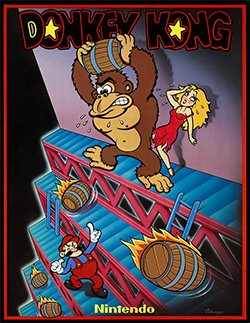
Donkey Kong puts players in the role of a determined protagonist who must ascend a construction-like structure to save a captured companion. The adversary, a large ape, throws obstacles downward to impede progress. These characters and the rescue premise became iconic and were adapted, renamed, and developed in later Nintendo franchises.
Ports, legacy and influence
After its arcade debut, the game was ported to a variety of home systems and reissued on many platforms over subsequent decades. Its influence is seen in the rise of platformers, the emergence of recurring video game characters, and the use of concise, stage-based challenge design. Donkey Kong is often cited in histories of video games as a milestone in character-driven arcade design.
Further reading and resources
Questions and answers
Q: Who made Donkey Kong?
A: Donkey Kong was made by Nintendo in 1981.
Q: Who designed the game?
A: The game was designed by Shigeru Miyamoto and Gunpei Yokoi.
Q: What happened to their other games before Donkey Kong?
A: Their other games failed in North America before Donkey Kong.
Q: What is the plot of the game?
A: In the game, Mario (then called Jumpman) has to climb a construction site to save his girlfriend Pauline from an escaped gorilla named Donkey Kong.
Q: When did this game come out?
A: Donkey Kong came out in 1981.
Q: How does Mario save Pauline?
A: Mario has to climb a construction site to save Pauline from Donkey Kong.
Q:What is the name of Mario's girlfriend ?
A:Mario's girlfriend is named Pauline.
Related articles
Author
AlegsaOnline.com Donkey Kong (1981 video game) Leandro Alegsa
URL: https://en.alegsaonline.com/art/28456