
M32 motorway — short Bristol link to the M4
Short urban motorway connecting Bristol and the M4 across Gloucestershire; a busy commuter route of about 4.4 miles with notable urban impact and proposals for improvement.
Overview
The M32 is a short, purpose-built motorway that connects the city of Bristol with the national motorway network via the M4. At roughly 4.4 miles (7.1 km) it is among the shorter motorways in the United Kingdom. The route passes through parts of Bristol and the northern edge of Gloucestershire, serving as a primary arterial link for commuters, freight and local traffic.
Image gallery
5 Images


Route and design
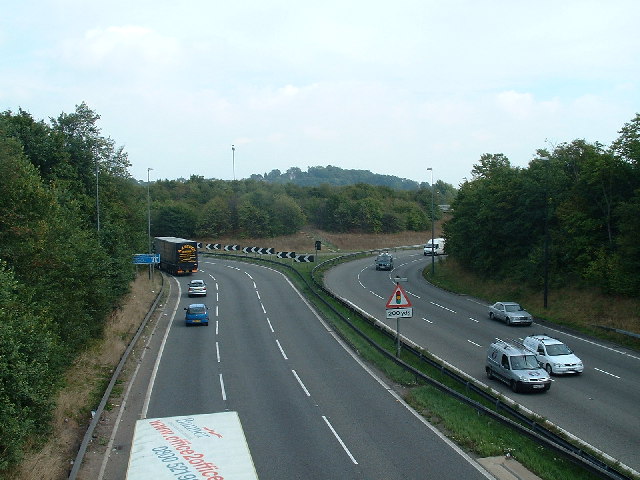
Physically the M32 is an urban motorway designed for relatively high-capacity traffic over a short distance. It features limited access, grade-separated junctions and traffic-management measures typical of motorways. The short length and close spacing of entry and exit points reflect its role as a connector between the city centre and the long-distance motorway network, rather than as a long-distance trunk road itself.
History and development
The M32 was planned and built in the mid-to-late twentieth century as part of regional road improvements to link Bristol more directly to the M4 corridor. Construction reflected the transport priorities of the era: fast road access to and from urban centres. Over time, the road has been adapted with maintenance and incremental upgrades to meet changing traffic patterns.
Uses, impacts and management
Today the M32 carries substantial commuter flows into Bristol and is important for local freight distribution. Its proximity to residential areas has made it the focus of discussions about noise, air quality and urban severance. Authorities and community groups have proposed measures to reduce those effects and to promote sustainable travel alongside continued motorway management by the national road authority. For general information on motorways see motorway resources.
Notable facts and future considerations
The M32’s compact size makes it notable among UK motorways. Urban planners continue to consider how short urban motorways should evolve to balance vehicle access with environmental and social goals. Proposals that have been discussed in public forums include targeted traffic-management changes, improved public transport links, and schemes to enhance walking and cycling facilities near the route.
- Length: about 4.4 miles (7.1 km).
- Function: urban connector between Bristol and the M4.
- Issues: congestion, air quality and urban impact subject to local planning debate.
For further route details and maps consult regional transport summaries or local planning documents available from the relevant authorities M4 and Gloucestershire resources.
Author
AlegsaOnline.com M32 motorway — short Bristol link to the M4 Leandro Alegsa
URL: https://en.alegsaonline.com/art/141964