
Luc-Adolphe Tiao — Prime Minister of Burkina Faso (2011–2014)
Profile of Luc-Adolphe Tiao, a Burkinabé journalist-turned-politician who served as Prime Minister from 2011 until the 2014 political crisis that toppled President Blaise Compaoré.
Luc-Adolphe Tiao (born 4 June 1954) is a Burkinabé journalist and politician best known for serving as Prime Minister of Burkina Faso between 2011 and 2014. He led the government under President Blaise Compaoré, succeeding Tertius Zongo, and presided over a period marked by development efforts and growing political tensions that culminated in the popular uprising of October 2014.
Image gallery
1 Image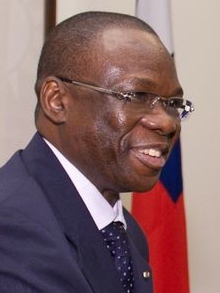
Early life and career
Tiao trained initially for religious studies and later pursued a career in journalism and public communication. His background combined ethical and public-service orientations with media experience, which shaped his later work in government. Throughout his pre‑ministerial career he held positions that bridged reporting, editorial management and advisory roles in public affairs, gaining attention as a communicator and policy advocate. For background on his formative studies see education and early biography.
Prime ministership (2011–2014)
Appointed to lead the cabinet in 2011, Tiao replaced a long-serving predecessor and assembled a team to address economic growth, social programs and national stability. His administration engaged with foreign partners, pursued development projects, and navigated domestic political debates. In late December 2012 he submitted his resignation and was reappointed three days later, an episode that reflected the political maneuvering common in Burkina Faso's executive politics under President Blaise Compaoré.
2014 political crisis and aftermath
The fall of 2014 brought mass protests against constitutional changes that many saw as an attempt to extend the incumbent president's time in office. In response, Compaoré dissolved the government and declared a state of emergency on 30 October; the president resigned the next day. Tiao's premiership ended with that collapse of the ruling order, and the country entered a transitional period that reconfigured political leadership.
Legacy and significance
Luc-Adolphe Tiao's public profile combines journalism and high office. He is remembered for functioning as a bridge between media, administration and political elites during a contentious period in Burkina Faso's contemporary history. Analysts note his role in managing daily governance while broader constitutional and political conflicts were being contested by civil society and the street. For further reading and sources on Burkina Faso's modern politics consult additional resources and archives.
Author
AlegsaOnline.com Luc-Adolphe Tiao — Prime Minister of Burkina Faso (2011–2014) Leandro Alegsa
URL: https://en.alegsaonline.com/art/141877