
Lee County, North Carolina
Lee County in central North Carolina, with county seat Sanford and a 2010 population of 57,866. Overview of geography, history, economy, government, and local points of interest.
Lee County is a county in the U.S. state of North Carolina. It had a population of 57,866 at the 2010 census. The county seat and largest town is Sanford, which serves as the region's commercial and administrative center. Lee County lies within North Carolina's central Piedmont and combines small urban areas with rural landscapes.
Image gallery
5 Images


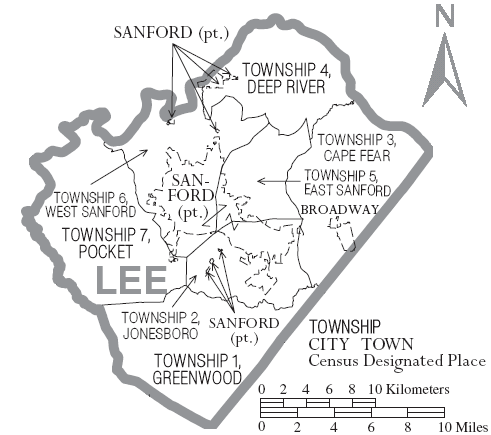

Geography and transportation
The county's terrain is typical of the Piedmont: rolling hills, mixed forests, and waterways that contribute to local recreation and agriculture. Lee County is connected by several regional highways and local roads that provide access to neighboring counties and larger urban centers in central North Carolina. Public and freight rail lines also run through parts of the county, supporting commerce.
History and development
Lee County developed from surrounding older counties during the transition from the 19th to the 20th century and grew as agriculture and small manufacturing expanded across the Piedmont. Over time, towns such as Sanford evolved into local hubs for commerce, services, and civic life. Historic buildings and downtown districts reflect the county's gradual industrial and civic development.
Economy and community
The local economy has roots in agriculture and manufacturing and has diversified to include retail, services, light industry, and small businesses. Community life centers on town centers, schools, faith institutions, and civic organizations. Public services include county government departments, schools, and health and emergency services that serve a mix of town and rural residents.
Points of interest and recreation
Visitors and residents find parks, walking trails, community festivals, and historic sites across the county. Rivers and small lakes nearby offer outdoor recreation, while downtown areas feature shops, restaurants, and cultural events. Family-oriented attractions and annual community gatherings contribute to local identity and tourism.
Government, education, and notable facts
- County government is administered from the county seat and typically includes elected commissioners and appointed administrators.
- Public education is provided through a county school system, supplemented by regional higher-education and vocational resources.
- Lee County serves as a bridge between larger metropolitan areas and rural parts of the state, combining agricultural tradition with ongoing economic change.
Author
AlegsaOnline.com Lee County, North Carolina Leandro Alegsa
URL: https://en.alegsaonline.com/art/141344