
Lawrence v. Texas (2003) — U.S. Supreme Court decision decriminalizing consensual sodomy
2003 Supreme Court ruling that struck down state laws criminalizing consensual adult homosexual conduct, overturning Bowers v. Hardwick and recognizing liberty interests under the Fourteenth Amendment.
Lawrence v. Texas is a landmark United States constitutional case decided by the United States Supreme Court in 2003. The Court held that state laws making certain private, consensual sexual acts between adults crimes were unconstitutional. The ruling removed criminal penalties that had been used to prosecute same-sex sexual activity and transformed legal understanding of privacy, liberty, and sexual autonomy.
Image gallery
3 Images
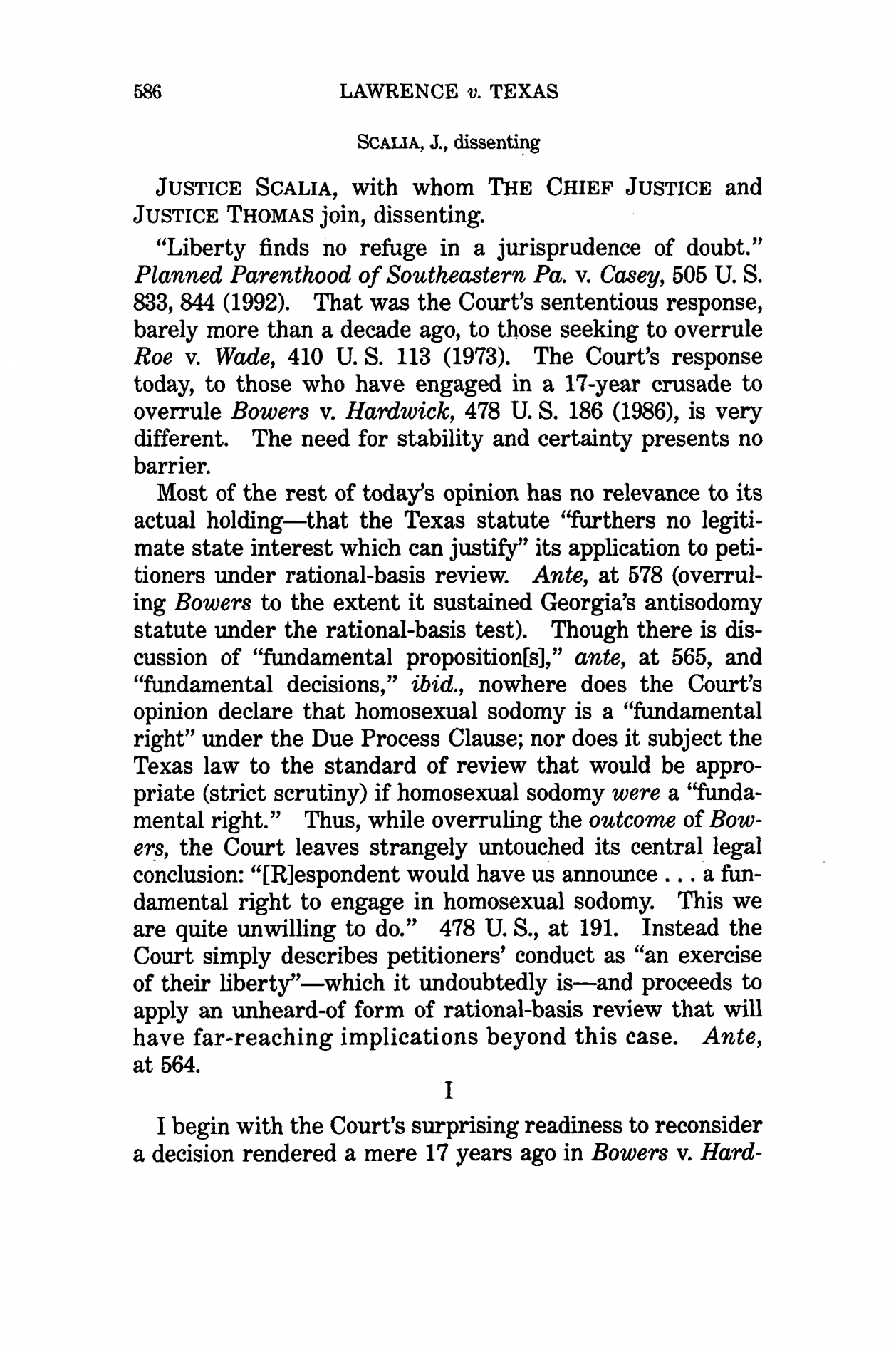

Background and facts
The case arose from an arrest under a Texas statute that criminalized "deviate sexual intercourse" between persons of the same sex. Two adults were charged after police entered a private residence. Those convictions were challenged as violations of liberty protected by the Fourteenth Amendment. The case of Lawrence v. Texas built on decades of legal debate over whether the state may punish private consensual sexual behavior, often referred to in legal and public discussions as laws against sodomy.
Court ruling and reasoning
The Court, in an opinion authored by Justice Anthony Kennedy, found that the Texas law violated the Due Process Clause of the Fourteenth Amendment by infringing the liberty of adults to engage in private, consensual intimacy. The decision explicitly overturned the earlier precedent set by Bowers v. Hardwick, rejecting the idea that historical disapproval alone justified criminal penalties for private sexual conduct. The judgment emphasized dignity, autonomy, and the rights of adults acting in private.
Key holdings and legal points
- The state may not criminalize private, consensual sexual activity between adults on the basis of moral disapproval alone.
- The decision relied on principles of liberty and due process rather than the Equal Protection Clause, although its effects intersected with equality claims.
- By overruling Bowers, the Court reset constitutional analysis concerning sexual privacy and intimacy.
Significance and consequences
Lawrence v. Texas had immediate and long-term consequences for LGBT rights and criminal law. It invalidated similar statutes in other states and removed a tool used to criminalize and stigmatize same-sex relationships. The ruling was later cited in subsequent decisions about marriage equality and other civil rights matters, influencing how courts consider personal autonomy and privacy. Its emphasis on liberty under the Due Process protections of the Fourteenth Amendment became a touchstone in constitutional litigation.
Notable facts and further reading
The decision was issued in the context of longstanding social and legal debates in the United States and specifically struck down a Texas law that had criminalized consensual conduct in that state (Texas). Scholars and advocates regard the ruling as a turning point for decriminalization and privacy rights. For primary documents and commentary see the case text and legal analyses at authoritative sources: statutory and historical background, legal commentary on the case law, and summaries from court resources and legal scholars (Court materials, constitutional context, Due Process discussion).
Questions and answers
Q: What is Lawrence v. Texas?
A: Lawrence v. Texas, 539 US 558 (2003), is a primary piece of case law which ultimately decriminalized sodomy in the United States.
Q: Who ruled upon Lawrence v. Texas?
A: The United States Supreme Court ruled upon Lawrence v. Texas in 2003.
Q: What did the law criminalize?
A: The law criminalized consensual, adult homosexual intercourse.
Q: How was it found unconstitutional?
A: It was found unconstitutional under the Due Process clause of the Fourteenth Amendment.
Q: When did this case take place?
A: This case took place in 2003.
Q: What amendment was used to find it unconstitutional?
A: The Due Process clause of the Fourteenth Amendment was used to find it unconstitutional.
Q: What effect did this have on sodomy laws in the US?
A: This ultimately decriminalized sodomy in the United States
Author
AlegsaOnline.com Lawrence v. Texas (2003) — U.S. Supreme Court decision decriminalizing consensual sodomy Leandro Alegsa
URL: https://en.alegsaonline.com/art/141268