
H. R. Haldeman
White House Chief of Staff to President Richard Nixon (1969–1973), a powerful political aide and businessman who played a central role in the Watergate scandal and its aftermath.
Overview
Harry Robbins "Bob" Haldeman (October 27, 1926 – November 12, 1993) was an American political aide and businessman who rose to national prominence as a senior aide in the Nixon White House. He is best known for serving as White House Chief of Staff and as a tightly organized gatekeeper to President Richard Nixon. Haldeman combined a businesslike management style with fierce loyalty to the president; his name is often associated with the operations and culture of the Nixon administration and with the Watergate scandal.
Image gallery
5 Images


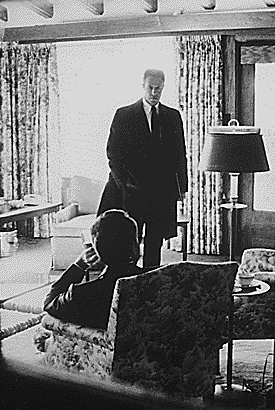
Early life and career
Haldeman worked in business and Republican politics before joining the White House, building a reputation as an efficient organizer and a dependable campaign staffer. His experience in private-sector management shaped how he structured the White House staff: he favored clear chains of command, strict control over access to the president, and a disciplined communications approach. These habits made him both effective and controversial among colleagues and the press.
Role and responsibilities in the Nixon White House
As Chief of Staff, Haldeman controlled much of the daily flow of information and visitors to the Oval Office and coordinated policy and personnel matters across the administration. He helped create systems for scheduling, internal memos and executive decision-making that emphasized confidentiality and centralized control. Haldeman's influence extended to political strategy and the management of presidential priorities, and he was often described as one of Nixon's closest confidants.
Watergate involvement and legal consequences
During the Watergate era, Haldeman became implicated in efforts to limit and shape the criminal investigation into the break-in and related activities. Recorded conversations and documents from the administration played a major role in revealing the extent of those efforts. He resigned from his White House position in 1973; subsequently he was tried, convicted for his part in the cover-up, and spent time in prison. The scandal and its legal fallout significantly altered public perceptions of the White House and of presidential accountability.
Later life and legacy
After serving his sentence and returning to private life, Haldeman maintained a low public profile. Historians and journalists have used his records, taped conversations and contemporaneous accounts to better understand internal White House decision-making during the Nixon years. His career is frequently cited in discussions about the powers and responsibilities of presidential aides, the ethics of executive-branch management, and the institutional reforms that followed Watergate.
Characteristics and notable facts
- Management style: Corporate, hierarchical, strict control of information.
- Role: Central gatekeeper between the president and staff, influential in scheduling and access.
- Controversy: Involvement in efforts to obstruct or misdirect investigations into administration wrongdoing.
- Historical sources: Tapes and documents from the Nixon White House remain important for studying the period.
For further context on Haldeman's career and the administration he served, see accounts of Nixon-era governance and the legal and institutional responses to Watergate. Additional biographical and archival materials are available from specialized collections and biographies of the Nixon presidency. Biographical overview • Nixon administration context
Questions and answers
Q: Who was H. R. Haldeman?
A: H. R. Haldeman was an American political aide and businessman who served as White House Chief of Staff to President Richard Nixon.
Q: What was H. R. Haldeman's nickname?
A: H. R. Haldeman's nickname was "Bob".
Q: When was H. R. Haldeman born and when did he die?
A: H. R. Haldeman was born on October 27, 1926 and died on November 12, 1993.
Q: What was H. R. Haldeman's role in the Watergate scandal?
A: H. R. Haldeman was involved in the Watergate scandal, which was a political scandal in the United States that occurred during the 1970s.
Q: What is the Watergate scandal?
A: The Watergate scandal was a political scandal in the United States that occurred during the 1970s.
Q: What is H. R. Haldeman's full name?
A: H. R. Haldeman's full name is Harry Robbins Haldeman.
Q: What position did H. R. Haldeman hold in the White House?
A: H. R. Haldeman served as White House Chief of Staff to President Richard Nixon.
Author
AlegsaOnline.com H. R. Haldeman Leandro Alegsa
URL: https://en.alegsaonline.com/art/139293