
H. D. Deve Gowda — Indian politician and 11th Prime Minister of India
H. D. Deve Gowda served as India's 11th Prime Minister (June 1996–April 1997), was Chief Minister of Karnataka (1994–1996), led Janata Dal (Secular) and represented Hassan in the Lok Sabha.
Haradanahalli Doddegowda Deve Gowda is an Indian politician known for rising from regional and agrarian politics to national office. He served as India's 11th Prime Minister from 1 June 1996 to 21 April 1997 and earlier held the office of Chief Minister of Karnataka from 1994 to 1996. In later years he led the Janata Dal (Secular) party and represented the Hassan constituency in the Lok Sabha.
Image gallery
6 Images


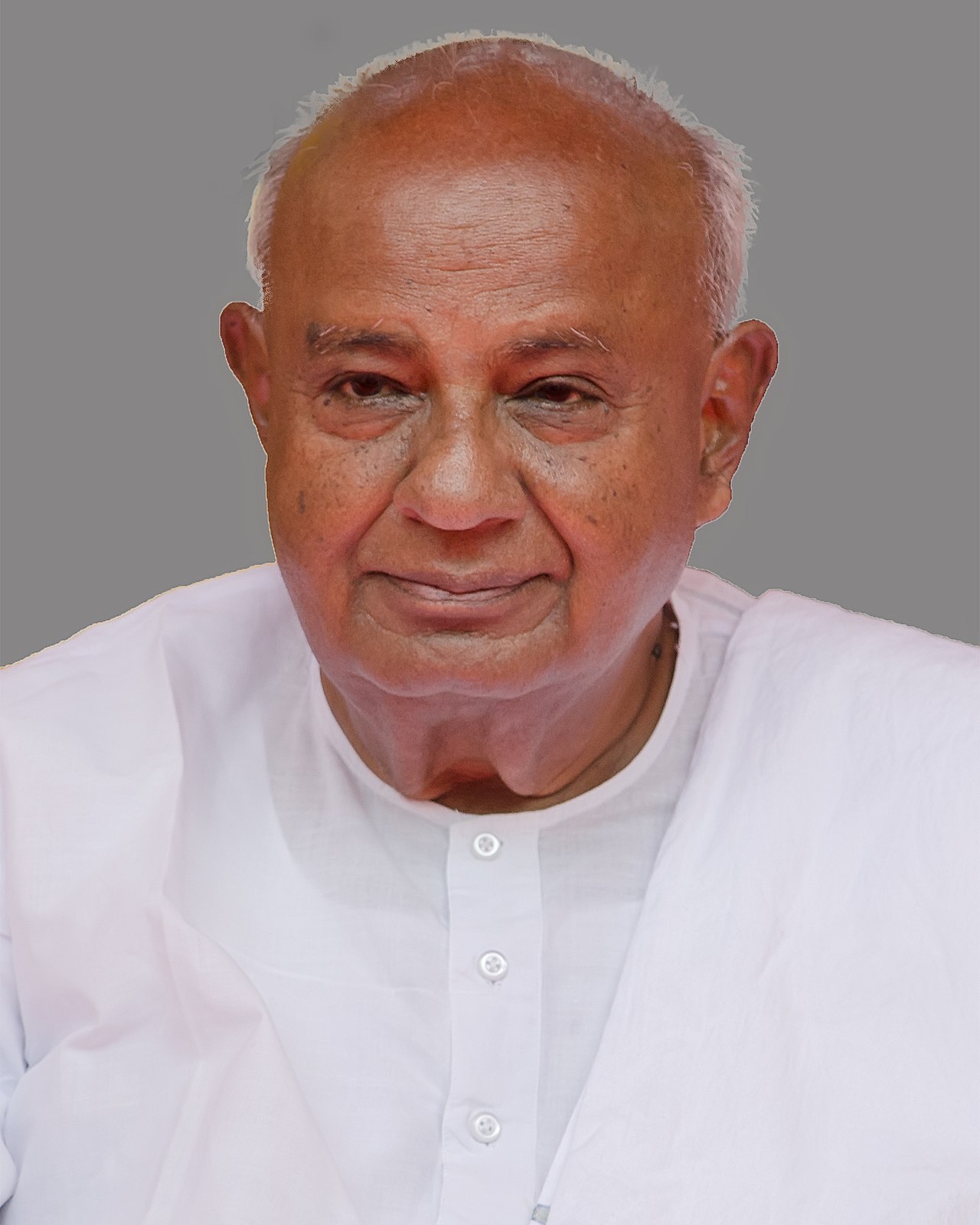


Early life and political rise
Born in 1933 in a rural family, Deve Gowda began his public life in local bodies and cooperative institutions. His political base developed in Karnataka, where he built support among farmers and village communities. Over decades he moved through state-level positions and party structures, becoming a prominent regional leader whose experience in grassroots administration shaped his public image.
Chief Ministership and prime ministership
As Chief Minister of Karnataka (1994–1996) he led a coalition government in a politically competitive state. In 1996 regional parties and a coalition of non-Congress groups selected him as a consensus candidate for national leadership at a time when no single party commanded a clear majority in Parliament. He served as Prime Minister during a period marked by coalition management, short-term arrangements and negotiation among diverse partners.
Parliamentary career and party leadership
Following his term as prime minister, Deve Gowda continued to play an active role in national politics. He was a member of the Lok Sabha for multiple terms and represented the Hassan constituency of Karnataka from 2004 through 2019 in the lower house of Parliament (Hassan). He also served as national president of the Janata Dal (Secular) and remained an influential voice within regional and coalition politics.
Deve Gowda is frequently noted as an example of a regional leader who attained national office during the era of coalition governments in India. His background in agriculture and local governance informed his political priorities and helped shape his reputation as a representative of rural interests.
- Notable facts: He led a short-lived United Front government in 1996–97.
- He maintained an active parliamentary role well after his prime ministership and influenced Karnataka state politics through his party.
- Several of his family members have also been active in state politics, reflecting a political legacy at the regional level.
While his term at the national helm was brief, Deve Gowda's career illustrates the changing dynamics of Indian democracy in the 1990s, when coalition arrangements allowed regional figures to assume central leadership and influence national policymaking from outside the larger national parties.
Author
AlegsaOnline.com H. D. Deve Gowda — Indian politician and 11th Prime Minister of India Leandro Alegsa
URL: https://en.alegsaonline.com/art/139286