
Gerald P. Carr: Skylab Commander, Marine Officer and Engineer
Gerald Paul "Jerry" Carr (1932–2020) was a U.S. Marine Corps officer, mechanical and aeronautical engineer, naval aviator and NASA astronaut who commanded Skylab 4, the final crewed Skylab mission.

Overview
Gerald Paul "Jerry" Carr was an American engineer, military officer and astronaut best known as commander of the third and final crewed visit to the Skylab orbital workshop. A United States Marine Corps colonel and a trained naval aviator, Carr combined military service with advanced engineering education to serve with NASA as an astronaut and mission leader. He died in Albany, New York on August 26, 2020, shortly after his 88th birthday.
Image gallery
8 Images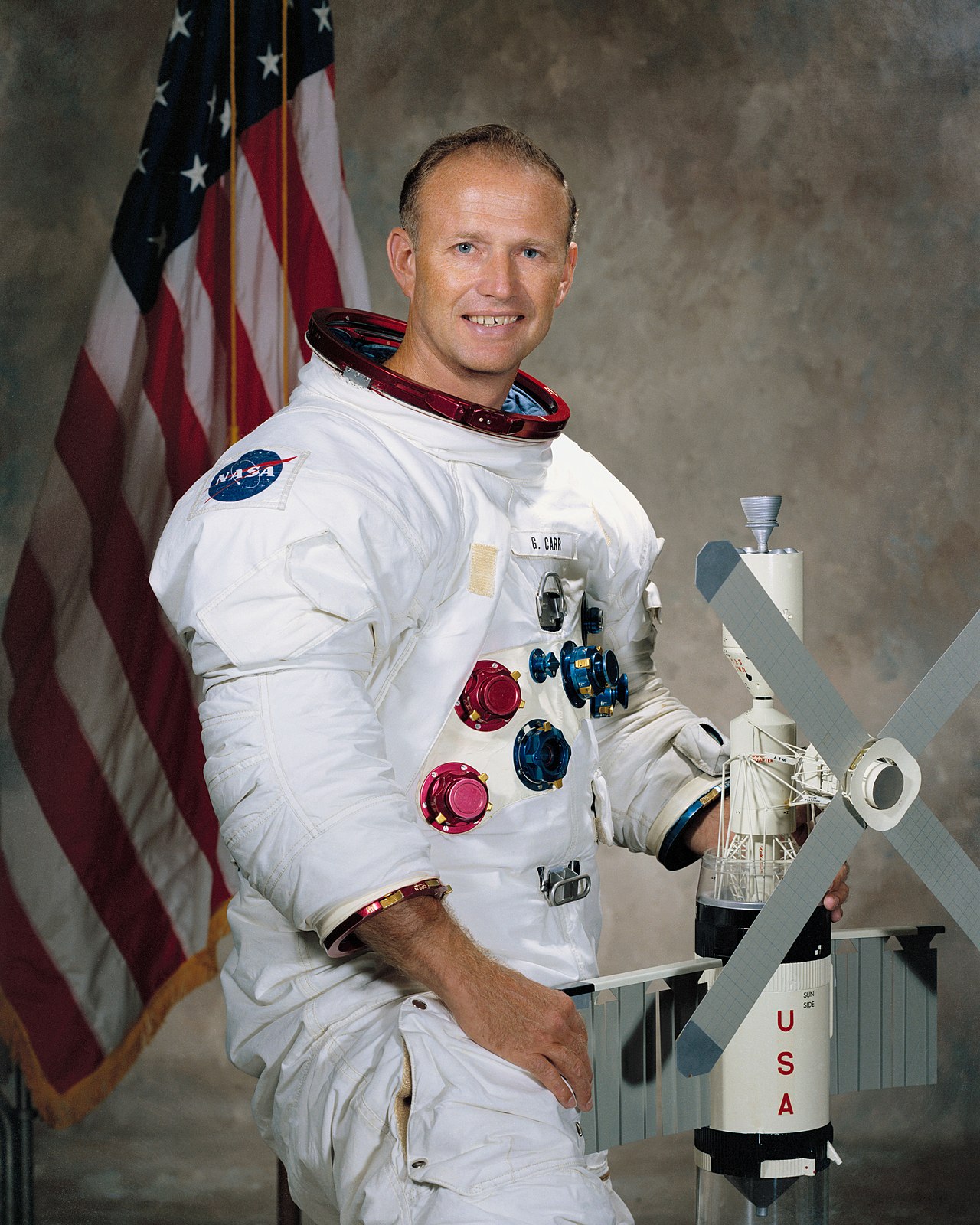


Early life and education
Born in Denver, Colorado, Carr studied engineering at the university level. He pursued technical studies at the University of Southern California and later at Princeton University, preparing for a career that blended mechanical and aeronautical disciplines. His formal training underpinned both his work as a professional engineer and his technical responsibilities at NASA.
Military and astronaut career
As an officer in the USMC, Carr served as a pilot and advanced through operational and leadership roles. He also held credentials as a mechanical and aeronautical engineer (engineering) and was selected to join the astronaut corps, where he served in flight and command positions. During his NASA tenure he was identified with the agency known widely as NASA and officially listed among its astronauts.
Skylab 4 (third crewed Skylab mission)
Carr commanded Skylab 4, the final long-duration crewed expedition to the Skylab Orbital Workshop (Skylab). The mission launched in mid-November 1973 and concluded in early February 1974. Key facts about the mission include:
- Dates: November 16, 1973 – February 8, 1974.
- Crews: commanded by Gerald P. Carr with fellow crewmembers who carried out scientific and technical work aboard the station.
- Accomplishments: extended on-orbit habitation, biomedical studies and solar observations that helped define long-duration human spaceflight operations.
Legacy and notable facts
Carr's leadership of Skylab 4 contributed to early lessons about living and working in space for prolonged periods. His dual background as a military aviator and engineer exemplified the combination of operational skill and technical knowledge common to astronaut commanders of that era. He spent his final years away from flight, passing in Albany, New York, leaving a record as one of the leaders of America's first space-station program.
For further reading about Carr's career and Skylab, consult historic NASA mission summaries and archival materials maintained by governmental and educational collections (USMC records, NASA archives, astronaut biographies). Additional institutional profiles are available through the universities he attended (USC, Princeton).
Author
AlegsaOnline.com Gerald P. Carr: Skylab Commander, Marine Officer and Engineer Leandro Alegsa
URL: https://en.alegsaonline.com/art/138847