
Frederick Gowland Hopkins
English biochemist Frederick G. Hopkins (1861–1947) won the 1929 Nobel Prize for discovering vitamins and advancing nutritional science; he helped establish biochemistry as a modern discipline.
Overview
Frederick Gowland Hopkins (20 June 1861 – 16 May 1947) was an English chemist and pioneer of nutritional biochemistry. He is best known for demonstrating the existence and physiological importance of trace dietary components later called vitamins, work that earned him the Nobel Prize in Physiology or Medicine in 1929, shared with Christiaan Eijkman.
Image gallery
2 Images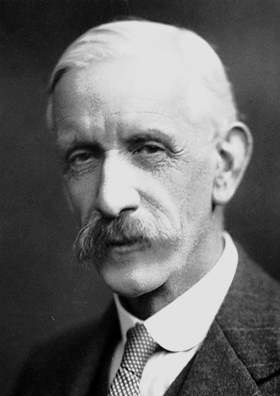

Research and contributions
Hopkins carried out careful experiments on animal growth and metabolism that revealed ordinary diets lacking small, unidentified factors produced deficiency symptoms even when proteins, fats and carbohydrates were adequate. He introduced the term "accessory food factors" to describe these essentials and helped shift scientific attention toward micronutrients. His laboratory techniques and biochemical approach contributed to the emergence of biochemistry as a distinct scientific field.
Career and recognition
Throughout his career Hopkins held academic posts at Cambridge and influenced generations of researchers. He received high honours for his work and public service, reflected in titles and society memberships such as OM FRS. His efforts combined laboratory investigation with practical concerns about diet and public health.
Legacy and impact
The discovery that foods contain essential micronutrients transformed medicine, agriculture and public policy: it underpinned prevention of deficiency diseases, informed dietary recommendations, and led to later identification and isolation of specific vitamins. Hopkins's emphasis on rigorous biochemical methods paved the way for subsequent discoveries in metabolism and nutrition.
Key facts
- Born: 1861; Died: 1947.
- Field: Biochemistry and nutrition research (research).
- Major honour: Nobel Prize 1929 (shared with Eijkman).
Hopkins remains an important figure in the history of science for showing that health depends not only on calories and macronutrients but also on small chemical components that regulate growth and metabolism.
Author
AlegsaOnline.com Frederick Gowland Hopkins Leandro Alegsa
URL: https://en.alegsaonline.com/art/138600