
Franz Vranitzky
Austrian Social Democratic politician who served as Chancellor from 1986 to 1997, led Austria through EU accession and a period of economic and political transition.
Franz Vranitzky (born 4 October 1937) is an Austrian politician and member of the Social Democratic Party (SPÖ). He served as Chancellor of Austria (Chancellor) from 1986 until 1997. Before becoming head of government he entered national politics from a career in banking and finance, and he is known for guiding Austria through economic reform and European integration in the late twentieth century.
Image gallery
4 Images


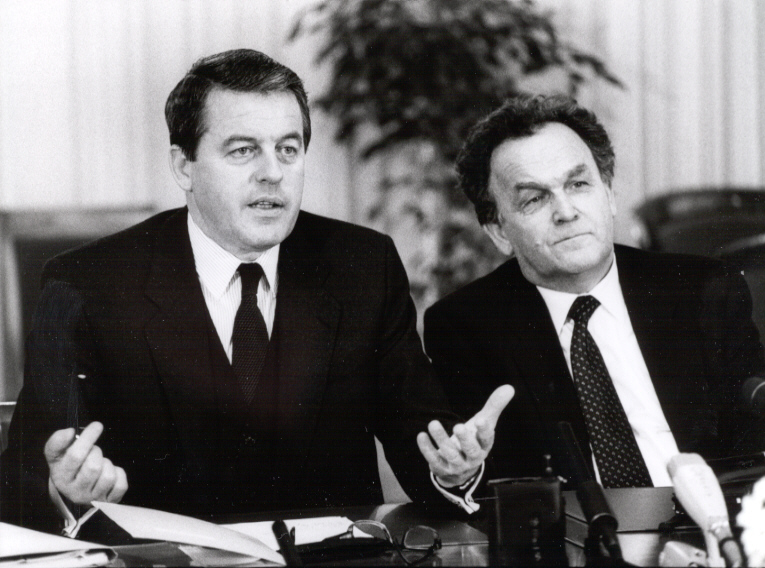
Early life and political rise
Vranitzky was born in Vienna to a family of Central European origins and trained in economics. He built a professional reputation in Austria’s banking sector before moving into public office. In the mid-1980s he joined the federal cabinet as finance minister in a coalition that included the Freedom Party (FPÖ). His technocratic background helped him establish credibility on fiscal and economic matters.
Chancellorship: priorities and developments
As chancellor Vranitzky emphasized economic stability, social partnership and the modernization of public institutions. His governments pursued pragmatic fiscal management while navigating the demands of globalization and changing European markets. A defining element of his tenure was advancing Austria’s relations with the European Community, a process that culminated in membership during the 1990s.
Key actions and context
- Managed coalition politics in a fragmented party landscape and sought consensus between labor, business and political partners.
- Promoted structural reforms intended to strengthen Austria’s competitiveness while maintaining the country’s welfare arrangements.
- Engaged in national debate over Austria’s twentieth-century history and supported policies to address the country’s past.
Later career and roles
After leaving the chancellorship in 1997 he remained active in public life, participating in international forums and advisory bodies. He has been associated with transnational discussion groups and played roles as an elder statesman and commentator on European affairs. His membership in high-level steering groups reflects continued engagement with diplomatic and economic networks.
Legacy and assessment
Vranitzky is widely regarded as a pragmatic, consensus-oriented leader who presided over a transitional era for Austria. Historians and commentators credit him with shepherding Austria into the European fold, maintaining economic stability and confronting sensitive historical issues. Opinions differ on the long-term effects of his economic choices, but his decade-long leadership remains a significant chapter in modern Austrian politics.
For further reading and reference, consult party histories, accounts of Austria’s EU accession and analyses of late twentieth-century Austrian governance. Useful starting points include party archives, official government summaries and collections of speeches and interviews.
Author
AlegsaOnline.com Franz Vranitzky Leandro Alegsa
URL: https://en.alegsaonline.com/art/138585