
Florida House of Representatives
The lower chamber of Florida's legislature: 120 members elected from single-member districts, responsible for lawmaking, budget decisions, oversight, and constituent representation; subject to term limits and redistricting.
Overview
The Florida House of Representatives is the lower house of the bicameral Florida Legislature, the state legislature of the state of Florida. It serves alongside the Florida Senate, which is the upper house. The chamber has 120 members who represent single-member districts drawn to contain roughly the same number of residents (approximately 157,000 people per district). Members are elected by voters across the state and together they introduce, debate, and vote on proposed laws that affect state policy, the budget, and local concerns.
Image gallery
2 Images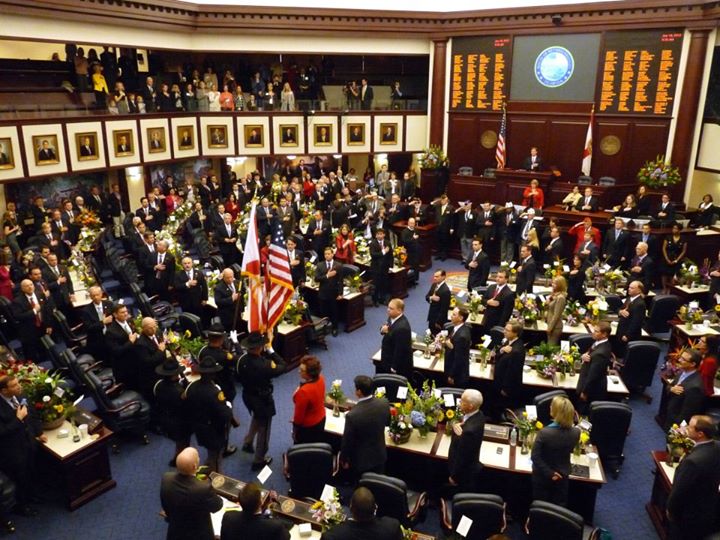

Organization and powers
The House is led by an elected Speaker and governed by majority and minority leadership teams. Organization centers on standing committees that review bills before floor consideration; common committee areas include budget and appropriations, judiciary, education, and transportation. The chamber plays a primary role in crafting the state budget and can initiate appropriation measures. It also exercises oversight of executive agencies, conducts investigations, and participates in the process of state constitutional amendments and, in some cases, impeachment proceedings.
Elections, terms and districts
Representatives serve short terms designed to keep them responsive to voters. Elections occur at regular intervals (in even-numbered years), and officeholders are subject to state-imposed term limits. Legislative districts are reapportioned after each decennial census; the redistricting process, handled by the legislature and subject to judicial review, determines the shape and population balance of the 120 districts and can be politically contested.
Qualifications and duties
The Florida Constitution establishes qualifications for service, including age and residency requirements, and the requirement to be a registered elector. Once elected, representatives divide time between lawmaking in Tallahassee and constituent service in their districts. Duties commonly include sponsoring bills, serving on committees, securing state funding for local projects, and responding to constituent concerns and complaints.
History and notable features
Florida's bicameral legislature traces its roots to territorial government and statehood in the 19th century. Over time the House's size, districting rules, and internal procedures have evolved through constitutional revisions, court rulings, and voter-approved amendments. Term limits and regularized redistricting procedures introduced in the late 20th century changed the chamber's composition and turnover rate. The House's actions shape statewide policy on education, transportation, health care, taxation, and land use.
Quick facts
- Membership: 120 representatives, each from a single-member district.
- Term length: Short, regularly scheduled terms with limits to encourage turnover.
- Primary roles: Lawmaking, budgeting, oversight, and constituent representation.
- Sessions and procedure: The chamber meets in regular sessions as defined by the state constitution; committees refine policy before floor votes.
- Related bodies: Works with the Florida executive branch and the Florida Senate in the legislative process.
For more detailed procedures, committee listings, and current membership, consult official legislative resources or the House's published rules and calendars available through state information channels and legislative portals (lower house, state legislature references).
Author
AlegsaOnline.com Florida House of Representatives Leandro Alegsa
URL: https://en.alegsaonline.com/art/138412