
Fail-Safe (1964 film)
Cold War thriller directed by Sidney Lumet about an accidental nuclear strike and the political, military, and moral crisis that follows.
Overview
Fail-Safe is a 1964 American Cold War thriller directed by Sidney Lumet. Adapted from the 1962 novel by Eugene Burdick and Harvey Wheeler, the film dramatizes a frightening technical and command breakdown in which U.S. bombers are accidentally ordered to attack the Soviet Union. Presented in stark black-and-white and with restrained, serious tone, the movie explores the limits of human control over nuclear weapons and the terrifying consequences of error.
Image gallery
2 Images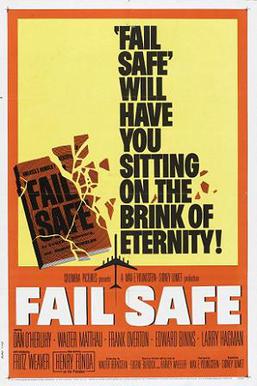

Story and themes
The plot follows the chain of events that begin with a navigation error and a malfunctioning command signal that send a squadron of strategic bombers toward Moscow. As military and civilian leaders race to avert catastrophe, the film probes themes of command responsibility, the Fallibility of technology, brinkmanship, and the moral weight carried by those who hold life-or-death power. Unlike satirical treatments of nuclear folly, Fail-Safe offers a sober, suspenseful account meant to emphasize realism and ethical urgency.
Cast and production
The ensemble cast includes Henry Fonda as the U.S. President, with notable supporting performances by Walter Matthau, Dan O'Herlihy, Fritz Weaver, Larry Hagman, and Dom DeLuise. The picture was produced and distributed by Columbia Pictures. Lumet's direction emphasizes tight procedural detail, measured pacing, and the moral weight of leadership under pressure.
Reception and historical context
Released at the height of Cold War tensions, the film resonated with contemporary fears about nuclear annihilation and the reliability of command-and-control systems. Critics and audiences compared its sober treatment to other contemporary works that grappled with similar anxieties. Its realistic, dramatic approach led to debates about public and political responses to cinematic portrayals of nuclear crisis.
Legacy and adaptations
Fail-Safe has endured as a touchstone of Cold War cinema and as a study of systems failure and moral dilemma. It influenced later dramatizations of accidental escalation and was adapted again for television decades later. The film remains referenced in discussions of nuclear strategy, civil-military relations, and the responsibilities of technological stewardship.
Notable facts
- Based on a contemporary novel that examined modern command systems and human judgment.
- Famous for its restrained tone and emphasis on procedural realism.
- Often contrasted with satirical takes on the same subject because of its serious dramatic intent.
Author
AlegsaOnline.com Fail-Safe (1964 film) Leandro Alegsa
URL: https://en.alegsaonline.com/art/138243