
Eyre Coote (1762–1823), British Army officer and politician
Irish-born British Army general and parliamentarian (1762–1823), styled Sir Eyre Coote until 1816 and appointed GCB in 1815; often confused with an earlier general of the same name.
Eyre Coote (20 May 1762 – 10 December 1823) was an Irish-born British Army officer who also took part in public life as a politician. Contemporary records styled him General Sir Eyre Coote until 1816. He is recorded as a Knight Grand Cross of the Order of the Bath (GCB) for 1815–1816. Biographies of the period show that officers of his rank commonly combined military service with parliamentary activity.
Image gallery
3 Images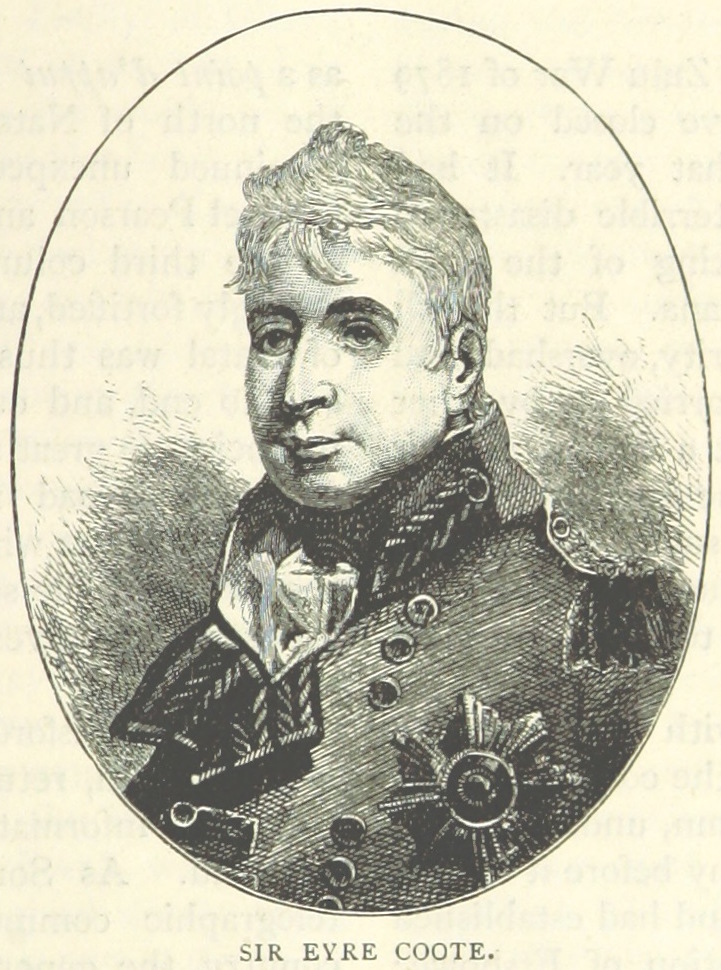


Military career and rank
Coote reached general officer rank in the British Army during the late 18th and early 19th centuries. As with many senior officers of the era, his responsibilities would have included regimental command, administrative and staff duties, and occasional colonial or home service postings. The professional life of a general then often involved purchase or patronage for earlier commissions, gradual promotion by seniority or distinction, and holding ceremonial colonelcies.
Political activity and public life
Alongside his military career, Coote participated in politics. It was common in his generation for senior officers to sit in Parliament or serve in local government, using military reputation to support political influence. Records describe him simply as a soldier and politician; detailed constituency service and voting records are found in period parliamentary registers and biographical registers of MPs.
Honours, style and later life
Coote was listed as a Knight Grand Cross of the Order of the Bath in 1815 and is recorded with that distinction through 1816. The Order of the Bath was one of the principal British chivalric honours of the period, used to recognize senior military and civil service. He died on 10 December 1823. Some contemporary references continue to call him Sir Eyre Coote, reflecting the style used while the honour was current.
Notable distinctions and historical context
- He should not be confused with an earlier Eyre Coote (1726–1783), a better-known commander in India; the repetition of names in military families was common.
- Readers seeking general background on the army of his era can consult summaries of the British Army, and on his birthplace see overviews of Ireland in the late 18th century.
- Further information on the honour he held is available through sources treating the Order of the Bath and its reform in the early 19th century.
For a fuller biographical picture, consult dedicated military biographies and parliamentary compendia which distinguish between individuals of the same family name and provide details of service records, regimental appointments, and the constituencies represented.
Author
AlegsaOnline.com Eyre Coote (1762–1823), British Army officer and politician Leandro Alegsa
URL: https://en.alegsaonline.com/art/138202