
Elena Ceaușescu
Romanian communist politician, wife of Nicolae Ceaușescu, who held senior state and party posts and was executed with her husband during the 1989 Romanian Revolution.
Overview
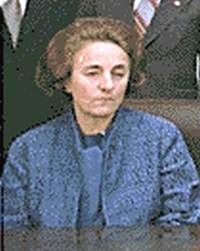
Elena Ceaușescu (born Lenuța Petrescu; 7 January 1916 – 25 December 1989) was a Romanian political figure who rose to prominence as the wife and close collaborator of Nicolae Ceaușescu. She held high state and party offices during the later decades of the communist era and was widely associated with the leadership of the Socialist Republic of Romania.
Image gallery
4 Images


Rise and official roles
Starting from a modest background, Elena moved into the upper ranks of the Romanian Communist Party alongside her husband. Over time she accumulated formal positions and honors, including a place among the country's top civil authorities and appointments that drew attention for their prominence relative to her limited formal education. The regime promoted her as part of a broader leadership team dominated by the Ceaușescu couple.
Institutions and influence
Elena was active in state institutions and cultural bodies, and she received scientific and honorary titles that boosted her public profile. Her ascent affected academic and administrative structures and contributed to perceptions of nepotism and centralized control. International observers and domestic critics noted the unusual concentration of authority within the ruling family.
Controversies
Her tenure was controversial: opponents accused her and the inner circle of abusing power, cultivating a personality cult, and undermining professional standards. Questions were raised about academic claims attributed to her and about how political patronage shaped career advancement in Romania. These controversies formed part of wider grievances against the regime in the 1980s.
End of rule and legacy
The Ceaușescus' rule ended during the Romanian Revolution of December 1989. After a brief trial on charges related to their conduct in office, Elena and her husband were executed by a firing squad on 25 December 1989. The abrupt conclusion of their regime left a complex legacy: some Romanians remember stability in certain respects, while many others emphasize repression, economic hardship, and institutional damage.
Notable facts
- She is often discussed alongside her husband in analyses of authoritarian rule and cults of personality.
- Her rapid promotion to national prominence remains a frequent example in studies of patronage within single-party states.
- For further context on the political environment in which she operated, see treatments of the Romanian Communist Party and its leadership as General Secretary-led systems.
Author
AlegsaOnline.com Elena Ceaușescu Leandro Alegsa
URL: https://en.alegsaonline.com/art/137934