
Edwin G. Krebs: Biochemist and Nobel Laureate (1918–2009)
Overview of Edwin G. Krebs, his discovery of reversible protein phosphorylation with Edmond H. Fischer, its scientific importance, and his legacy in biomedical research.
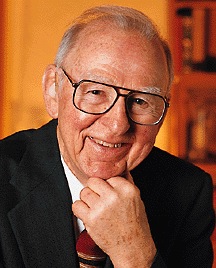
Edwin G. Krebs (June 6, 1918 – December 21, 2009) was an American biochemist whose work transformed understanding of how cells regulate the activity of proteins. He shared the 1992 Nobel Prize in Physiology or Medicine with Edmond H. Fischer for elucidating a general mechanism by which protein function is switched on and off. Their findings established a molecular language for cellular control that underpins modern cell biology.
Image gallery
3 Images

Key discovery
Krebs and Fischer demonstrated that many proteins are regulated by reversible addition and removal of phosphate groups, a process known as reversible phosphorylation. This modification changes a protein's shape, activity, interactions and localization, allowing rapid and reversible control. Two classes of enzymes — protein kinases, which add phosphates, and phosphatases, which remove them — form paired switches that govern processes ranging from metabolism to gene expression.
Approach and collaboration
The productive partnership between Krebs and Edmond H. Fischer combined biochemical experimentation with careful physiological questions. Their collaborative style emphasized isolating specific proteins, tracking changes in activity, and demonstrating cause-and-effect relationships. These methodological principles influenced generations of laboratory research in signaling pathways and enzyme regulation. For more on experimental techniques connected to their work, see research summaries.
Impact and applications
The concept of reversible phosphorylation provided a framework for understanding how cells respond to hormones, nutrients and stress. Dysregulation of phosphorylation is now known to contribute to many diseases, including cancer, diabetes and neurodegeneration, and has guided development of targeted drugs that inhibit or modify kinases and phosphatases. Their discovery also laid groundwork for modern studies of signal transduction and cellular communication across organisms and tissues involved in complex cellular processes.
Beyond the Nobel recognition, Krebs's legacy endures through the techniques, concepts and trained scientists who continued to expand kinase and phosphatase biology. His work remains a central pillar in biochemistry and biomedical research, illustrating how a clear mechanistic insight can reshape multiple fields and lead to practical medical advances. For contextual resources and teaching materials, consult reviews of phosphorylation and collaborative histories such as those linked by academic biographies.
Author
AlegsaOnline.com Edwin G. Krebs: Biochemist and Nobel Laureate (1918–2009) Leandro Alegsa
URL: https://en.alegsaonline.com/art/137900