
Dan Shechtman
Israeli materials scientist who discovered quasicrystals in 1982; awarded the 2011 Nobel Prize in Chemistry for revealing a new class of solid matter and reshaping crystallography.
Dan Shechtman (born January 24, 1941) is an Israeli materials scientist best known for discovering quasicrystals, a previously unknown form of solid matter. He holds a professorship in materials science at the Technion – Israel Institute of Technology and has been a prominent figure in research on nonperiodic order in alloys and ceramics. His discovery changed established ideas in crystallography and earned him the 2011 Nobel Prize in Chemistry.
Image gallery
7 Images


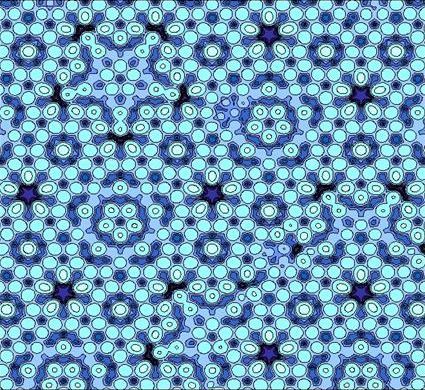
Early career and position
Shechtman trained and worked in materials science and metallurgy before joining the Technion faculty. He is listed as the Philip Tobias Professor of Materials Science at Technion. His work often combines electron microscopy, diffraction techniques and alloy synthesis to probe atomic arrangements in solids.
Discovery of quasicrystals
While on sabbatical at the U.S. National Bureau of Standards in Washington, D.C., Shechtman observed an unusual diffraction pattern on April 8, 1982. The pattern indicated fivefold (icosahedral) symmetry in an alloy — a symmetry thought impossible for conventional crystals because it cannot fill space periodically. This observation revealed the existence of quasiperiodic or aperiodic order in solids and launched a new area of study in condensed matter physics.
Scientific significance and reaction
The initial reports of quasiperiodic crystals met considerable skepticism from parts of the scientific community, illustrating how paradigm-shifting results can be disputed. Over time, independent confirmations and theoretical developments showed that quasicrystals are stable phases with distinct physical properties. Their existence broadened the definition of what constitutes a crystal.
Characteristics and examples
- Quasicrystals exhibit long-range order without translational periodicity.
- They can display symmetries—such as fivefold or icosahedral symmetry—not allowed in periodic crystals.
- They are found in certain metallic alloys, and similar quasiperiodic patterns appear in some polymers and synthetic structures.
Awards, legacy and context
Shechtman received the 2011 Nobel Prize in Chemistry for the discovery of quasicrystals, recognizing both the experimental finding and its conceptual impact on materials science. His work is discussed in institutional and scientific histories, and primary sources about his discovery are associated with organizations such as the U.S. National Bureau of Standards and archives in Washington, D.C. For readers seeking information in Hebrew or primary biographical details, see resources linked through Hebrew-language profiles.
Author
AlegsaOnline.com Dan Shechtman Leandro Alegsa
URL: https://en.alegsaonline.com/art/137253