
Agenda, Kansas
Agenda is a small incorporated city in Republic County, Kansas, United States. It had 68 residents at the 2010 census and is typical of rural Great Plains communities centered on agriculture.
Overview
Agenda is an incorporated city in Republic County, in the north-central part of the state of Kansas, United States. It is one of many small towns on the Great Plains that serve surrounding farms and ranches. As recorded in the 2010 census, the city had 68 residents; population counts at that scale reflect the very small, close-knit nature of the community.
Image gallery
1 Image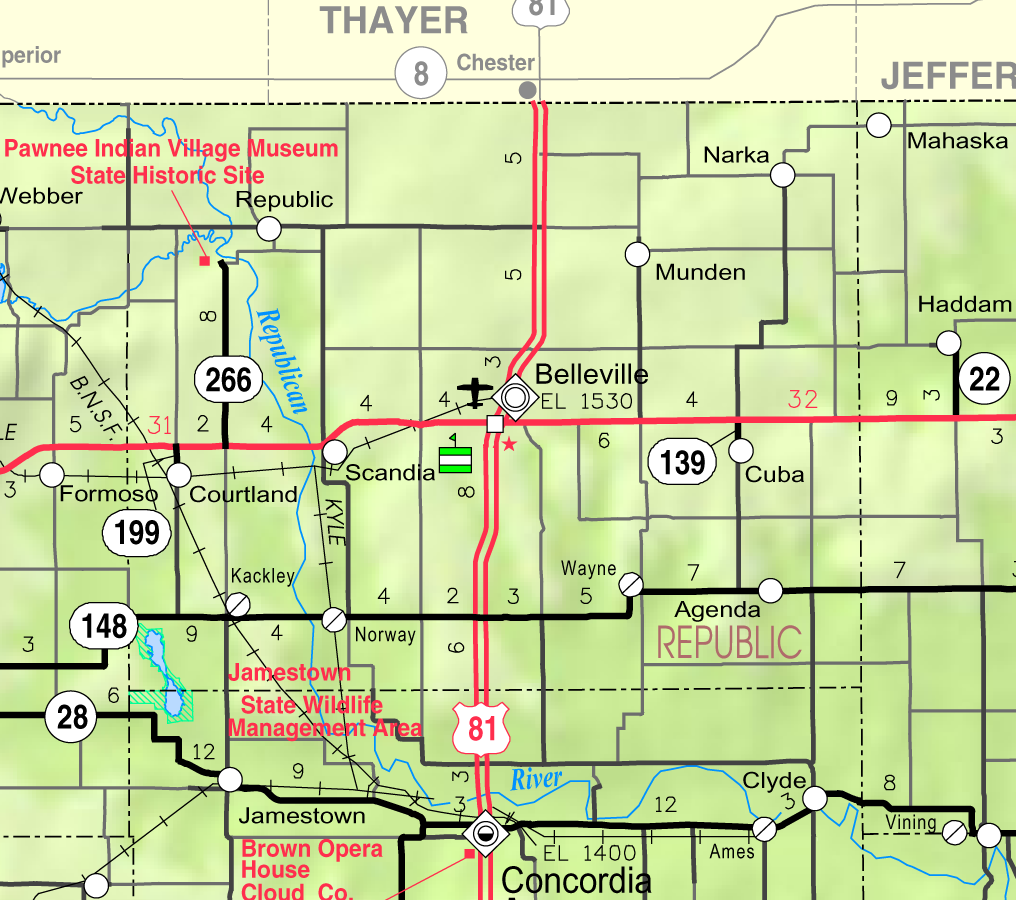
History
The community developed during the wider settlement of Kansas in the late 19th century, when agriculture and access to rail or road links encouraged small towns to form. Like comparable settlements, Agenda grew to provide a local center for trade, postal service, and community life for nearby farms. Over time the town retained its incorporated status while remaining small in population.
Geography and climate
Agenda sits within the Great Plains region, characterized by predominantly flat to gently rolling farmland. The local climate is continental: warm to hot summers, cold winters, and modest precipitation that supports cereal crops, pasture, and other dryland agriculture common to north-central Kansas.
Economy, services and community life
The local economy is tied largely to agriculture and agribusiness: crop farming, livestock, and services that support rural operations. Within the city limits there are typically a few civic buildings, possibly a post office or community hall, and homes that form a compact settlement. Community life in such towns often centers on seasonal events, volunteer organizations, and interdependence among residents.
Governance and education
Agenda is governed as an incorporated municipality under county oversight and participates in county-level services such as law enforcement and road maintenance. Educational needs for children are generally met through a regional or consolidated school district that serves multiple small towns and rural areas in Republic County.
Notable points
- Very small population makes Agenda representative of rural, low-density communities on the Great Plains.
- Its continued incorporation is an example of local identity and administrative continuity in sparsely populated areas.
- Current demographic and economic details are available from official census and county resources for those seeking up-to-date statistics.
Related articles
Author
AlegsaOnline.com Agenda, Kansas Leandro Alegsa
URL: https://en.alegsaonline.com/art/1369
Sources
- www2.census.gov : "2018 U.S. Gazetteer Files"
- factfinder2.census.gov : "American FactFinder"
- census.gov : "Population and Housing Unit Estimates"
- factfinder2.census.gov : "American FactFinder" · web.archive.org
- geonames.usgs.gov : "US Board on Geographic Names"
- factfinder2.census.gov : "2010 City Population and Housing Occupancy Status" · web.archive.org
- books.google.com : A History of Republic County, Kansas
- books.google.com : Kansas: A Cyclopedia of State History, Embracing Events, Institutions, Industries, Counties, Cities, Towns, Prominent Persons, Etc
- epodunk.com : "Profile for Agenda, Kansas"
- kshs.org : kshs.org/geog/geog_postoffices/search/county:RP
- census.gov : "US Gazetteer files: 2010, 2000, and 1990"