
Columbus County, North Carolina
A rural county in southeastern North Carolina: overview, geography, history, economy, towns, and notable features including the county seat Whiteville (2010 population 58,098).
Columbus County is a largely rural county in southeastern North Carolina. As of the 2010 U.S. census the county recorded 58,098 residents. The county seat is Whiteville, a small service center for the surrounding agricultural and forested landscape. Columbus County combines low-density towns, farmland and significant wetland and river corridors typical of the coastal plain.
Image gallery
5 Images


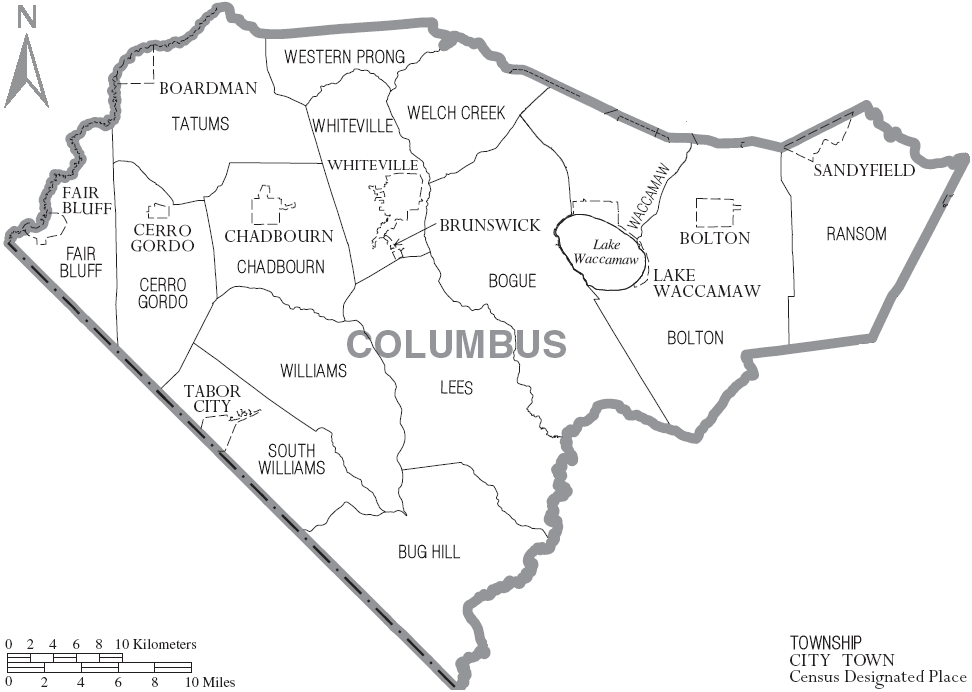

Geography and environment
The county lies inland from the Atlantic coast on the coastal plain. Its terrain is generally flat to gently rolling and includes pine forests, farm fields, swamps and river corridors. These natural areas support timber production, wildlife habitat and outdoor recreation such as hunting, fishing and boating. Waterways and wetlands are important for drainage and ecology in the county.
History and development
Columbus County was created in the early 19th century and named for the explorer Christopher Columbus. Before European settlement the area was inhabited by Native American peoples. Over time the economy developed around agriculture, timber and small manufacturing tied to local resources. Towns grew at crossroads and along rail lines and roads to serve trade and community needs.
Communities, economy and services
In addition to Whiteville, Columbus County contains smaller towns and unincorporated communities that provide schools, healthcare and local government services. Typical economic activities include row-crop farming, forestry, poultry and other agribusiness, together with light manufacturing and retail trade that support rural populations.
Notable facts and visiting
- The county is characterized by a low population density and a landscape shaped by the coastal plain.
- Outdoor recreation—fishing, hunting, birdwatching and boating—are common draws for residents and visitors.
- Local festivals, historical sites and small museums reflect the county's agricultural and community heritage.
For official information on government, services and tourism consult county resources such as the county government website and regional economic development organizations: county information, state resources and local community pages at Whiteville and town portals. Additional regional context is available through state and regional planning organizations and visitor guides: local government and state archives.
Author
AlegsaOnline.com Columbus County, North Carolina Leandro Alegsa
URL: https://en.alegsaonline.com/art/136858