
Bramall Lane: Sheffield's historic football stadium
Bramall Lane is a long-established sports ground in Sheffield, England, home to Sheffield United since 1889 and notable as one of the world’s oldest major football venues.
Overview
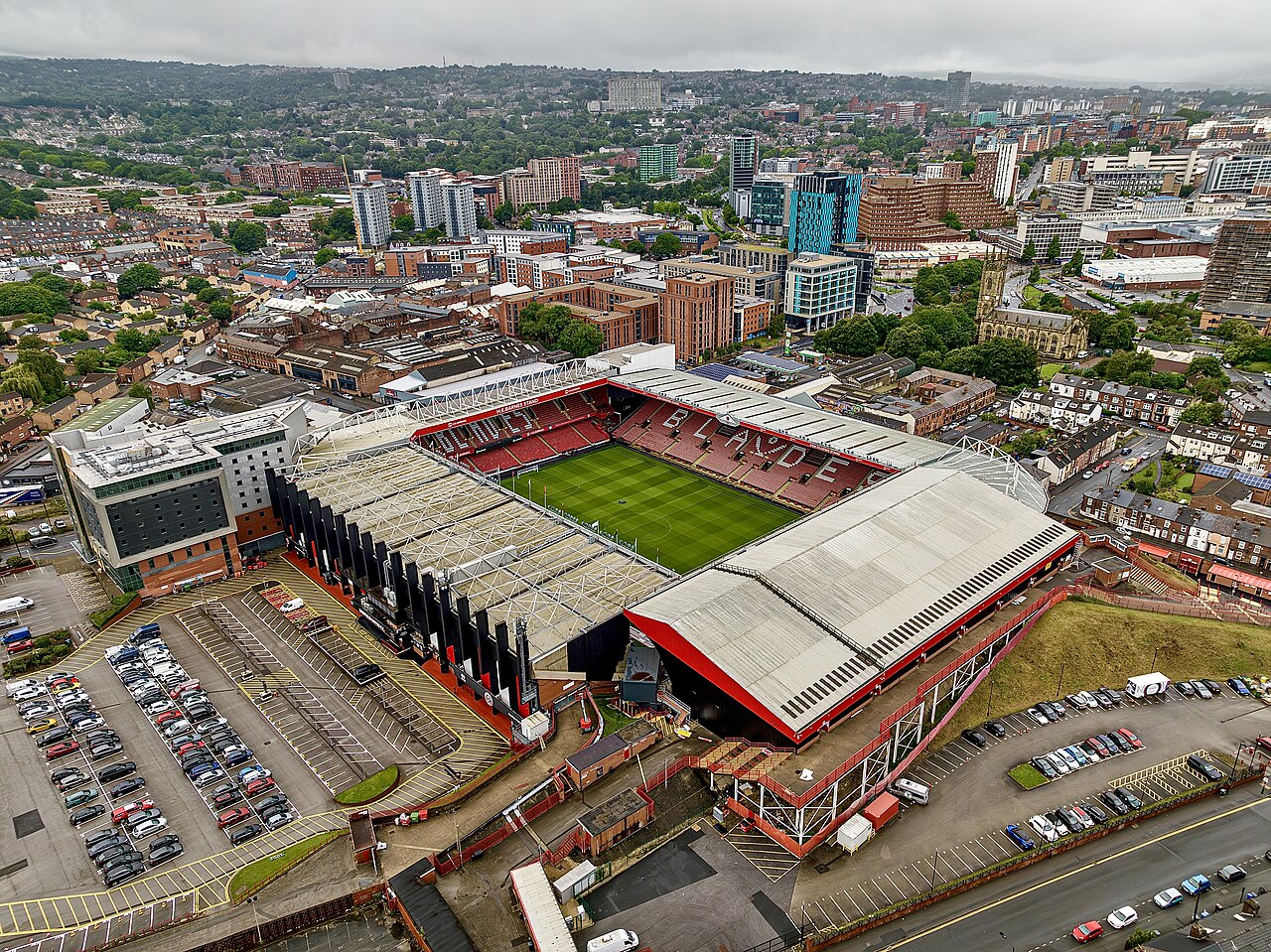
Bramall Lane is a football stadium located in the city of Sheffield, within the county of South Yorkshire, England. It has been the home ground of Sheffield United since the club was founded in 1889 and remains in regular use for professional association football. The ground is often cited among the oldest major stadiums still hosting top-level matches, and it occupies a prominent place in the sporting history of the city.
Image gallery
10 Images


Characteristics and layout
The site has evolved from its early days as a multi-purpose sporting field into a modern football venue while retaining a compact, urban character. Its stands, terraces and hospitality areas have been renovated at different times rather than rebuilt all at once, producing a mixture of architectural styles and seating arrangements. The pitch and spectator facilities meet contemporary standards for professional competition, while the stadium's location close to Sheffield's center makes it easily accessible by road and public transport.
History and milestones
Bramall Lane's history stretches back to the 19th century when organised football and other sports were developing in the north of England. Over the decades the ground has hosted a number of landmark events that reflect the sport's early development in Britain, including local cup finals and inter-city matches that contributed to the standardisation of playing rules. It has also been used by other local clubs for major fixtures, notably by Sheffield Wednesday and by Sheffield F.C. on important occasions.
Uses and significance
Beyond serving as Sheffield United's regular match venue, Bramall Lane has been important as a neutral or shared ground for significant fixtures in the city and region. In the late 19th and early 20th centuries it hosted pioneering events such as some of the earliest floodlit matches and important inter-association contests between Sheffield and London bodies, which helped bring regional codes closer together. Today it continues to stage league games, cup ties and club events that form part of the community and sporting calendar.
Notable facts and distinctions
- It is frequently described as the oldest major stadium still in continuous use for professional association football, a distinction based on its long, documented history.
- The ground played a role in early experiments and demonstrations—such as floodlighting and inter-city matches—that influenced how the modern game was organised and presented to spectators.
- Because the site has been adapted over many decades, visitors can see contrasts between traditional turn-of-the-century elements and later 20th- and 21st-century improvements.
For detailed historical records, architectural plans or event archives related to Bramall Lane, consult local sports histories and official club sources. The venue remains a living part of Sheffield's sporting identity and a continuing home for top-level football in the city.
More about the stadium • Sheffield city • South Yorkshire • England • Sheffield United club • Sheffield F.C.
Related articles
Author
AlegsaOnline.com Bramall Lane: Sheffield's historic football stadium Leandro Alegsa
URL: https://en.alegsaonline.com/art/13681
Sources
- bbc.co.uk : "Match report"