
Bovec, Slovenia
Bovec is a small town in northwestern Slovenia's Julian Alps, an administrative centre and gateway to the Soča Valley known for mountain scenery, outdoor sports, First World War history and nature conservation.
Bovec is a small town in northwestern Slovenia set where the clear, emerald Soča River flows through a steep Alpine valley. The settlement’s multilingual heritage is reflected in older names such as Italian Plezzo and German Flitsch. It serves as the administrative seat of the municipality commonly referred to simply as Bovec.
Image gallery
10 Images


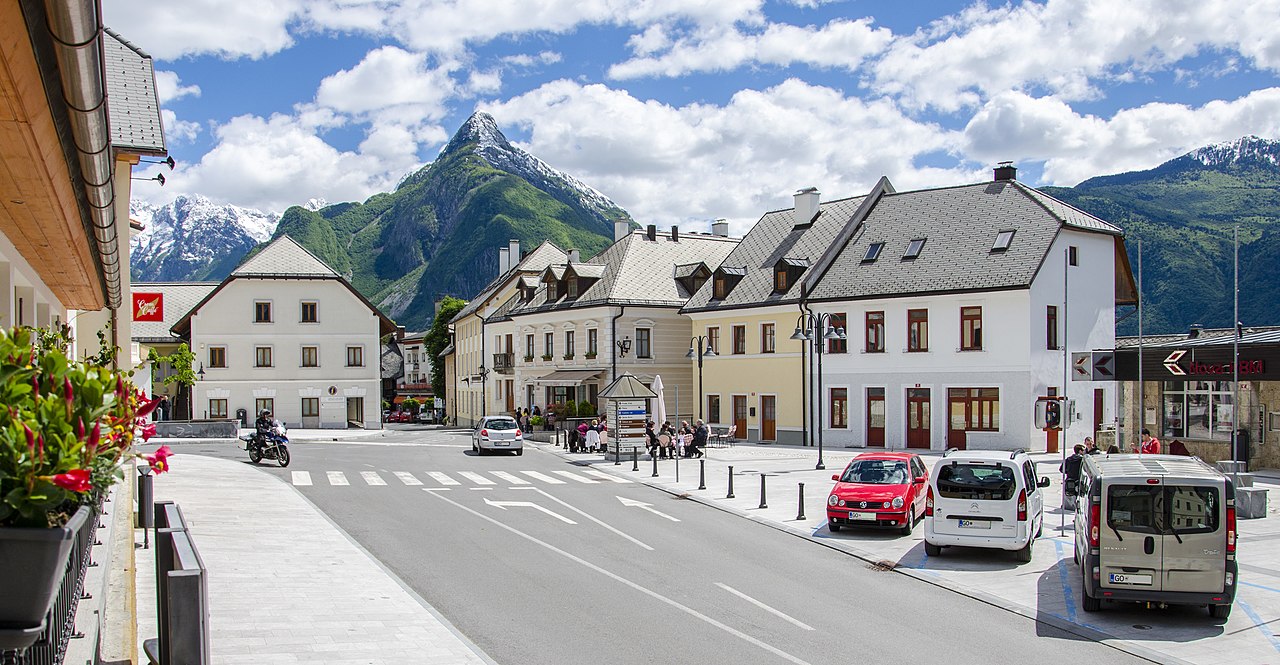

Geography and environment
Bovec lies amid high limestone peaks, glacial cirques and narrow river gorges. The valley supports a mix of montane and subalpine habitats with coniferous forests, alpine meadows and freshwater ecosystems along the Soča. Parts of the surrounding highlands are contiguous with protected areas and conservation corridors, and the landscape is valued for both biodiversity and scenic quality.
History and administration
The valley has long been shaped by its position at a crossroads of Alpine cultures and shifting frontiers. In the early 20th century the area was a major theatre of the Isonzo Front during the First World War; traces of wartime routes, fortifications and memorials remain and are interpreted for visitors. After the upheavals of the 20th century the locality became part of the modern Republic of Slovenia. The present Municipality of Bovec (Slovene: Občina Bovec) was established on 10 March 1994; before that date the area belonged to the Municipality of Tolmin.
Economy, tourism and activities
Tourism and outdoor recreation are central to the local economy. Bovec functions as a base for a wide range of pursuits that make use of the river and mountain terrain:
- whitewater rafting and kayaking on the Soča; canyoning and guided river activities;
- hiking, alpine climbing and via ferrata routes in the surrounding peaks;
- mountain biking, paragliding and nature photography;
- seasonal winter sports in nearby areas and low‑altitude winter walking trails.
Local operators provide equipment, guiding and accommodation, and the town is a starting point for excursions into nearby plateaus and valleys. Visitors seeking administrative or practical information are advised to consult municipal and visitor resources (municipal information).
Culture, conservation and practical links
Bovec’s cultural life reflects Alpine traditions and the historical layers of the region, with small museums, memorials and occasional local festivals. Conservation and sustainable tourism are priorities for many local stakeholders, given the sensitivity of river habitats and high‑altitude ecosystems. The town is accessible by regional roads and seasonal public transport links, and it functions as a gateway between Slovenia and neighbouring Italy and Austria for travellers exploring the Julian Alps.
Questions and answers
Q: What is the name of the town in Italian?
A: The town is called Plezzo in Italian.
Q: What is the name of the town in German?
A: The town is called Flitsch in German.
Q: When was the municipality of Bovec established?
A: The municipality of Bovec was established on 10 March 1994.
Q: Was Bovec part of any other municipality before it became its own?
A: Before that date, Bovec was part of the municipality of Tolmin.
Q: Where is Bovec located?
A: Bovec is a small Slovenian town located in the Julian Alps.
Q: What type of administrative centre does Bovec serve as?
A: Bovec serves as an administrative centre for the Municipality of Bovec (Slovene Občina Bovec).
Related articles
Author
AlegsaOnline.com Bovec, Slovenia Leandro Alegsa
URL: https://en.alegsaonline.com/art/13435
Sources
- statoids.com : "Communes of Slovenia"
- stat.si : "Nadmorska višina naselij, kjer so sedeži občin"
- stat.si : "Population by sex, municipalities and settlements, Slovenia, 1 January 2017"
- stat.si : "Vzpostavitev lokalne samouprave v Republiki Sloveniji v številkah"
- geopedia.si : "Municipality of Bovec - map"
- bovec.si : "Climate in the Bovec area"