
Alfred P. Murrah Federal Building
Former U.S. federal office building in Oklahoma City, opened 1977, damaged in the 1995 Oklahoma City bombing and later replaced by the Oklahoma City National Memorial.
Overview
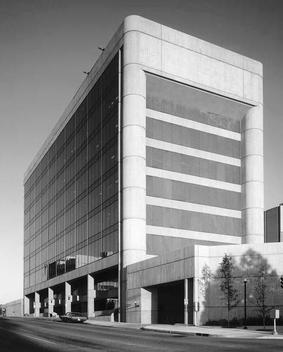
The Alfred P. Murrah Federal Building stood at 200 N.W. 5th Street in downtown Oklahoma City. Opened in 1977, it housed multiple federal offices and regional agencies and was named for Judge Alfred P. Murrah. The site became nationally known after a violent attack in 1995 that destroyed much of the structure and resulted in significant loss of life.
Image gallery
4 Images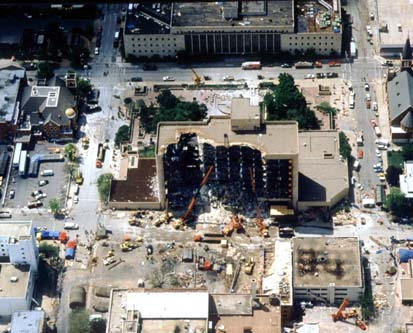

Design and use
The building was a multi-story federal complex intended to consolidate regional services and offices. Its layout followed typical federal design of the era: office wings, public counters and secured internal areas. As a working federal facility it served a range of administrative functions for the federal government and local citizens who visited for services and hearings. For general context see United States federal government.
The 1995 bombing
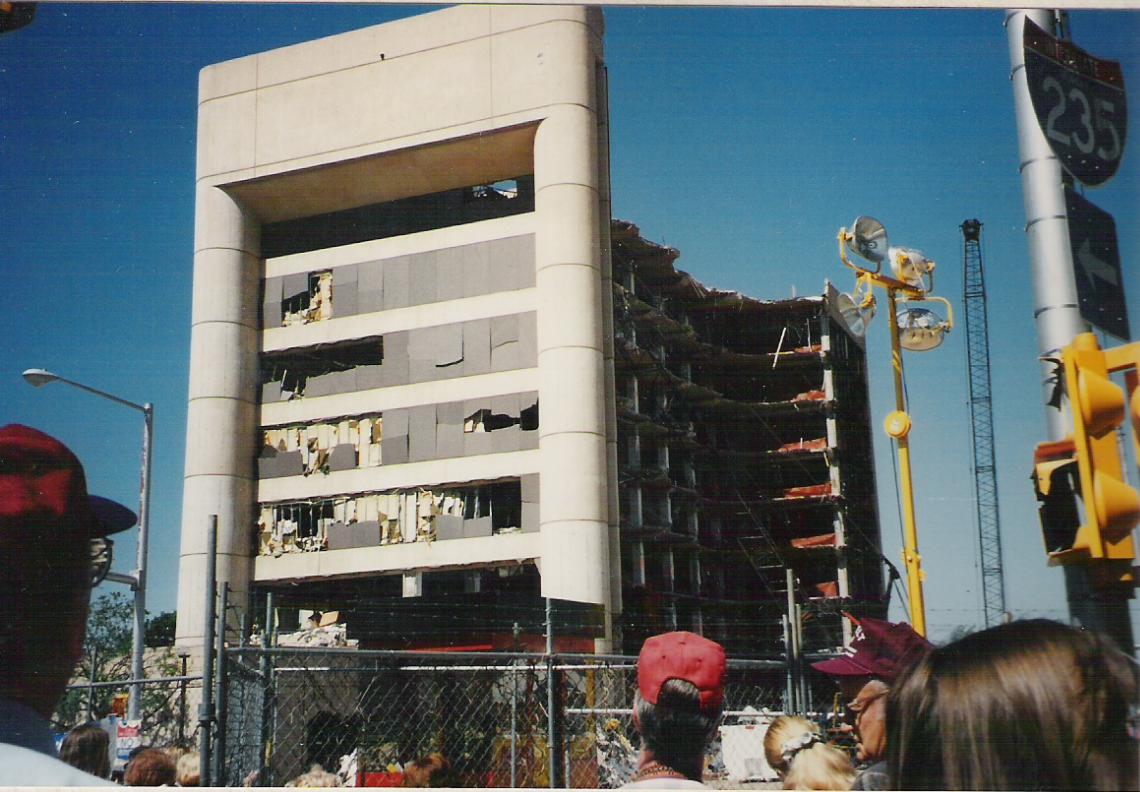
On April 19, 1995 the Murrah Building was the target of a truck-bomb attack that devastated the façade and interior and caused extensive casualties. The bombing, carried out by domestic terrorists, killed many people and injured hundreds, and it was prosecuted as one of the deadliest acts of domestic terrorism in U.S. history. Contemporary coverage and historical accounts of the event can be found under the Oklahoma City bombing.
Aftermath, investigation and demolition
Investigations quickly identified the perpetrators, who were arrested and later convicted. The damaged structure was assessed by engineers and emergency personnel; after recovery and rescue efforts the remaining shell was removed by controlled demolition later that year. The response involved multiple levels of government, first responders, volunteers and community organizations.
Memorial and legacy
The footprint of the Murrah Building is now the site of the Oklahoma City National Memorial and Museum, established to honor the victims, survivors and rescuers. The outdoor memorial features symbolic elements such as a field of empty chairs, a reflecting pool and the preserved "Survivor Tree"—all intended to support remembrance and education. The museum interprets the bombing, its human impact and broader issues of domestic terrorism and community resilience.
Notable distinctions
- Location: prominent federal complex in downtown Oklahoma City.
- Historical significance: site of a major domestic terrorist attack and a turning point in public emergency preparedness and counterterrorism policy.
- Legacy: transformed from a federal office building into a widely visited memorial and educational center.
Author
AlegsaOnline.com Alfred P. Murrah Federal Building Leandro Alegsa
URL: https://en.alegsaonline.com/art/134297