
Agatha, wife of Edward the Exile
Agatha was the wife of Edward the Exile and mother of Margaret of Wessex and Edgar Ætheling. Her origins are uncertain; she linked the exiled English royal line with Central and Eastern European courts.
Agatha (born before c.1030; died sometime after 1070) was the wife of Edward the Exile and the mother of several children who played notable roles in 11th-century Britain. She is chiefly remembered through her offspring — most famously Saint Margaret of Scotland and the claimant Edgar Ætheling — and by the long-standing scholarly debate over her family background.
Image gallery
1 Image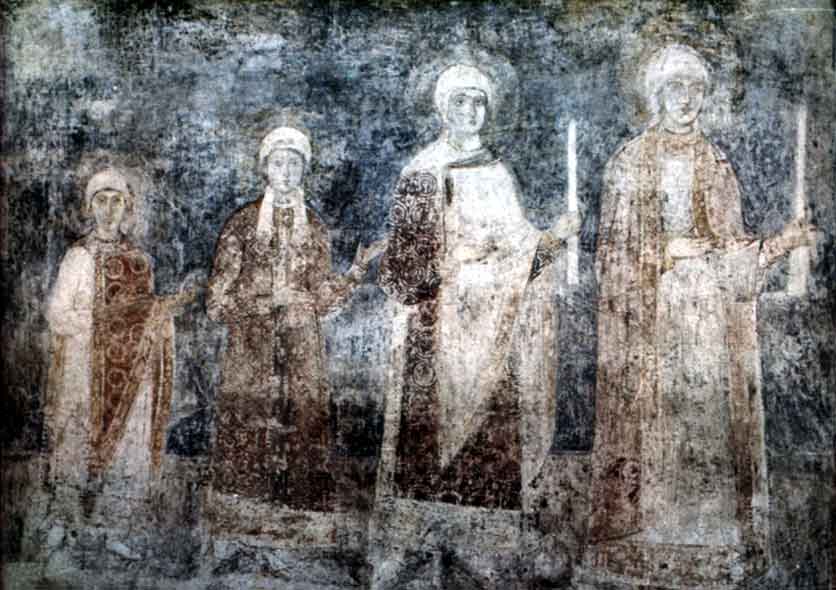
Origins and identity
Medieval chronicles describe Agatha as kin to several continental dynasties, but they are vague and sometimes contradictory. Later historians have proposed ties to the royal houses of Hungary, Kievan Rus', Germany or combinations of these. Because primary sources are limited and inconsistent, her precise parentage remains uncertain. Her name, Agatha, and the pattern of political alliances suggest a continental, possibly Central or Eastern European, origin rather than Anglo-Saxon.
Marriage and children
Agatha married Edward the Exile while he lived at foreign courts after the Norman and Danish upheavals in England. Their known children include:
- Margaret (later Queen of Scotland, canonized as Saint Margaret)
- Edgar Ætheling (a royal claimant in England after 1066)
- Christina (often identified in monastic records as a daughter who entered religious life)
The family returned to England in 1057 at the invitation of King Edward the Confessor; Edward the Exile died soon after their arrival. In the turbulent years that followed, Agatha's children became prominent actors in Anglo-Scottish and Anglo-Norman affairs.
Historical significance and legacy
Agatha's significance derives less from surviving records about her person and more from the dynastic consequences of her marriage. Through Margaret, she is an ancestor of later Scottish and English monarchs and of many European royal lines. Edgar's brief recognition as king by some English nobles after Hastings marked the end of the native royal line's hopes of immediate restoration.
Debates and notable facts
Scholars continue to debate Agatha's parentage using onomastic clues, medieval testimony and the geopolitical context of royal marriages. Because evidence is limited, careful scholarship treats her origins as unresolved. Her example illustrates how matrimonial ties linked rulers across the medieval Christian world and how gaps in the written record can leave basic biographical questions open to interpretation.
Related articles
Author
AlegsaOnline.com Agatha, wife of Edward the Exile Leandro Alegsa
URL: https://en.alegsaonline.com/art/1340