
Timeline of the Far Future: cosmic, stellar and planetary milestones
A structured account of likely events from the next billion years to the deep future, covering stellar and planetary evolution, galactic dynamics, entropy, black holes and possible ultimate fates of the universe.
The long-term future of Earth, the Solar System and the cosmos is shaped by well‑understood physical processes and a number of open questions. Predictions combine observations of today with models from a range of disciplines: scientific fields such as astrophysics, particle physics, evolutionary biology and geology. These fields explain how stars and planets form and evolve, how atoms behave over long periods, and how processes like plate tectonics govern planetary surfaces. Together they let scientists sketch a timeline that ranges from the next few billion years to epochs billions of trillions of times longer.
Image gallery
4 Images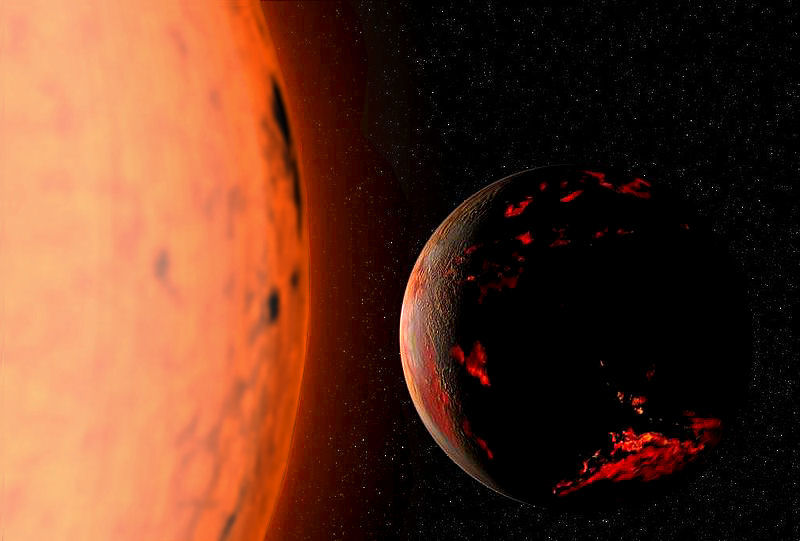



Major epochs and milestones
- Near term (0–10 billion years): The Sun continues on the main sequence for several billion years more. In roughly a few billion years the Sun will exhaust most core hydrogen, expand as a red giant and alter conditions on Earth, eventually leaving a white dwarf remnant.
- Galactic rearrangements (next ~10^9 years): The Milky Way and the Andromeda galaxy are expected to merge within a few billion years, reshaping local stellar orbits while the gravitationally bound Local Group remains intact for a long time.
- Stelliferous era end (up to ~10^14 years): Star formation gradually declines as gas is consumed or expelled. Low‑mass stars live far longer than massive ones, so faint red dwarfs dominate late stellar populations.
- Degenerate era (~10^14 to ~10^40 years): Most normal stars have died; white dwarfs, neutron stars and black holes persist. Energy sources suitable for life become scarce and the universe approaches an overall increase of disorder.
- Black hole era and beyond (~10^40 to ~10^100+ years): Black holes slowly lose mass via Hawking radiation and eventually evaporate; afterward the universe will be populated mainly by low‑energy particles and photons.
Key processes that shape the timeline
Several physical principles determine these outcomes. The second law of thermodynamics implies a steady rise of entropy, reducing the amount of useful energy available to do work. Nuclear fusion in stars converts light elements into heavier ones until fuel is exhausted. Gravitational dynamics can eject bodies from systems or cause mergers. At the particle level, unknowns such as whether protons decay would change details of extremely long‑term matter stability; if protons are stable, ordinary matter can persist far longer.
Consequences for planets, life and structure
On planetary timescales, Earth will become less hospitable long before universal end stages: increasing solar luminosity and geological cooling will alter climates and drive the end of plate tectonics and long‑term carbon cycling. Biological evolution operates on much shorter timescales, so ecosystems and any technological societies face extinction risks well before cosmic endpoints. Human activity or future technology could modify local outcomes, for example by relocating habitats or harnessing stellar resources, but those remain speculative.
Uncertainties and alternative end‑states
Cosmology leaves room for distinct final scenarios. The commonly discussed ‘‘heat death’’ or big freeze envisions an ever more dilute, low‑energy universe as expansion continues. A competing idea, the big rip, would occur if cosmic expansion accelerates without bound and tears apart bound structures. A contracting universe ending in a big crunch is considered unlikely given current observations of accelerated expansion. Which of these occurs depends on the nature of dark energy and other poorly constrained aspects of fundamental physics and cosmology, including details explored by studies of the expanding universe.
Notable facts and perspective
The full timeline of the far future spans mind‑boggling orders of magnitude in time and is often divided into eras (stelliferous, degenerate, black hole and dark). While many numerical estimates use powers of ten (for example 10^14, 10^40 and 10^100 years), these are conceptual guides rather than precise predictions. Research continues, combining observational astronomy, particle experiments and theoretical work to refine the picture. For further technical introductions, see materials on astrophysics, particle physics and thermodynamics linked above.
This timeline reflects our best synthesis of known physics and well‑tested models, but it remains open to revision as new data and theories emerge.
Science overview • Planetary processes • Stellar evolution • Atomic stability • Biological outlook • Geology and tectonics • Thermodynamics • Cosmic expansion • Entropy • Useful energy • Hydrogen fuel
Author
AlegsaOnline.com Timeline of the Far Future: cosmic, stellar and planetary milestones Leandro Alegsa
URL: https://en.alegsaonline.com/art/133923