
2006 Canadian federal election
A federal election held on January 23, 2006, that produced a Conservative minority government under Stephen Harper and reshaped Canada's parliamentary landscape after controversy over government conduct.
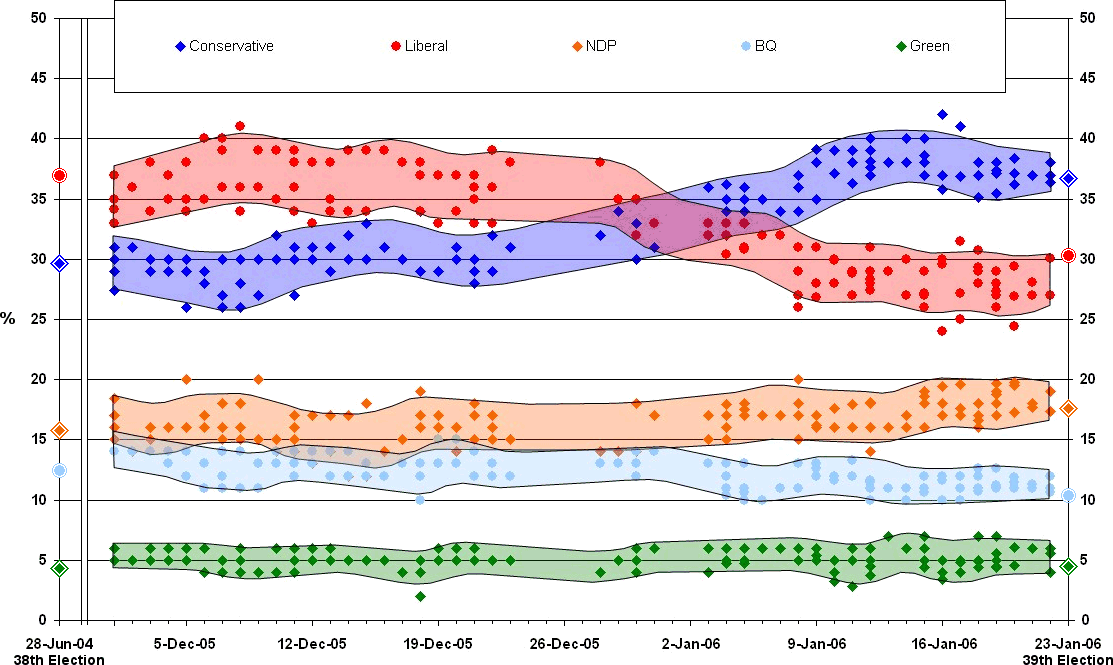
The 2006 Canadian federal election, held on January 23, 2006, selected members of the House of Commons for the 39th Parliament of Canada. The campaign followed a prolonged period of minority government and public controversy over federal conduct. The result brought a shift in governing power: the Conservative Party emerged as the largest party and its leader became prime minister, while the Bloc Québécois drew enough support in Quebec to become the Official Opposition.
Image gallery
9 Images





Background
The election was precipitated by a rare parliamentary crisis. In late 2005 the sitting government was found in contempt of Parliament — an unprecedented finding in Canadian and Commonwealth practice — which undermined public confidence and made a general election likely. Longstanding issues such as the sponsorship controversy, questions about government accountability, and debates over Canada's role abroad all framed voters' choices.
Major parties and campaign themes
Key national parties included the Conservatives, Liberals, Bloc Québécois, and the New Democratic Party. Campaign debates focused on government ethics and transparency, fiscal management, social programs, and international commitments. Regional concerns and party leadership also influenced voting patterns across provinces and territories.
Results and immediate effects
The Conservative victory produced a minority government requiring cooperation with other parties to pass legislation. The Bloc Québécois, running only in Quebec, became the Official Opposition — the first time a party limited to Quebec constituents held that position. The Liberal Party, which had governed for over a decade, moved into opposition and underwent leadership and organizational changes.
Significance
The 2006 election is remembered for ending a lengthy period of Liberal federal rule and for demonstrating how parliamentary accountability and scandal can alter political fortunes. It also highlighted the dynamics of minority government in Canada and the regional nature of the country's party system.
- Parliamentary chamber: House of Commons
- Parliament formed: 39th Parliament
Author
AlegsaOnline.com 2006 Canadian federal election Leandro Alegsa
URL: https://en.alegsaonline.com/art/133611