
Yoichiro Nambu — Theoretical Physicist
Japanese-born American theoretical physicist who introduced spontaneous symmetry breaking into particle physics; his ideas shaped particle theory, string theory origins, and models of mass generation.
Overview
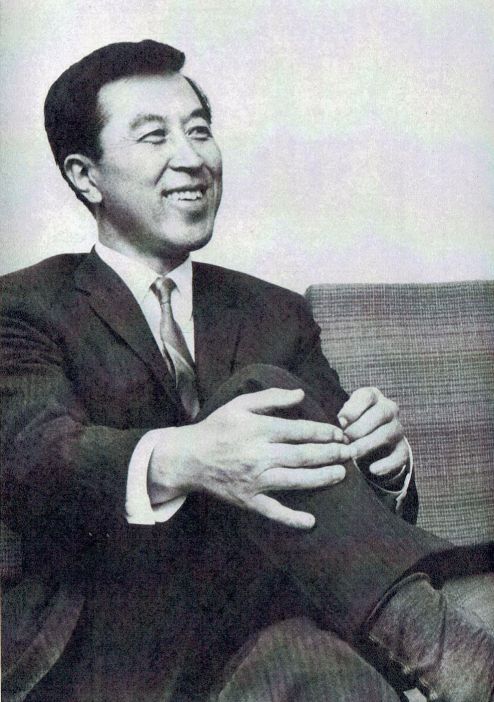
Yoichiro Nambu (南部 陽一郎, 18 January 1921 – 5 July 2015) was a Japanese-born American theoretical physicist whose work reshaped modern particle physics. He is widely credited with importing the concept of spontaneous symmetry breaking from condensed-matter physics into the language of elementary particles and with formulating models that explain how particles acquire mass.
Image gallery
4 Images


Key contributions
Nambu's ideas appear across several central topics in 20th-century physics. Notable concepts and models associated with him include:
- Spontaneous symmetry breaking in particle physics and the prediction of massless collective excitations now called Nambu–Goldstone bosons.
- The Nambu–Jona-Lasinio (NJL) model, which uses analogies with superconductivity to illustrate dynamical mass generation.
- Early recognition of the string-like interpretation of certain scattering amplitudes, an insight important to the birth of string theory.
- Contributions that influenced the development of quantum chromodynamics and ideas about color charge.
Career and honors
Nambu spent much of his academic career at institutions in the United States, including a long tenure at the University of Chicago. His theoretical innovations earned him many awards; most prominently, he was awarded half of the 2008 Nobel Prize in Physics for discovering the mechanism of spontaneous broken symmetry in subatomic physics. The other half of that prize was shared by colleagues who worked on related aspects of symmetry breaking in the quark sector.
Importance and legacy
Nambu's approach—bridging condensed-matter analogies and particle theory—changed how physicists think about mass, phase transitions, and collective phenomena in quantum fields. Terms and models bearing his name remain standard in textbooks and research. His work is discussed in many institutional biographies and retrospectives (University profile), collected publications (selected works), and broader historical treatments of particle physics (biographical resources).
For readers seeking introductory explanations, study guides often begin with the NJL model and the illustration of symmetry breaking via analogies to superconductivity, then connect those concepts to the later development of the electroweak theory and to elements of modern gauge theories.
Author
AlegsaOnline.com Yoichiro Nambu — Theoretical Physicist Leandro Alegsa
URL: https://en.alegsaonline.com/art/133184