
Tristan Tzara
Tristan Tzara (1896–1963), born Samuel Rosenstock, was a Romanian-born poet and artist who helped found the Dada movement; known for provocative manifestos, sound poetry, and experimental performance.
Tristan Tzara (born Samuel or Samy Rosenstock, 1896–1963) was a poet, essayist and performer best known for his central role in creating and promoting the Dada movement. His writing and theatrical work helped define an anti‑establishment, anti‑war aesthetic that questioned traditional art, meaning and public taste. Contemporary references to his birth and early records can be found via archival sources.
Early life and influences. Tzara was born in what is now Romania and began his literary activity there before moving to Western Europe; his Romanian origins are a frequent subject of biographical accounts (Romanian background). Early contact with Symbolism and other fin‑de‑siècle currents shaped his aesthetic, even as he pushed beyond them toward more radical experiments in form and performance (Symbolism and precursors).
Founding Dada. During World War I, Tzara helped establish the Dada circle in Zurich and became one of its most visible spokespeople. He published manifestos, organized performances and edited journals that spread Dada ideas to Paris and beyond; his later Paris activities tied him to the French avant‑garde and the city that hosted much of his career (Dada movement, France).
Tzara's public persona emphasized provocation and unpredictability. He wrote theatrical pieces and poems that used chance procedures (for example, methods for creating poems by cutting and rearranging text), sound experiments and abrupt juxtapositions. Critics and collaborators often described his stance as confronting or even nihilistic, a tendency that informed Dada's rejection of inherited values (nihilistic aspects).
Image gallery
10 Images




Notable works and practices
- Manifestos and pamphlets that articulated Dada principles
- Plays and performances such as experimental stage pieces
- Collage, sound poetry and chance‑based composition techniques
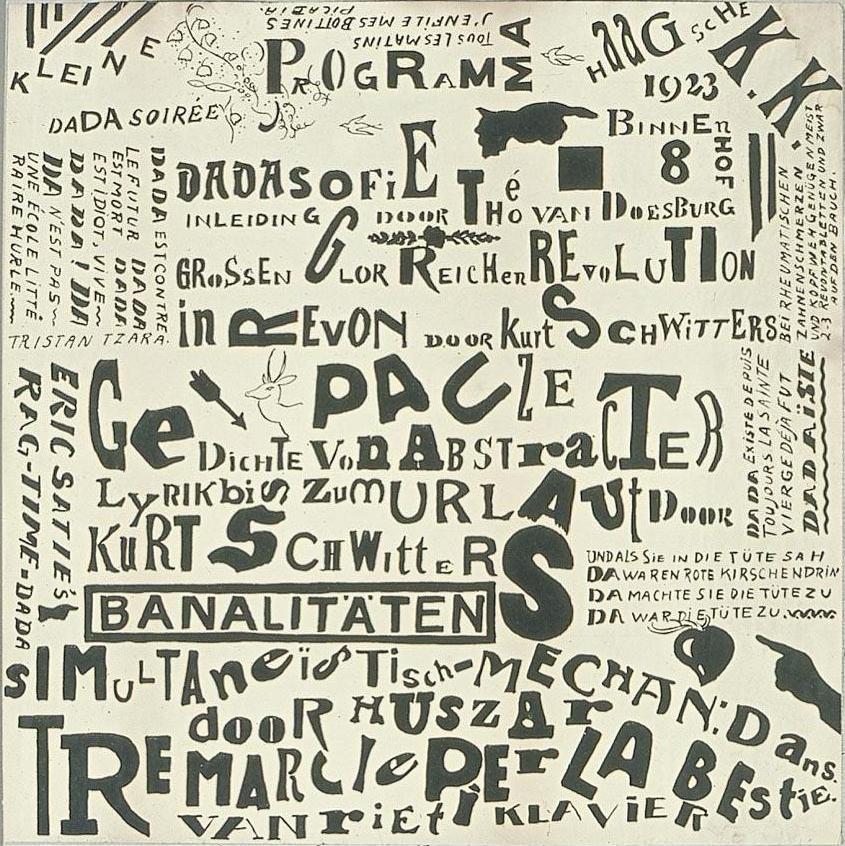
- Editorial work on Dada journals and exhibition programs
Later career and legacy. After the first fervor of Dada, Tzara remained active as a writer, editor and translator. He had complex relations with later avant‑garde groups (including debates with Surrealists) but his early insistence on anti‑art gestures and performative provocation has had lasting influence on twentieth‑century poetry, performance art and experimental music. Scholars continue to study his manifestos and performances as key moments in the development of modernist and post‑modern artistic practice.
Further reading and primary materials are available through archival and critical sources: birth and archival records, biographical surveys, French period studies, Dada documentation, contextual material on Symbolism and analyses of Dada's nihilism.
Author
AlegsaOnline.com Tristan Tzara Leandro Alegsa
URL: https://en.alegsaonline.com/art/132299