
Dadaism (Dada) — an overview of the anti‑art movement
Dadaism (Dada) was an early 20th‑century international avant‑garde movement that rejected conventional aesthetics and embraced absurdity, chance, and anti‑war protest, influencing later modern and contemporary art.
Overview
Dadaism, commonly called Dada, was an international avant‑garde tendency that emerged during the turmoil of World War I. Rather than proposing a single style, Dada functioned as a loose network of artists, poets and performers who questioned traditional notions of art, value and meaning. Its practices ranged from provocative performances and sound poetry to photomontage and the display of everyday objects as art.
Image gallery
10 Images





Origins and development
The movement began in the mid‑1910s in neutral Zurich, where the Cabaret Voltaire became an early gathering place for émigré artists reacting against war, nationalism and bourgeois culture. Parallel and later Dada groups arose in Berlin, Cologne, Paris and New York. Each center had its own tone — Zurich’s experiments were theatrical and poetic, Berlin’s were openly political, Paris focused on visual provocation, and New York emphasized conceptual gesture.
Characteristics and techniques
Dadaists favored disruption over craftsmanship. Common methods included collage and photomontage, chance operations, sound and performance pieces, typographic experimentation, and the presentation of found objects (readymades). Language was often pushed to the edge through nonsense, simultaneous poetry and sound experiments intended to undermine ordinary meaning.
Notable figures and examples
- Hugo Ball and Emmy Hennings — early Zurich organizers.
- Tristan Tzara and Jean (Hans) Arp — poets and theorists.
- Hannah Höch and Kurt Schwitters — montage and collage practitioners.
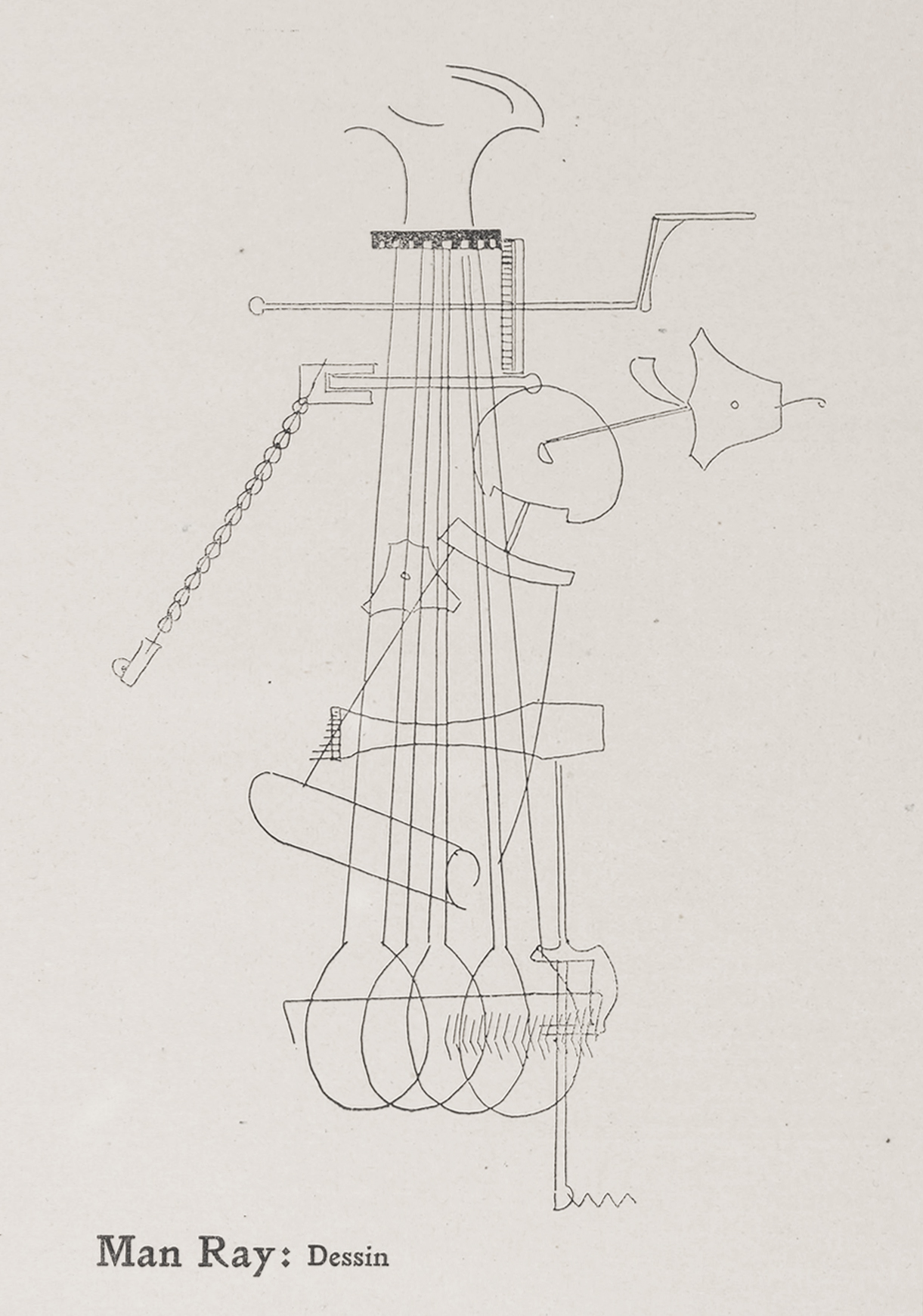
- Marcel Duchamp and Man Ray — readymades and conceptual gestures.
Legacy and significance
Although Dada as a named tendency faded into the 1920s, its rejection of artistic conventions helped spawn Surrealism and later movements such as Pop Art, Fluxus and conceptual art. Its experiments with chance, anti‑esthetic stance and performance continue to influence contemporary art and cultural critique.
For introductory resources and context see general Dada summaries, historical background on the wartime era and World War I, and discussions of Dada’s relationship to later movements and modern art.
Questions and answers
Q: What is Dadaism?
A: Dadaism is an avant-garde intellectual movement that started around World War 1.
Q: Was it originally an art movement?
A: No, it was not originally an art movement, but it did influence art greatly for a time.
Q: When did Dadaism start?
A: Dadaism started around World War 1.
Q: How long did the influence of Dadaism last in art?
A: The influence of Dadaism lasted for a time in art.
Q: What type of movement is Dadaism?
A: Dadaism is an avant-garde intellectual movement.
Q: Did the influence of Dadaism have any impact on other areas besides art?
A: It is unclear if the influence of Dadaism had any impact on other areas besides art.
Related articles
Author
AlegsaOnline.com Dadaism (Dada) — an overview of the anti‑art movement Leandro Alegsa
URL: https://en.alegsaonline.com/art/25039
Sources
- smithsonianmag.com : smithsonianmag.com/arts-culture/dada-115169154/