
Ted Key (1912–2008): American Cartoonist and Creator of Hazel
Overview of Ted Key (Theodore Keyser), creator of the single-panel Hazel, contributor to children's magazines, and originator of Peabody's Improbable History.
Overview
Theodore Keyser, known professionally as Ted Key (August 25, 1912 – May 3, 2008), was an American cartoonist and writer recognized for his concise single-panel humor and for creating memorable comic characters. His best-known work, the domestic single-panel strip Hazel, depicted a sharp-witted live-in maid whose practical solutions and blunt observations provided a steady source of comic situations. Key worked in print and broadcast media across several decades, contributing to weekly magazines, children's publications, and animated television.
Image gallery
2 Images
Major works and recurring features
- Hazel – A single-panel gag cartoon focused on a no-nonsense, bossy maid and her employers. It appeared regularly in the pages of The Saturday Evening Post beginning in the 1940s and continued in various newspapers thereafter.
- Diz and Liz – A two-page illustrated feature that ran in the children's magazine Jack and Jill during the 1960s and early 1970s, blending light humor with gentle lessons for young readers.
- Peabody's Improbable History – Conceived for the animated series The Rocky and Bullwinkle Show, this segment introduced Mr. Peabody, a brilliant, time-traveling dog, and his boy companion Sherman, using historical encounters as the premise for short, clever stories.
Style, themes, and techniques
Key's cartoons typically relied on a tight visual composition and a single, punchy caption or line of dialogue. His humor was observational and domestic rather than satirical or topical, which helped his work remain accessible across generations. The central figure in much of his output—an efficient, outspoken caretaker—played on everyday household dynamics to reveal character and social foibles. In animation, his concept work emphasized witty premises and strong character contrasts, which translated well from a still cartoon to short animated segments.
Adaptations, reception, and legacy
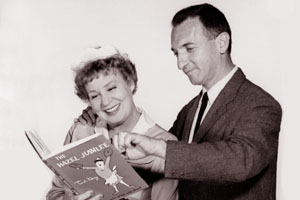
The popularity of the Hazel cartoons led to a television adaptation titled Hazel, starring veteran actress Shirley Booth as the titular maid. The series brought Key's creation to a broader audience and demonstrated the adaptability of single-panel characters to episodic storytelling. His work for children's publishing and animation extended his influence beyond newspaper readers to television audiences and young magazine readers.
Awards and notable facts
Throughout his career Key received recognition from his peers; in 1977 he was awarded the National Cartoonists Society Newspaper Panel Award for his work on Hazel. Beyond awards, Key's creations endure as examples of mid-20th-century American cartooning that blended concise visual economy with warm, character-driven humor. His contributions to both print and animated media illustrate a versatility that allowed single-panel ideas to find new life in other formats.
Further reading and context
Key's career is often cited when discussing the transition of cartoon characters from the printed page to radio, television, and animation. For those interested in mid-century comics and family-centered humor, his body of work offers accessible examples of how simple premises and strong character voice can sustain long-running features across different media formats.
Author
AlegsaOnline.com Ted Key (1912–2008): American Cartoonist and Creator of Hazel Leandro Alegsa
URL: https://en.alegsaonline.com/art/131658