
Sofya Kovalevskaya — Russian mathematician (1850–1891)
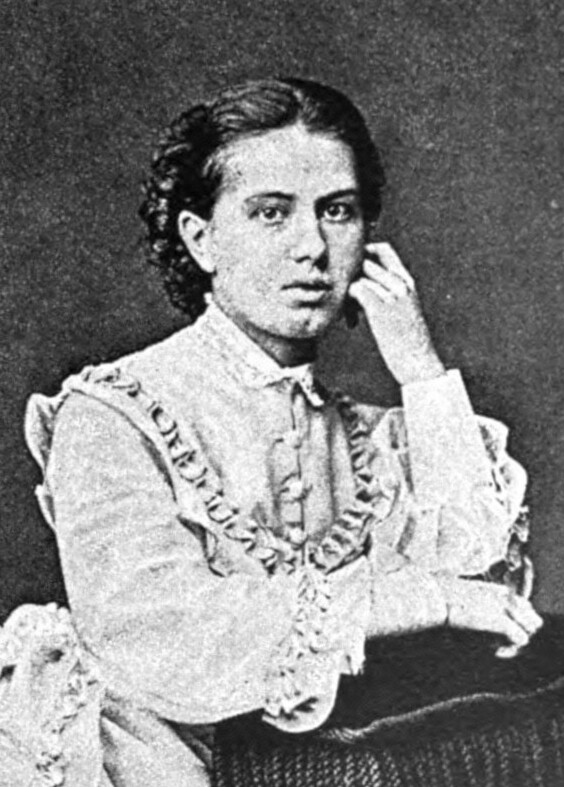
Sofya Kovalevskaya was a Russian mathematician who made foundational contributions to analysis, partial differential equations and mechanics, and was a leading pioneer for women in science.
Overview
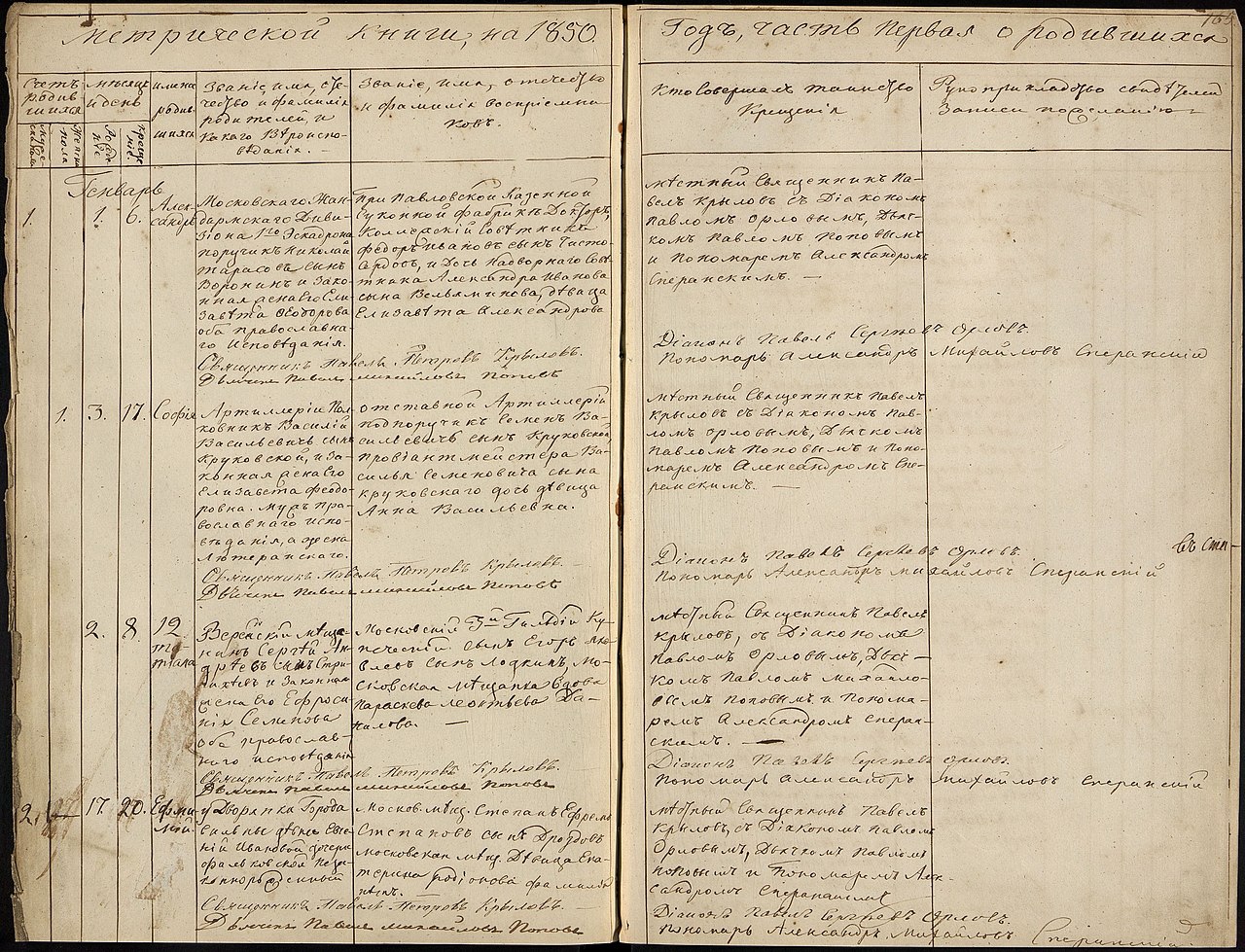
Sofya Vasilyevna Kovalevskaya (born Sofya Korvin-Krukovskaya; 15 January 1850 [O.S. 3 January]) was a Russian mathematician known for important work in analysis, the theory of partial differential equations and classical mechanics. She became one of the first women in modern times to receive a doctoral degree in mathematics and was among the earliest women appointed to a full professorship in Northern Europe. For primary documents and early records see early records.
Image gallery
8 Images


Early life and education
Kovalevskaya was raised in the Russian Empire in an era when formal university education was generally closed to women. She pursued private study and later moved to Western Europe to continue her mathematical training. Her work was examined and supported by established mathematicians of the time, which led to academic recognition and formal degrees. Biographical overviews and scholarly notes on her education are available at biographical background.
Major mathematical contributions
Kovalevskaya made several results that remain part of standard mathematical knowledge. She proved a fundamental existence and uniqueness theorem for certain analytic partial differential equations, a result that is widely cited as the Cauchy–Kovalevskaya theorem. She also discovered an integrable case of the equations governing the motion of a rigid body about a fixed point; this case is commonly called the Kovalevskaya top. These contributions connected rigorous function-theoretic methods with problems from classical mechanics. More technical discussion of her work in partial differential equations can be found at partial differential equations and her contributions to mechanics are summarized at mechanics.
Career and recognition
After establishing a solid research record, Kovalevskaya obtained academic positions that were exceptional for a woman of her time. She accepted a professorship in Sweden and held editorial and other scholarly roles, participating in the broader European mathematical community. Her appointment and related institutional records are described at appointment record. Histories of mathematics cite her both for mathematical achievements and for the symbolic importance of her professional milestones.
Personal life and writings
Alongside technical papers, Kovalevskaya left personal writings, correspondence and essays that illuminate her experiences as a woman in science during the 19th century. These materials show how intellectual work, social constraints and personal circumstances intersected in her life. Scholars consult letters and memoirs to understand her relationships with contemporaries and the reception of her work.
Legacy and influence
Kovalevskaya's name is attached to theorems and examples that remain in mathematical teaching and research. Beyond her technical legacy, she served as an inspiration to later generations of women pursuing scientific careers and is frequently mentioned in accounts of gender and academic opportunity. Her life is studied both for its mathematical content and for its cultural and historical significance.
Selected themes
- Analysis: development of analytic methods for differential equations and function theory.
- Partial differential equations: existence and uniqueness results for analytic initial data and their applications.
- Mechanics: identification of integrable cases in rigid-body dynamics and links between analysis and classical mechanics.
- Women in science: early examples of university degrees, professorships, and editorial work by a woman in mathematics.
For further reading and curated bibliographies consult archival guides and institutional collections that collect Kovalevskaya's scientific papers, letters and contemporary commentary (archival guide, biographical studies, mathematical reviews, mechanical analyses, institutional records).
Author
AlegsaOnline.com Sofya Kovalevskaya — Russian mathematician (1850–1891) Leandro Alegsa
URL: https://en.alegsaonline.com/art/131025