
Sir George Gabriel Stokes, 1st Baronet
Irish-born mathematician and physicist; long-serving Lucasian Professor at Cambridge known for foundational work in fluid dynamics (Navier–Stokes), optics and mathematical physics.
Overview
Sir George Gabriel Stokes (13 August 1819 – 1 February 1903) was an Irish-born physicist and mathematician who spent most of his career at the University of Cambridge. He held the Lucasian Professorship of Mathematics from 1849 until his death and combined theoretical work with experimental interests. His name is associated with several fundamental results and concepts used across applied mathematics, physics and engineering.
Image gallery
10 Images




Early career and academic roles
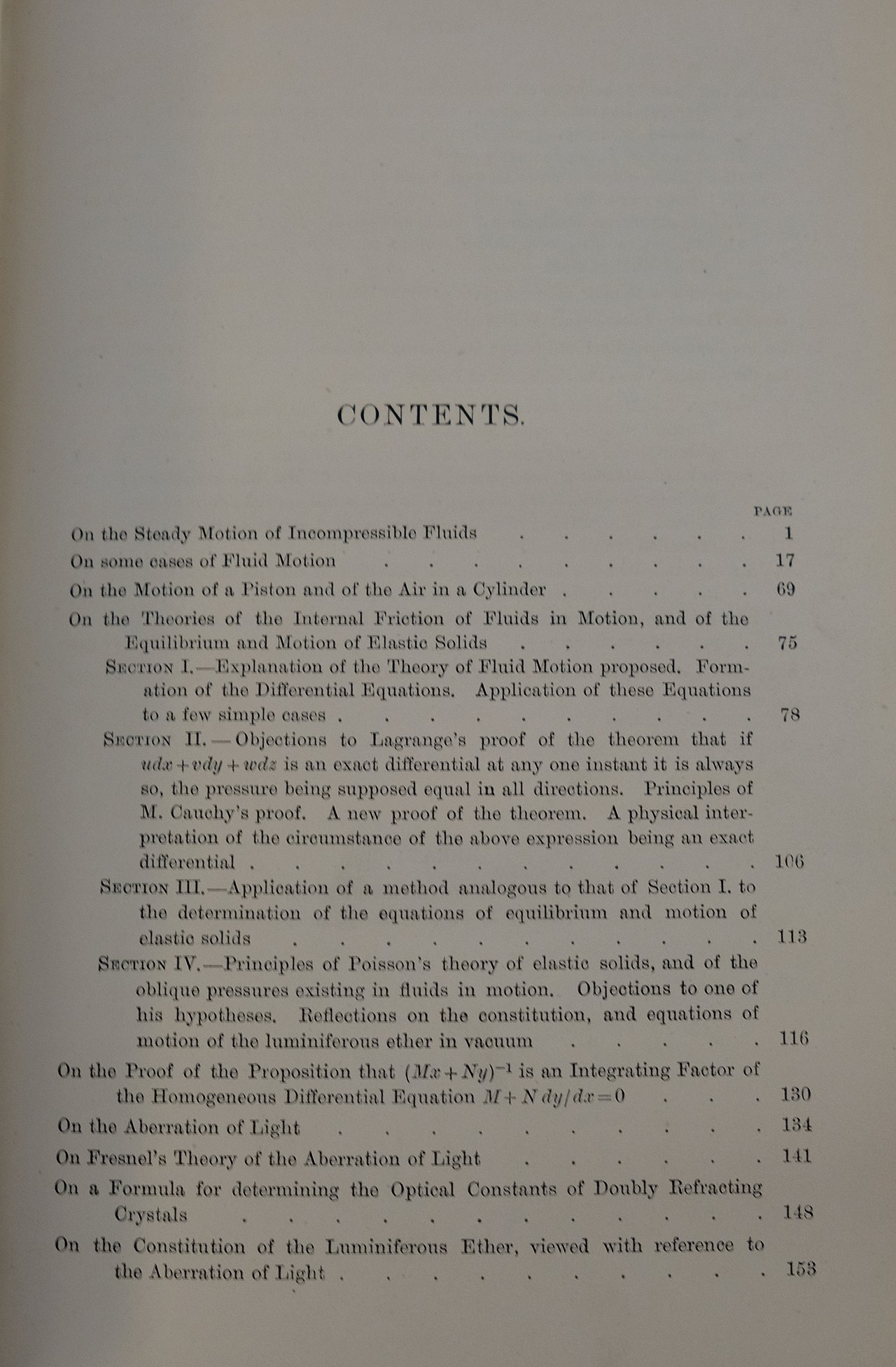
Stokes spent his professional life at Cambridge, where his teaching, research and administrative duties influenced generations of students. He served in leading scientific roles and was recognized by contemporaries with high honours. Over a long tenure he helped to shape the curriculum and research direction of mathematical physics at a time when formal links between mathematics and laboratory science were consolidating.
Major contributions
Stokes made substantial advances in fluid mechanics, optics and mathematical analysis. Many of the concepts that bear his name remain central to modern science and engineering:
- Navier–Stokes equations: fundamental equations for viscous fluid flow that form the basis of much of classical fluid mechanics; problems of existence and smoothness for these equations remain important in mathematics and physics (Navier–Stokes equations).
- Stokes' theorem: a unifying result in vector calculus relating integrals over surfaces to integrals along their boundaries; it underlies many formulas in electromagnetism and differential geometry.
- Stokes' law: an expression for the viscous drag on small spheres moving through a fluid, widely used in experimental physics, colloid science and sedimentation studies.
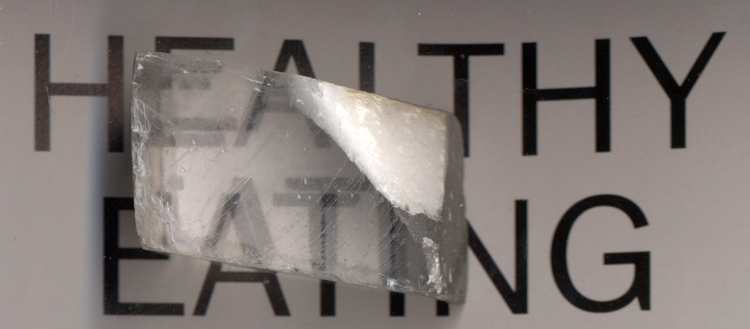
- Optics and spectroscopy: observations grouped under his name, such as the Stokes shift, describe energy differences between absorbed and emitted light and are important in fluorescence and Raman spectroscopy.
Approach and influence
Stokes exemplified the 19th-century synthesis of rigorous mathematical technique with experimental observation. He emphasized analytical methods, asymptotic reasoning and careful measurement, helping to establish practices that would guide later theoretical and applied work. His contributions provided tools for aerodynamics, oceanography, meteorology and engineering, where models of viscous flow and wave motion are routinely applied.
Legacy
The name Stokes appears across many theorems, laws and effects in physics and mathematics, reflecting both the breadth of his work and its lasting utility. Concepts he developed are integral to advanced curricula in mathematics, physics and engineering. Beyond specific formulae, his career demonstrates how sustained teaching, editorial work and participation in scientific societies can disseminate methods and standards that shape entire disciplines.
Further reading and resources
Readers seeking technical accounts will find modern treatments of the Navier–Stokes equations in fluid mechanics texts and expositions of vector calculus for Stokes' theorem. Historical studies explore his role in 19th‑century British science and the interaction between mathematical analysis and laboratory practice.
Author
AlegsaOnline.com Sir George Gabriel Stokes, 1st Baronet Leandro Alegsa
URL: https://en.alegsaonline.com/art/130979