
Sadako Ogata: Japanese academic, diplomat, and UN High Commissioner for Refugees
Overview of Sadako Ogata (1927–2019), Japanese scholar and diplomat who led UNHCR (1991–2000), chaired UNICEF's executive board and headed JICA, known for humanitarian leadership during 1990s crises.
Overview
Sadako Ogata (née Nakamura; 16 September 1927 – 22 October 2019) was a prominent Japanese academic, diplomat and administrator whose career combined scholarship, international diplomacy and humanitarian leadership. She served as United Nations High Commissioner for Refugees from 1991 to 2000 and later held senior positions in Japanese international development institutions. Ogata wrote on international relations and refugee protection and was long associated with Sophia University as a professor emeritus.
Image gallery
4 Images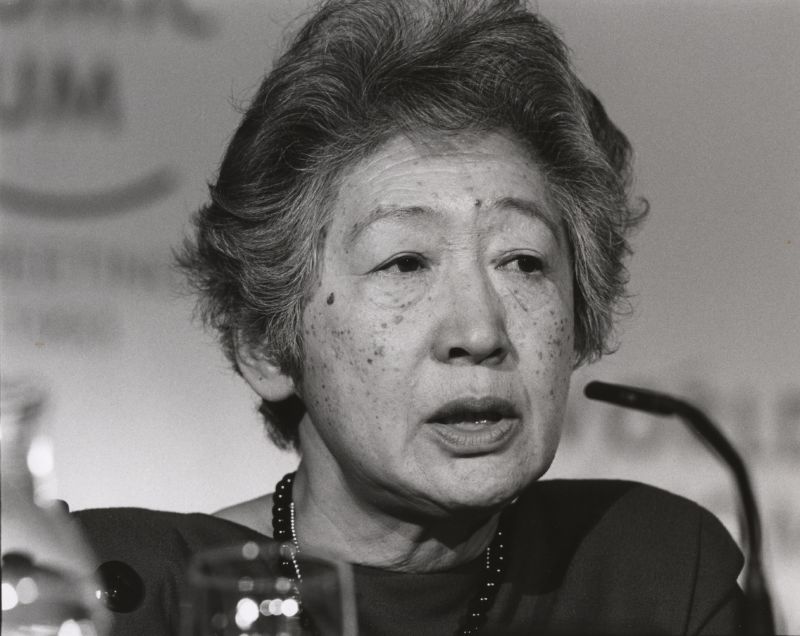


Career and major roles
Ogata's public service brought her to the center of several major humanitarian challenges of the 1990s. Her most visible role was as head of the UNHCR, where she oversaw the agency's response to multiple refugee emergencies and expanded the organization's engagement with conflict-affected populations. Earlier she had served as Chairwoman of the UNICEF Executive Board and later took leadership of the Japan International Cooperation Agency (JICA), helping to link Japanese development policy with crisis relief and reconstruction.
Major crises and responses
- Early 1990s — management of large-scale displacement associated with the Gulf War and the Kurdish exodus.
- Mid-1990s — coordination of international humanitarian responses during the Rwandan genocide and its aftermath.
- Late 1990s — involvement in refugee issues stemming from the wars in the former Yugoslavia, including protection and resettlement initiatives.
In each of these contexts Ogata emphasized protection, humanitarian access and the need for sustained international commitment to refugees and internally displaced people.
Approach and influence
Known for combining academic rigour with practical leadership, Ogata stressed legal protections, durable solutions and the centrality of human dignity in humanitarian work. She advocated for stronger cooperation between UN agencies, non-governmental organizations and donor governments, and she used her platform to highlight neglected crises and the plight of vulnerable groups such as children and women.
Honors and legacy
Ogata received broad international recognition for her work on refugee protection and international development. Her tenure at UNHCR helped to shape modern practice in refugee assistance, particularly in situations of complex emergencies. After leaving the UN, she continued to influence Japanese and global development policy through advisory roles, public writing and leadership at JICA. Ogata died in Tokyo on 22 October 2019; her contributions to humanitarian law and refugee protection remain widely cited in discussions of international relief and human rights.
Author
AlegsaOnline.com Sadako Ogata: Japanese academic, diplomat, and UN High Commissioner for Refugees Leandro Alegsa
URL: https://en.alegsaonline.com/art/130292