
Roy Moore: Alabama jurist and political figure
American jurist and politician known for his tenure as Chief Justice of Alabama, advocacy of Christian legal principles, multiple removals from office, controversial statements, and a high‑profile 2017 Senate campaign.
Overview
Roy Stewart Moore (born 1947) is an American lawyer, judge, and conservative political figure who served as Chief Justice of the Supreme Court of Alabama in separate terms. He became nationally prominent for his vocal advocacy that public policy should reflect his interpretation of Christian principles, and for a series of high‑profile legal and political controversies. Coverage of Moore has included discussion of his judicial actions, political campaigns, statements about religious and social issues, and allegations reported by media and accusers. For a general profile and public statements see biographical resources.
Image gallery
4 Images
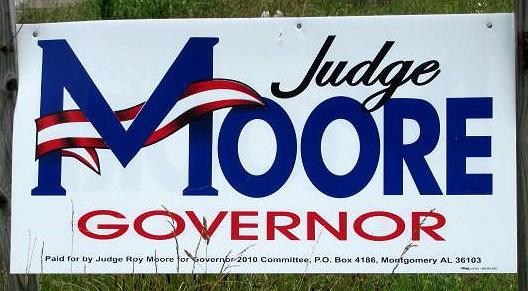


Judicial career and legal controversies
Moore first won election as Alabama chief justice and gained attention for ordering the placement of a carved Ten Commandments monument in a judicial building; he was later removed from that office for defying court orders to remove the monument. In a later period in the 2010s he again served as chief justice and clashed with federal court rulings on same‑sex marriage, leading to his suspension and eventual removal from the bench for judicial misconduct. Observers and courts cited his refusal to follow federal court orders as central to those disciplinary actions. For background on related court decisions and judicial ethics proceedings consult legal summaries.
Political campaigns and the 2017 Senate race
Moore has run for several statewide offices. His most prominent campaign on the national stage was the 2017 special election for the U.S. Senate seat from Alabama. That campaign drew intense attention and became a focal point for debates within his party and across the country about electability, party support, and the impact of public controversies. He was the Republican nominee and lost the general election. Commentary on the race and its political consequences can be found at analytical sources.
Controversies, public statements, and allegations
Moore's public profile has been shaped by several recurring themes: strong opposition to same‑sex marriage, statements about Islam and Muslims that critics labelled discriminatory, and advocacy for a prominent role for Christian belief in government. He has also been associated in reports with far‑right groups and with figures described as neo‑Confederate or white nationalist; these associations have been noted by historians, journalists, and watchdog organizations.
- Religious‑symbol cases: Refusal to remove Ten Commandments monument.
- Federal compliance: Conflicts with federal court rulings on marriage and other issues.
- Allegations: Multiple women publicly accused Moore of sexual misconduct dating to earlier decades; he denied the allegations. These claims were widely reported and shaped public reaction during his campaigns.
- Associations: Reported ties or contacts with far‑right and neo‑Confederate figures have drawn additional scrutiny.
Legacy, public debate, and distinctions
Moore remains a polarizing public figure. Supporters praise his willingness to defend conservative Christian beliefs in public life and his stances on what they describe as constitutional and moral principles. Critics argue his judicial conduct undermined rule‑of‑law principles and point to his public statements and reported associations as evidence of exclusionary politics. His career is frequently cited in discussions about judicial independence, the intersection of religion and government, and how allegations of personal misconduct affect public officeholders. For further reading on these broader themes see relevant commentary.
Questions and answers
Q: Who is Roy Moore?
A: Roy Stewart Moore is an American lawyer, politician, and former judge.
Q: What has Roy Moore been known for?
A: Roy Moore has been known for his strongly anti-homosexual, anti-Muslim, and far-right views, his belief that Christianity should order public policy, as well as his past ties to neo-Confederates and white nationalist groups.
Q: Has Roy Moore been controversial?
A: Yes, Roy Moore has earned significant national attention and controversy due to his views and past ties.
Q: What are some of Roy Moore's views?
A: Roy Moore's views include anti-homosexual, anti-Muslim, and far-right beliefs, as well as his belief that Christianity should order public policy.
Q: What groups has Roy Moore had ties to in the past?
A: Roy Moore has had ties to neo-Confederates and white nationalist groups in the past.
Q: What is the significance of Roy Moore's views and ties?
A: Roy Moore's views and ties have prompted controversy and national attention, as they reflect a strong opposition to certain marginalized groups and an alignment with extremist ideology.
Q: What is Christianity's role in Roy Moore's vision for public policy?
A: Roy Moore believes that Christianity should order public policy, meaning that he believes the government should be influenced by Christian values and principles.
Author
AlegsaOnline.com Roy Moore: Alabama jurist and political figure Leandro Alegsa
URL: https://en.alegsaonline.com/art/130137