
Robert Bork: American jurist, legal scholar and conservative public figure
Robert H. Bork (1927–2012) was an American legal scholar, appellate judge and public official, noted for his antitrust writing, role in the Nixon administration and his 1987 Supreme Court nomination defeat.
Overview
Robert Heron Bork (March 1, 1927 – December 19, 2012) was an influential and polarizing American legal scholar, government official and judge. He made a lasting mark as an antitrust theorist and constitutional critic, served in senior Justice Department roles, authored several books and articles, and became a central figure in a high-profile Supreme Court confirmation battle that gave rise to the verb "to bork," meaning an aggressive campaign to defeat a nominee.
Image gallery
5 Images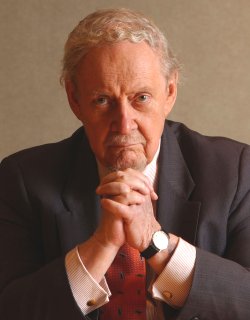


Early life and education
Bork was born in Pittsburgh, Pennsylvania, in 1927 and later completed his higher education at the University of Chicago, where he studied law and developed his interest in legal theory and constitutional history. His academic background anchored a career that moved between teaching, scholarship and public service.
Career and public service
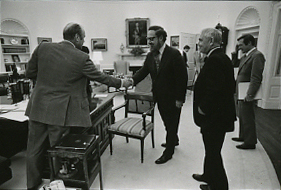
Bork combined scholarship with government work. He served as United States Solicitor General and briefly as acting United States Attorney General during the Nixon administration; in that capacity he implemented the dismissal of the Watergate special prosecutor, a controversial episode that drew intense public scrutiny. Throughout his career he held academic posts and later served as a judge on the U.S. Court of Appeals for the District of Columbia Circuit. He was nominated in 1987 by President Ronald Reagan to the Supreme Court, but his nomination was ultimately rejected by the Senate. Earlier in his life and career he was recognized as a prolific writer and commentator on law and public policy.
Legal philosophy and writings
Bork was closely associated with a conservative, originalist approach to constitutional interpretation and a skeptical view of broad judicial policymaking. He argued that judges should be guided by the original meaning of the Constitution and by restraint, rather than by contemporary notions of justice. In antitrust law he became widely known for The Antitrust Paradox, a book that championed the consumer welfare standard and reshaped debates about competition policy. His published work and commentary addressed constitutional law, statutory interpretation and the limits of judicial power.
Notable events and legacy
- As Solicitor General and acting Attorney General, Bork played a central role in the Watergate-era conflicts that tested executive-branch authority and independence.
- His failed Supreme Court nomination produced the verb and cultural shorthand "to bork," reflecting deep political mobilization over judicial appointments.
- Supporters praised his intellectual rigor and commitment to textualism and originalism; critics argued his views would sharply limit rights and expand executive power.
Personal life and death
Bork was married twice, first to Claire Davidson (1952–1980) with whom he had three children, and later to Mary Ellen Pohl (from 1982). After a long career in law, scholarship and public debate, he died on December 19, 2012 from complications related to heart disease. His papers, books and the controversies surrounding his career remain subjects of study for legal historians and political scholars.
For further reading on Bork's positions, judicial record and the wider impact of his nomination fight, consult scholarly analyses and archival materials available through legal research resources and historical collections. More information about specific episodes in his career can be found in dedicated biographies and collections of his writings.
Selected roles and works
- United States Solicitor General and acting United States Attorney General
- Judge, U.S. Court of Appeals for the D.C. Circuit
- Author of influential works on antitrust and constitutional interpretation
Readers seeking primary sources or official documents on Bork's government service and publications can consult law libraries and government archives for original materials and records.
Author
AlegsaOnline.com Robert Bork: American jurist, legal scholar and conservative public figure Leandro Alegsa
URL: https://en.alegsaonline.com/art/129702