
Richard Rush (American film director)
American film director, screenwriter and producer (1929–2021), best known for the Academy Award–nominated The Stunt Man (1980) and a career spanning independent, countercultural and studio films.
Overview
Richard Rush (April 15, 1929 – April 8, 2021) was an American film director, screenwriter and producer whose work ranged from low-budget independent features to mainstream studio pictures. He is best known for the 1980 film The Stunt Man, a self-aware, genre-blending picture that received critical attention and multiple Academy Award nominations. Over a career that spanned more than three decades, Rush worked in comedies, thrillers, countercultural dramas and action pictures, often showing an interest in performance, illusion and the mechanics of filmmaking.
Image gallery
1 Image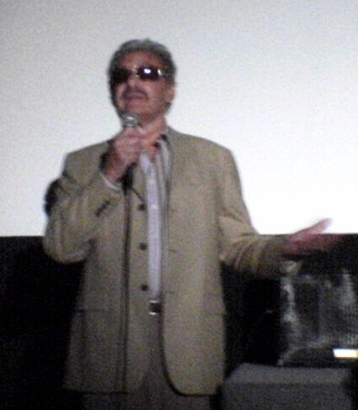
Early life and beginnings
Born in New York City, Rush developed an early interest in cinema and storytelling. He began making short films and learned the craft of screenwriting and directing at a time when independent production was becoming a viable alternative to the Hollywood studio system. His first features demonstrated an interest in contemporary youth culture and in narratives that foregrounded performance and identity.
Career and style
Rush's career moved between modest independent productions and larger studio assignments. He became associated in the late 1960s with films that reflected the era's countercultural energy, including stories about motorcycles, music scenes and youthful rebellion. A recurring element in his work is a fascination with artifice: many of Rush's films draw attention to acting, stunt work or the construction of spectacle, often blurring the boundary between actors' private lives and the roles they play.
Technically, Rush favored dynamic staging and often used elaborate set pieces or stunt sequences to explore character and theme. His films sometimes met mixed critical reception on release but have attracted reassessment and cult interest over time, in part because of their formal risks and their preoccupation with deception, performance and the processes of filmmaking itself.
Notable films
- Too Soon to Love (1960) — an early independent effort that focused on young characters and relationships, helping to establish Rush's interest in contemporary social issues.
- Hells Angels on Wheels (1967) and Psych-Out (1968) — films that engaged with 1960s subcultures and youth movements, tapping into the motorcycle and psychedelic milieus of the period.
- Freebie and the Bean (1974) — a commercially oriented action-comedy notable for its stunt work and broad humor; it demonstrated Rush's ability to handle larger-scale, mainstream material.
- The Stunt Man (1980) — Rush's most celebrated film, a complex, self-reflexive work about a fugitive who becomes a stunt double and becomes caught up in a director's manipulations; it brought him his greatest critical recognition.
- Air America (1990) — a studio action-comedy that illustrated Rush's continued work in commercial filmmaking.
- Color of Night (1994) — a psychological erotic thriller that performed poorly at the box office and attracted controversy; it later received a Golden Raspberry Award while also remaining a frequent subject of popular discussion.
Reception and legacy
Richard Rush's reputation is complex. Critics and scholars often cite The Stunt Man as a daring, idiosyncratic work that combines suspense, comedy and commentary on the nature of cinematic illusion. Several of his films earned devoted followings or were rediscovered by later audiences, while others were criticized on release. Rush is remembered for his willingness to move between independent sensibilities and studio constraints, and for a persistent interest in the relationship between life, performance and the spectacle of cinema.
Some of Rush's films have continued to provoke discussion for striking sequences or controversial elements; for example, Color of Night was noted in popular outlets for an explicit scene even as it failed commercially. Meanwhile, The Stunt Man's formal inventiveness has prompted ongoing critical study and admiration among filmmakers and historians.
Selected filmography
- Too Soon to Love (1960)
- Hells Angels on Wheels (1967)
- Psych-Out (1968)
- Freebie and the Bean (1974)
- The Stunt Man (1980)
- Air America (1990)
- Color of Night (1994)
Later life and death
In later years Rush lived and worked primarily in Los Angeles. He continued to be spoken of in film circles for his earlier accomplishments and for the unusual tonal range of his work. Richard Rush died on April 8, 2021, in Los Angeles at the age of 91.
Further reading and resources
For readers seeking additional information about Rush's life and films, the following resources provide biographical details, critical commentary and archival material:
Author
AlegsaOnline.com Richard Rush (American film director) Leandro Alegsa
URL: https://en.alegsaonline.com/art/129549