
René Préval: Haitian agronomist and two-term president
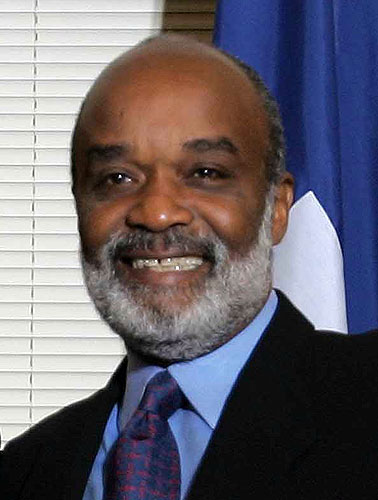
René Préval (1943–2017) was a Haitian agronomist and politician who served two non-consecutive terms as President of Haiti and briefly as Prime Minister in 1991.
René Garcia Préval (January 17, 1943 – March 3, 2017) was a Haitian agronomist and public official who held the nation's highest office twice. He is best known for serving as President of the Republic of Haiti from February 7, 1996 to February 7, 2001 and again from May 14, 2006 to May 14, 2011. Earlier in 1991 he served briefly as Prime Minister, a period that preceded a coup and a long episode of political instability.
Image gallery
4 Images

Early life and professional background
Préval trained and worked as an agronomist before entering high-level politics. His technical background informed a policy interest in agriculture, rural development and food security. He gained a reputation as a pragmatic administrator who often emphasized stable, incremental reforms over sweeping ideological programs.
Political career and presidencies
Préval moved between technocratic and political roles. He was appointed Prime Minister in early 1991 and resigned after the military coup that removed President Jean-Bertrand Aristide later that year. Préval later returned to electoral politics and won the presidency in 1996. After leaving office in 2001 he remained influential and was elected again in 2006. During both terms he worked with domestic and international partners on economic recovery, infrastructure, and social programs.
Major events and challenges
- 1991: Brief service as Prime Minister followed by political upheaval.
- 1996–2001: First presidential term focused on stabilizing institutions and the economy.
- 2006–2011: Second term dominated by the catastrophic January 12, 2010 earthquake and the large-scale reconstruction and humanitarian efforts that followed.
Préval's second administration confronted massive humanitarian and logistical challenges after the 2010 quake, and international aid and peacekeeping operations figured prominently in the response. His government also faced criticism over the pace of reconstruction and public health crises that emerged in the aftermath.
Legacy and notable facts
Préval is remembered as a figure who combined technical expertise with electoral politics. He attracted support from both rural constituencies and sectors seeking stability. He founded and worked with political groupings during his career and maintained ties to other major Haitian movements and leaders. Observers note that his presidencies were marked by the interplay of domestic governance and intense international engagement.
For further reading on Haitian politics and biographies of prominent leaders, see resources on the country's government and political history via biographical sources and descriptions of the office of the presidency.
Author
AlegsaOnline.com René Préval: Haitian agronomist and two-term president Leandro Alegsa
URL: https://en.alegsaonline.com/art/129393