
Pope Gregory VI (John Gratianus)
Pope Gregory VI (died 1048), born John Gratianus, served from May 1045 to December 1046 and resigned amid a simony controversy after intervening in a crisis of papal morality and succession.
Overview
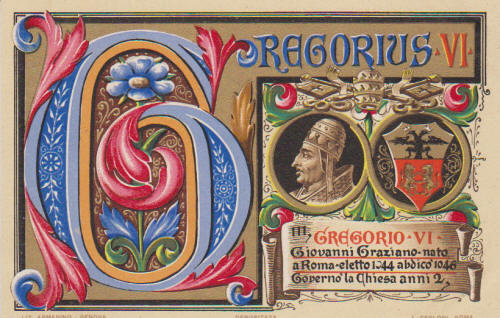
Pope Gregory VI, born John Gratianus and sometimes styled Gregorius Sextus, was a Roman cleric who became pontiff on 1 May 1045 and held the office until his resignation on 20 December 1046. His brief reign is best known for its connection to the moral and political turmoil of mid-11th-century Rome and for the controversy over simony that led to his voluntary departure.
Image gallery
4 Images


Background and election
John Gratianus served in the Roman clergy and was widely respected for integrity and administrative ability. In 1045, amid the scandalous conduct and rival claims of his predecessors, he accepted the papacy. Contemporary accounts describe his elevation as an attempt to resolve a chaotic situation in which multiple claimants and factions vied for control of the See of Rome. Sources often mention his Roman origin and priestly rank; see accounts that refer to him as a Roman priest.
Controversy: simony and motives
Gregory VI’s accession became controversial because it involved payment and negotiated transfers of authority during a period when the sale of ecclesiastical office—simony—was a pressing concern. Supporters argued he had acted to remove a discredited and corrupt predecessor; critics treated the transaction as a canonical offence regardless of motive. The question of intent—rescue or purchase—became central to his reputation and to reformers who sought to curb simony across Christendom.
Council of Sutri, abdication and deposition
The matter reached a decisive point at the Council of Sutri in 1046, convened under imperial pressure amid competing claims to the papal throne. There the situation of three claimants was examined: Gregory VI, Sylvester III and Benedict IX. Facing charges, Gregory acknowledged the irregularity of how he had obtained the office and chose to resign to preserve the Church’s unity. Contemporary lists regard him as the 149th Pope.
Later life and legacy
After his resignation Gregory VI traveled to the court of the Holy Roman Emperor; he was escorted to Germany and spent his remaining years away from Rome, dying in 1048 while in exile in Germany. His case became a frequent example in later medieval debates about simony and reform: defenders emphasized his good intentions and the crisis he tried to resolve, while reformers stressed the need for canonical propriety and stronger measures against the purchase of offices.
Significance
Gregory VI’s brief papacy illustrates the tangled relations among local Roman factions, clerical morality, and imperial influence in the 11th century. His resignation helped clear the way for a reforming sequence of popes selected with imperial involvement; the episode is often cited when discussing how the medieval Church confronted internal corruption. For further reading, contemporary chronicles and later reforming narratives discuss his abdication and its consequences.
- Pontificate: May 1045–December 1046
- Main issues: simony, papal rivalries, Church reform
- Death: 1048, in exile in Germany
Questions and answers
Q: Who was Pope Gregory VI?
A: Pope Gregory VI was an Italian priest of the Roman Catholic Church and the 149th Pope from 1 May 1045 until his abdication on 20 December 1046.
Q: What was Pope Gregory VI's birth name?
A: Pope Gregory VI's birth name was Johannes Gratianus.
Q: When did Pope Gregory VI become Pope?
A: Pope Gregory VI became Pope on 1 May 1045.
Q: How long did Pope Gregory VI serve as Pope?
A: Pope Gregory VI served as Pope from 1 May 1045 until his abdication on 20 December 1046.
Q: Why did Pope Gregory VI abdicate?
A: The reason for Pope Gregory VI's abdication is not stated in the text.
Q: How is Pope Gregory VI referred to in Latin?
A: Pope Gregory VI is referred to as Gregorius Sextus in Latin.
Q: What is Pope Gregory VI's legacy?
A: The text does not provide information on Pope Gregory VI's legacy.
Author
AlegsaOnline.com Pope Gregory VI (John Gratianus) Leandro Alegsa
URL: https://en.alegsaonline.com/art/128876