
Philipp Jenninger (1932–2018), German politician and diplomat
German CDU politician who led the Bundestag (1984–1988), later served in the Chancellery and as ambassador to Austria and the Holy See; remembered for a controversial 1988 speech and subsequent resignation.
Philipp Jenninger (10 June 1932 – 4 January 2018) was a German politician and diplomat associated with the Christian Democratic Union (CDU). Over several decades he held senior parliamentary and government posts, and later represented the Federal Republic of Germany abroad. His career combined legislative leadership, work in the Chancellery and two ambassadorial appointments.
Image gallery
2 Images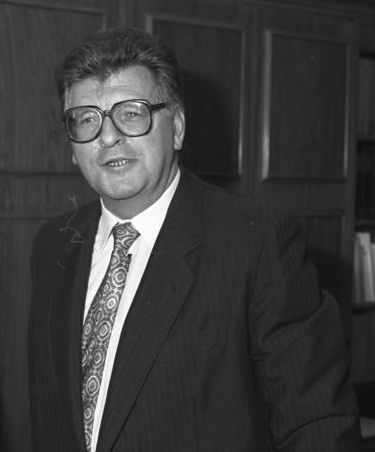

Political career
Jenninger was a long-serving member of the Bundestag, the German federal parliament, from 1969 until 1990. He held executive office as a Minister of State in the Chancellery from 1982 to 1984, a role that involved supporting the chancellor and coordinating government policy. In 1984 he was elected President of the Bundestag, the speaker who presides over parliamentary debates, a position he held until 1988.
Key offices
- Member of the Bundestag (1969–1990)
- Minister of State at the German Chancellery (1982–1984)
- President of the Bundestag (1984–1988)
- German Ambassador to Austria (1991–1995)
- German Ambassador to the Holy See (1995–1997)
Controversy and resignation
Jenninger's tenure as President of the Bundestag is often remembered for a contentious moment in November 1988. On the anniversary of Kristallnacht he delivered a speech intended to explain how widespread support for National Socialism had come about. Many listeners and some political opponents judged the address to have been inappropriately phrased and to have lacked sufficient moral distance from the subject. The public reaction and parliamentary criticism were intense, and Jenninger resigned from the presidency shortly afterwards. The episode has since been the subject of historical discussion about context, rhetoric and responsibility in public remembrance.
Diplomatic service and later life
After leaving the Bundestag, Jenninger entered diplomatic service. He represented Germany as ambassador to Austria and then to the Holy See, roles in which he worked on bilateral relations, cultural ties and church–state issues. In retirement he remained a figure noted in political and historical commentary. Jenninger died on 4 January 2018 in Stuttgart; contemporary notices recorded his death and reflected on his long public career (Stuttgart).
Assessment and legacy
Scholars and commentators view Jenninger's record as mixed: a seasoned parliamentary and government official who also became associated with a widely discussed misstep over historical memory and political language. His subsequent diplomatic work added a later chapter to his public service. Studies of post-war German politics and collective remembrance continue to cite the events of 1988 as an example of the challenges politicians face when addressing traumatic historical subjects.
For further background on German parliamentary institutions, diplomatic practice and the politics of historical memory, consult authoritative sources and collections that treat post-war Germany and European diplomacy.
Author
AlegsaOnline.com Philipp Jenninger (1932–2018), German politician and diplomat Leandro Alegsa
URL: https://en.alegsaonline.com/art/128663