
Petey Williams
Peter “Petey” Williams (born 1982) is a Canadian professional wrestler best known for his time in TNA, a two‑time X Division Champion and the inventor/popularizer of the “Canadian Destroyer”; also a musician.
Peter “Petey” Williams III (born August 26, 1982) is a Canadian athlete and professional wrestler who gained wide recognition for his work in Total Nonstop Action Wrestling (TNA). He became especially prominent in TNA’s X Division, where he won the X Division Championship on two occasions and served as captain of the Team Canada stable. Williams is widely identified with a high‑impact front‑flip piledriver finishing move commonly called the “Canadian Destroyer,” a maneuver he helped popularize in modern professional wrestling.
Image gallery
4 Images


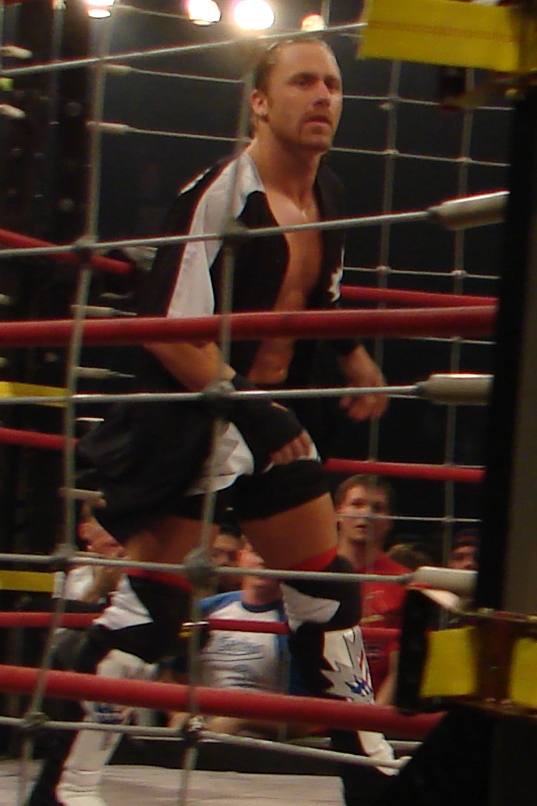
Style and ring persona
Williams’s in‑ring style blends speed, technical grappling and inventive offense typical of the X Division scene. He has been presented as an agile, resilient competitor who can combine high‑risk maneuvers with hard‑hitting strikes. The “Canadian Destroyer” finishing move — a front flip into a sit‑out or kneeling piledriver — became a signature highlighted in promos and televised matches and helped define his public image as a daring performer.
Career highlights and achievements
While much of Williams’s mainstream exposure came through TNA, his career also includes work on the independent circuit and appearances for other promotions. Key points often noted by observers include:
- Two reigns as TNA X Division Champion, a title associated with fast, athletic competitors and prominent multi‑person matches (X Division context).
- Leadership of the Team Canada faction, where he worked alongside fellow Canadian performers and played a visible role in storyline competition.
- Reputation for innovative offense and for making the Canadian Destroyer a widely discussed move among wrestling fans and commentators.
Music and projects outside the ring
Outside wrestling, Williams has been involved in music. He is a member of the band The High Crusade and performs alongside wrestlers Alex Shelley and Chris Sabin and friends from outside the ring. Williams contributes on guitar (guitar) and harmonica (harmonica), and the group released a debut album titled It's Not What You Think on September 7, 2010. His musical pursuits are often cited when discussing the wider interests and personalities of modern professional wrestlers beyond scripted competition.
Legacy and notable facts
Williams’s principal legacy rests on two complementary achievements: his role in bringing renewed attention to the X Division’s fast‑paced style and his association with one of wrestling’s most visually striking finishers. The Canadian Destroyer has been adopted, adapted and countered by other performers, and its prominence helped keep Williams’s name prominent among fans even during periods when he worked outside major televised promotions. He remains a recognizable figure to followers of TNA/Impact Wrestling and to fans of contemporary independent wrestling.
Further context
Discussions of Williams’s career typically place him in the larger trends of 2000s‑era professional wrestling: emphasis on athleticism in lighter weight categories, growth of talent moving between televised promotions and independents, and performers maintaining parallel projects such as music or film. For readers seeking more detailed match records, title histories or interviews, check promotion archives and reputable wrestling databases and media sources linked to the promotion pages and archival articles (Canadian sources, wrestling coverage).
Author
AlegsaOnline.com Petey Williams Leandro Alegsa
URL: https://en.alegsaonline.com/art/128596