
Peter Gay: Historian, Psychohistorian, and Interpreter of the Enlightenment
Biographical and intellectual profile of Peter Gay (1923–2015), German‑American historian and psychohistorian, his major works, methods, and legacy in Enlightenment and Freud studies.
Peter Gay (born Peter Joachim Fröhlich; June 20, 1923 – May 12, 2015) was a prominent German‑born scholar who became a leading American historian and a major figure in psychohistory. Trained in Europe and the United States, he combined traditional archival scholarship with psychological insight to illuminate the intellectual and cultural history of modern Europe, especially the Enlightenment, the Habsburg and Weimar eras, and the life and ideas of Sigmund Freud.
Image gallery
1 Image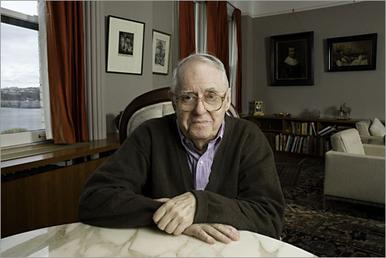
Biography and academic career
Gay was born in Berlin, Germany, and emigrated to the United States in 1941 amid the upheavals of the Second World War. He began his American academic career at Columbia University, where he taught political science from 1948 until 1955 and then history until 1969. Later he spent much of his career at Yale University, where he was named Sterling Professor of History and became Professor Emeritus. From 1997 to 2003 he served as director of the New York Public Library's Center for Scholars and Writers, linking scholarship with public audiences at the New York Public Library.
Major works and themes
Gay wrote more than twenty‑five books that combined narrative history with cultural and psychological interpretation. His influential multi‑volume study The Enlightenment: An Interpretation reassessed the movement's complexity and legacy, while Weimar Culture: The Outsider as Insider examined the creative tensions of the Weimar Republic. Gay's biography Freud: A Life for Our Time popularized psychoanalytic biography for general readers and defended the historical relevance of Freud's ideas.
Method and influence
As a practitioner of psychohistory, Gay used psychoanalytic concepts to explore motives, collective psychology, and cultural change. He sought to balance intellectual history with attention to emotions, social contexts, and individual personalities. His approach helped open new interdisciplinary conversations between history, psychology, and literary studies, though psychohistorical methods also prompted debate about the limits and evidentiary basis of psychological interpretation in historical research.
Honors, legacy, and selected works
Gay received major recognitions, including the American Historical Association's Award for Scholarly Distinction in 2004. He remained an active writer and public intellectual until his death in New York City at age 91. His work remains widely read for its clarity, narrative energy, and willingness to engage broad questions about modernity.
- Selected books:
- The Enlightenment: An Interpretation (multi‑volume)
- Weimar Culture: The Outsider as Insider (1968)
- Freud: A Life for Our Time (1988)
- Professional roles: professor at Columbia and Yale, director at the New York Public Library's Center for Scholars and Writers
- Personal origins: born in Berlin, Germany; emigrated to the United States
For further reading on the intellectual contexts that shaped Gay's work, consult institutional and archival resources at centers of historical and psychoanalytic scholarship, or explore library catalogs and scholarly reviews linked to major universities and public research libraries.
References to the institutions, cities, and organizations associated with Gay appear throughout this entry: details on his life and work can also be found via profiles hosted by Yale University, archival descriptions at the New York Public Library, and biographical notices from professional associations.
Author
AlegsaOnline.com Peter Gay: Historian, Psychohistorian, and Interpreter of the Enlightenment Leandro Alegsa
URL: https://en.alegsaonline.com/art/128498